


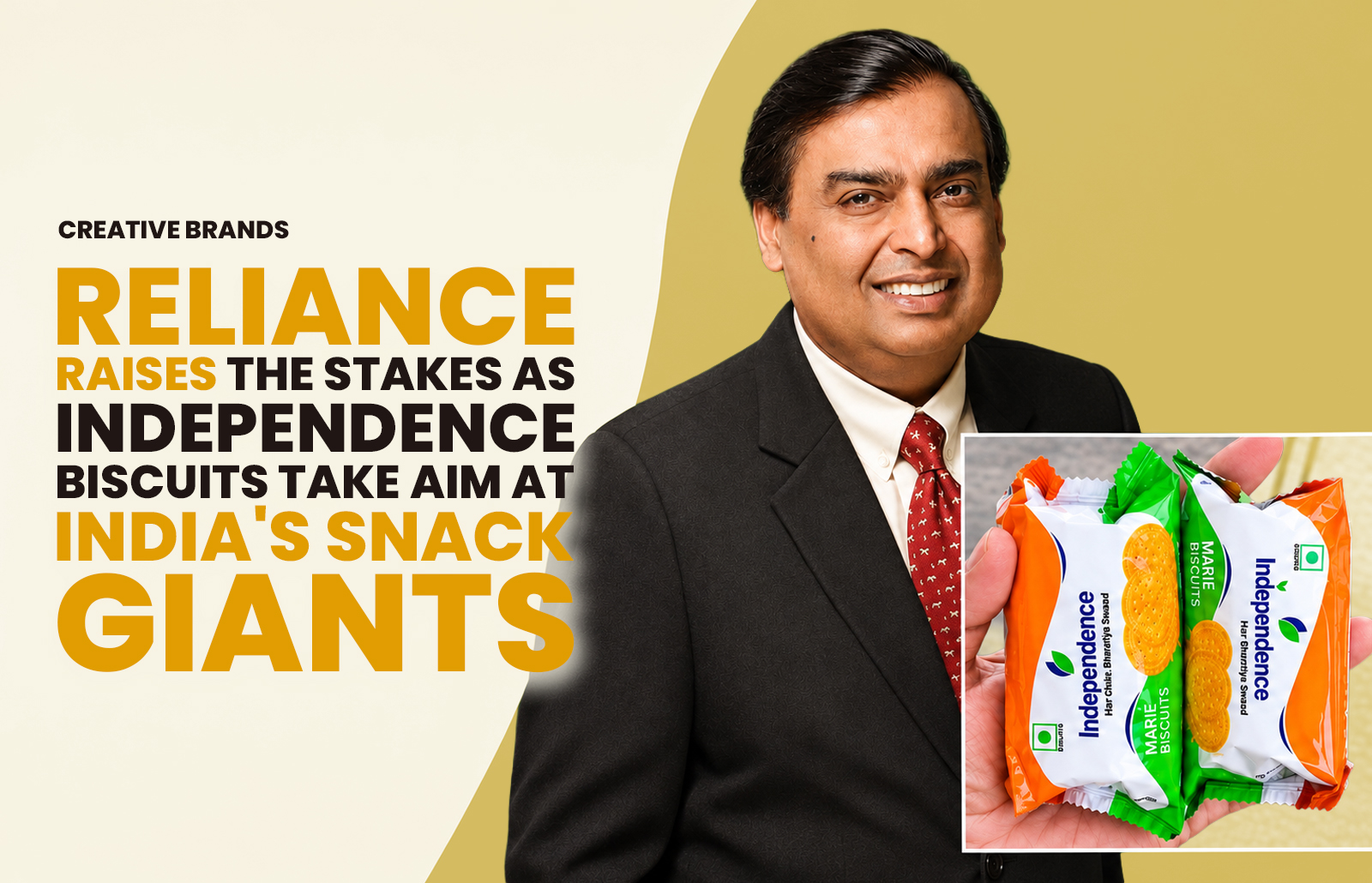
Reliance Consumer Products has entered India’s fiercely competitive biscuit market under its Independence brand, launching nine variants with prices starting at ₹5. The move signals another major challenge to established players, as Reliance leverages its vast retail network and value-focused strategy to capture consumers nationwide.
India’s biscuit industry is bracing for a fresh contest after Reliance Consumer Products, backed by billionaire Mukesh Ambani, announced its entry into the category with the launch of biscuits under its Independence brand.
The company has unveiled nine biscuit variants, with prices beginning at just ₹5, positioning itself squarely in one of the country’s largest and most competitive packaged food segments. The move a significant expansion of Reliance’s fast-moving consumer goods ambitions and sets the stage for a battle with long-established biscuit makers that have dominated Indian households for decades.
Biscuits are among the most widely consumed packaged food products in India, cutting across income groups, regions and age demographics. From tea-time staples to on-the-go snacks, the category enjoys deep market penetration and strong brand loyalty. Yet it is also highly price-sensitive, making affordability a crucial factor in winning consumers.
That is where Reliance appears to be placing its bet.
By introducing products at an accessible entry price point, the company is likely aiming to attract value-conscious shoppers while leveraging the growing reach of its Independence brand. The launch follows Reliance’s broader strategy of building a strong presence in everyday consumer goods, an area where it has steadily expanded its portfolio in recent years.
Industry observers believe Reliance’s biggest advantage may not lie solely in pricing but in its extensive retail ecosystem. Through its vast network of stores and distribution channels, the conglomerate has the ability to rapidly place products before millions of consumers across urban and rural markets. Such reach could help the company gain visibility and shelf space at a pace that few newcomers can match.
For established biscuit manufacturers, however, the arrival of a deep-pocketed challenger is unlikely to go unnoticed. Market leaders have spent years building trust, product innovation capabilities and distribution strength. Their brands are deeply entrenched in consumer habits, making the market difficult to disrupt despite its size.
The key question is whether Reliance can translate its scale into sustained consumer preference. While competitive pricing can encourage first-time purchases, repeat demand will depend on factors such as taste, quality and brand perception. In the food business, winning trial is only the first step; retaining customers is often the bigger challenge.
Consumers, meanwhile, could emerge as the biggest beneficiaries of the intensified competition. New product launches, promotional offers and sharper pricing strategies often accompany the arrival of a major new player, prompting rivals to strengthen their own propositions.
Reliance’s move also reflects the increasing attractiveness of India’s packaged food sector, where rising incomes, changing lifestyles and growing demand for branded products continue to create opportunities. With nine biscuit variants already on offer, the company is signalling that it intends to compete across multiple consumer preferences rather than target a single niche.
As the Independence brand enters a crowded marketplace, the biscuit battle is clearly getting bigger. Whether Reliance can loosen the grip of established brands remains to be seen, but its arrival ensures that one of India’s most familiar snack categories is set for a new phase of competition.
Discover more from Creative Brands Mag
Subscribe to get the latest posts sent to your email.















Leave a comment