


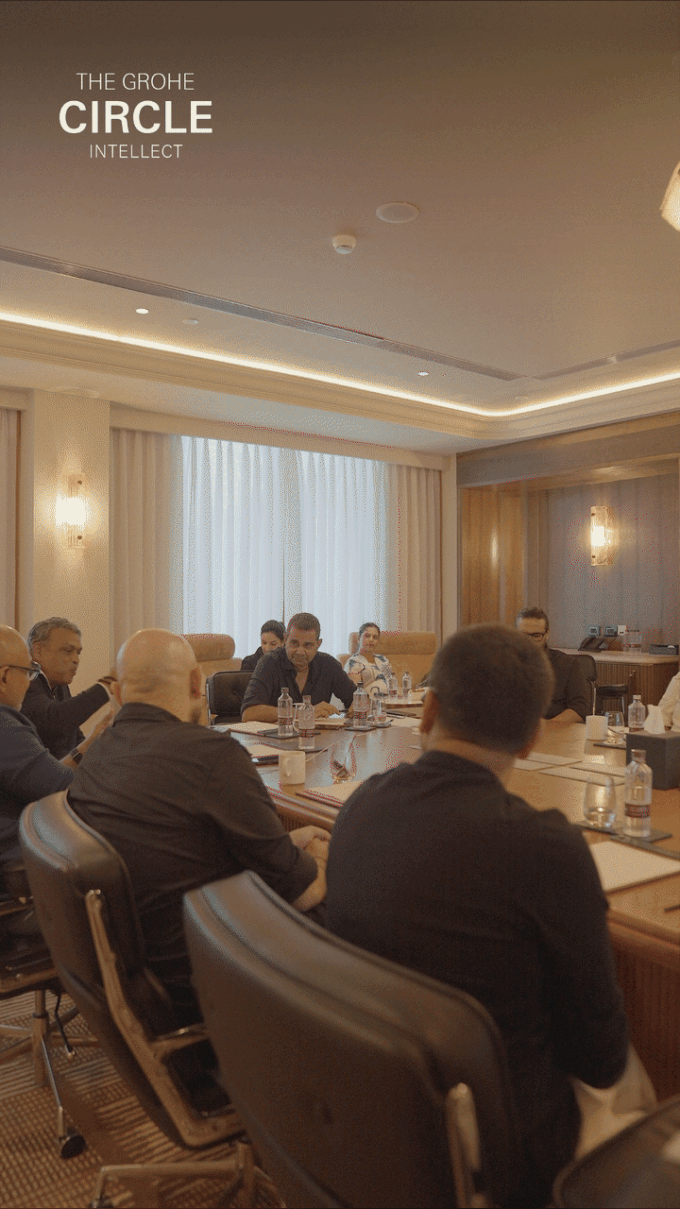
GROHE has launched The GROHE Circle Intellect Forum, bringing together 19 leading Indian architects to explore the changing requirements of bathroom design. The closed-door discussion examined product innovation, showers, wellness and smart technologies, with the insights set to inform a comprehensive five-year vision for the future of Indian bathrooms.
GROHE, the global brand specialising in complete bathroom solutions and kitchen fittings, has brought together some of India’s leading architects and design professionals to explore how bathroom spaces should evolve to meet changing consumer expectations. The inaugural edition of The GROHE Circle Intellect Forum provided a platform for industry experts to examine the specific requirements of Indian bathrooms and identify opportunities for more relevant, functional and future-ready design solutions.
The closed-door working session brought together 19 prominent architects, including Sanjay Puri of Sanjay Puri Architects, Sebastian Jose of Silpi Architects, Riddhi Jalan Khosla of Riddhi Jalan Khosla and Amaresh Anand of Khosla + Anand. The gathering represented a cross-section of India’s architecture and design community, with experience spanning luxury residential developments, commercial spaces and hospitality projects.
Unlike conventional industry events, the forum was designed as an open, experience-led working session, without product presentations or brand pitches. Moderated by Sanjay Puri, the discussion drew upon the participants’ practical experiences of project execution, site conditions, client expectations and the limitations of existing bathroom solutions.
The central question was how Indian bathrooms are built, used and maintained, and whether the products and technologies currently available adequately address these realities. The discussions were organised around three key categories: bathroom fittings, showers and wellness, and smart products.
Across these categories, architects examined the distinctive characteristics of Indian bathrooms, identified gaps in existing solutions and explored how each segment could evolve over the next five years. Participants also considered specific innovations that could make bathroom spaces more responsive to the country’s diverse lifestyles, architectural conditions and consumer preferences.
Priya Rustogi, Leader (Managing Director), India, LIXIL IMEA, said the forum was established to bring together a close-knit community of creative thinkers to exchange ideas for the benefit of the industry. She emphasised that the future of design in India would be shaped by professionals who understand the practical realities of creating spaces.
Rustogi also acknowledged Sanjay Puri’s contribution in steering the initiative, adding that GROHE intended to listen to industry perspectives and translate the insights into more thoughtful, functional and relevant bathroom solutions.
Anil Chaudhary, Business Head, South Asia, LIXIL IMEA, said the architects’ observations closely reflected the company’s understanding of market requirements. He noted that feedback from professionals who regularly specify and design products for Indian homes could provide valuable direction for future investments and product development.
Sanjay Puri observed that bathroom design was moving beyond purely functional considerations to become an increasingly important part of the overall spatial experience. He stressed the need for designs that reflect how people live, the spaces they occupy and their evolving expectations.
A significant outcome of the forum will be a comprehensive Synthesis Document consolidating the discussions and presenting an industry perspective on the future of Indian bathroom design. The document will outline principles for India-specific product development, identify untapped opportunities across the three categories and establish a collective five-year outlook.
The initiative marks the beginning of an ongoing engagement between GROHE in India and the country’s architecture and design community. By creating a platform for continuous dialogue, the brand aims to bring professional insights into discussions on consumer needs, technological developments and emerging design priorities.
The larger ambition is to encourage a more contextual approach to bathroom design, ensuring that future innovations are not simply imported concepts but solutions shaped by the realities of Indian homes and lifestyles.
Discover more from Creative Brands Mag
Subscribe to get the latest posts sent to your email.













Leave a comment