


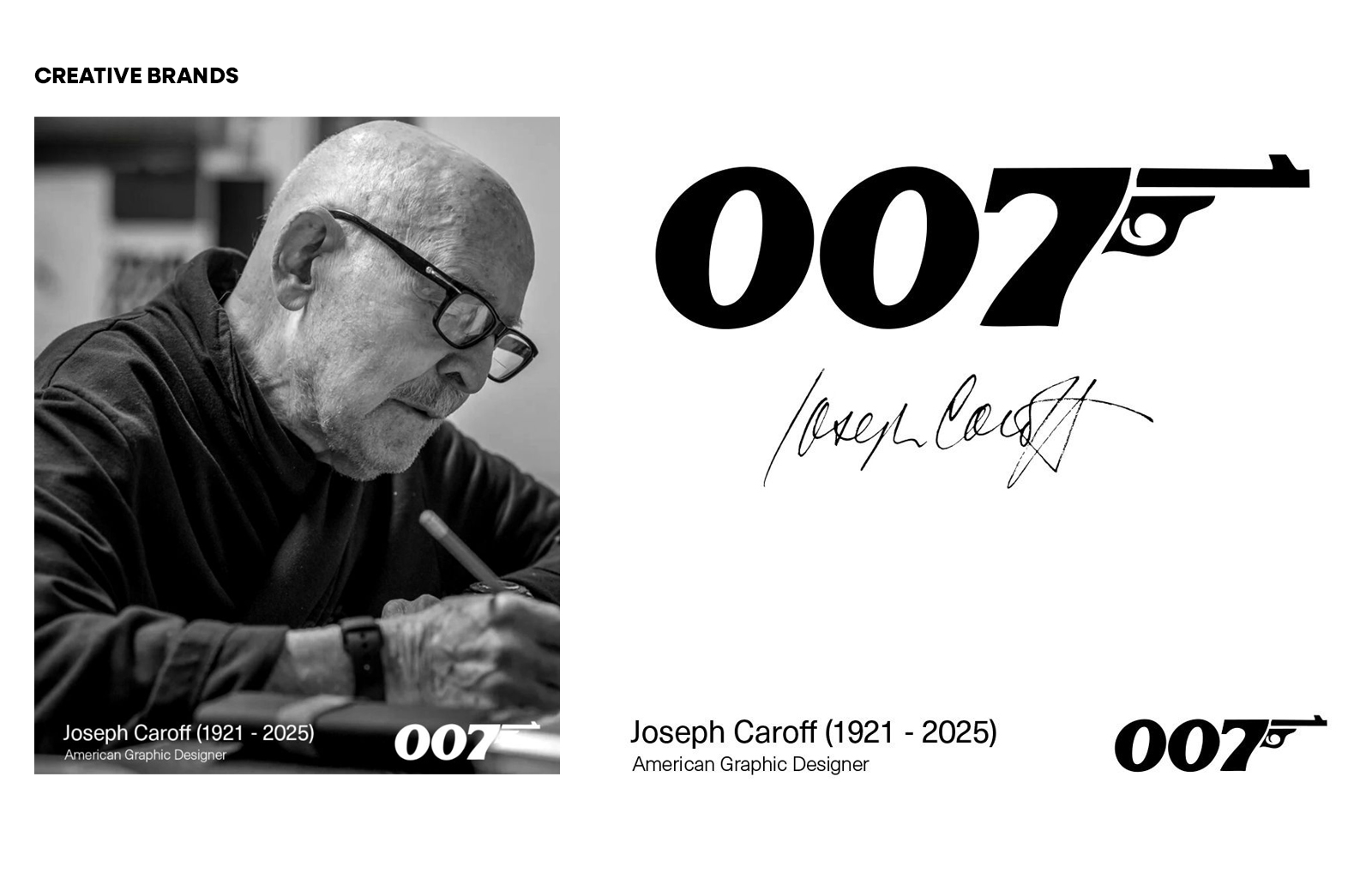
Joseph Caroff, the prolific American graphic designer who created the legendary James Bond 007 logo, has died aged 103. His work, spanning over 300 film campaigns including West Side Story and Cabaret, shaped cinematic history. Despite anonymity and modest pay, his designs became enduring cultural symbols celebrated worldwide.
Joseph Caroff, the man whose artistry gave James Bond its most recognisable emblem, died on 17 August 2025 at the age of 103. His passing marks the end of a remarkable life devoted to design, one that left an indelible imprint on cinema and popular culture.
Born in Linden, New Jersey, in 1921, Caroff’s early years were shaped by a fascination with visual storytelling. He studied at the Pratt Institute, honing his craft under the guidance of poster designer Jean Carlu. This apprenticeship instilled in him a discipline and precision that would later define his career. By the early 1960s, Caroff was already a respected figure in the world of graphic design, but it was a single commission in 1962 that would secure his place in cultural history.
That year, Caroff was asked to create a logo for Dr. No, the first James Bond film. His solution was deceptively simple yet brilliantly effective: the number “7” transformed into a gun, inspired by Ian Fleming’s Walther PPK. The design distilled Bond’s essence into a single image—sleek, dangerous, and unforgettable. Caroff was paid just $300 for the work, with no royalties and no credit. Yet the logo became a global symbol, appearing in every Bond film since, a visual shorthand for espionage, glamour, and danger.
Caroff’s contribution to Bond was only one chapter in a career that spanned more than 300 film campaigns. His posters for West Side Story, A Hard Day’s Night, Cabaret, and Manhattan captured the spirit of their times, blending artistry with marketing savvy. Each design was a narrative in itself, inviting audiences into the world of the film before they had seen a single frame.
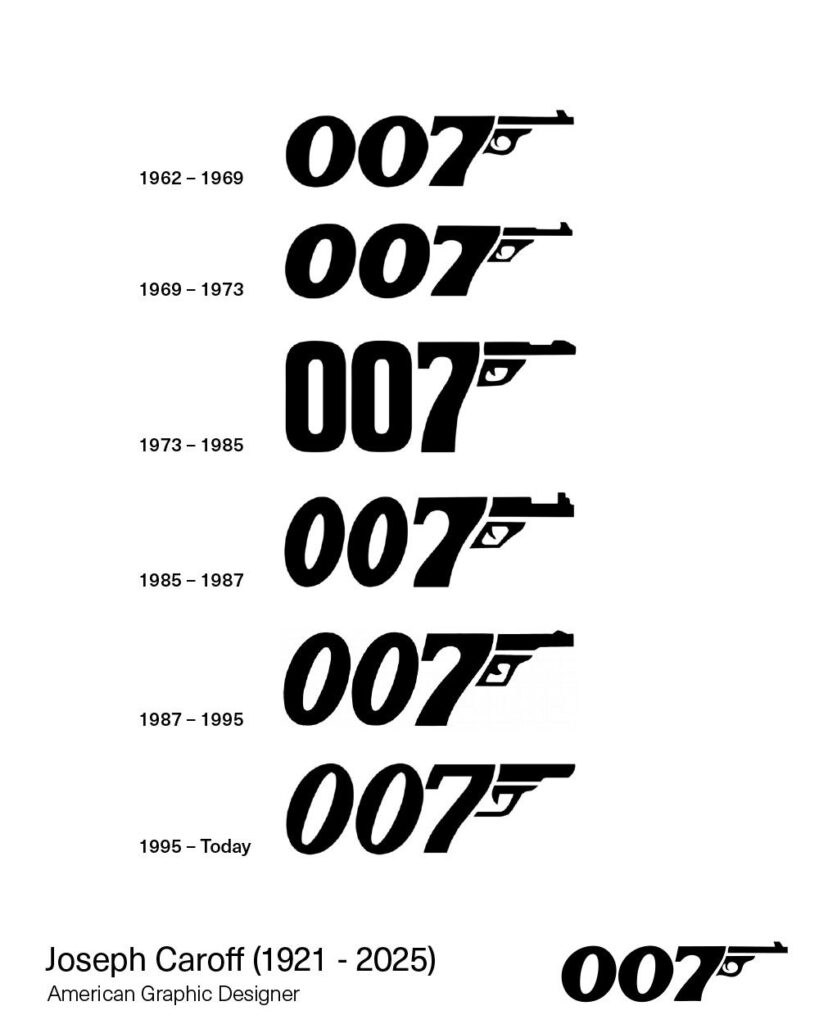
Much of Caroff’s work was anonymous, a reality of the industry in which designers often laboured behind the scenes while studios and directors took the spotlight. Yet his influence was everywhere. His ability to distil complex stories into striking visuals made him a trusted collaborator for filmmakers and studios alike. In 1965, he founded J. Caroff Associates, a firm that allowed him to expand his reach and mentor younger designers.
Caroff retired in 2006, turning his creative energy towards painting. This late chapter of his life was marked by a return to personal expression, free from the demands of commercial work. Yet even in retirement, his legacy continued to grow. In 2022, his career was celebrated in the documentary By Design: The Joe Caroff Story, which brought long-overdue recognition to his contributions. The film highlighted not only his Bond logo but also the breadth of his work across genres and decades.
Caroff’s story is emblematic of the quiet power of design. His creations were not mere decorations but cultural artefacts, shaping how audiences perceived films and, in the case of Bond, how they understood an entire franchise. The anonymity of his career underscores the paradox of design: its greatest successes are often invisible, absorbed seamlessly into the fabric of culture.
The Bond logo remains his most famous achievement, a design so iconic that it feels inevitable, as though it could never have been otherwise. Yet it was the product of a singular vision, a moment of inspiration that fused typography and imagery into something timeless. That Caroff received so little recognition at the time is a reminder of the undervalued role of designers in the film industry.
In reflecting on Caroff’s life, one sees a man who quietly shaped the visual language of cinema. His posters and logos were gateways, inviting audiences into stories that would define generations. His Bond logo, in particular, became more than a piece of design; it became a cultural symbol, instantly recognisable across the globe.
Discover more from Creative Brands Mag
Subscribe to get the latest posts sent to your email.













Leave a comment