


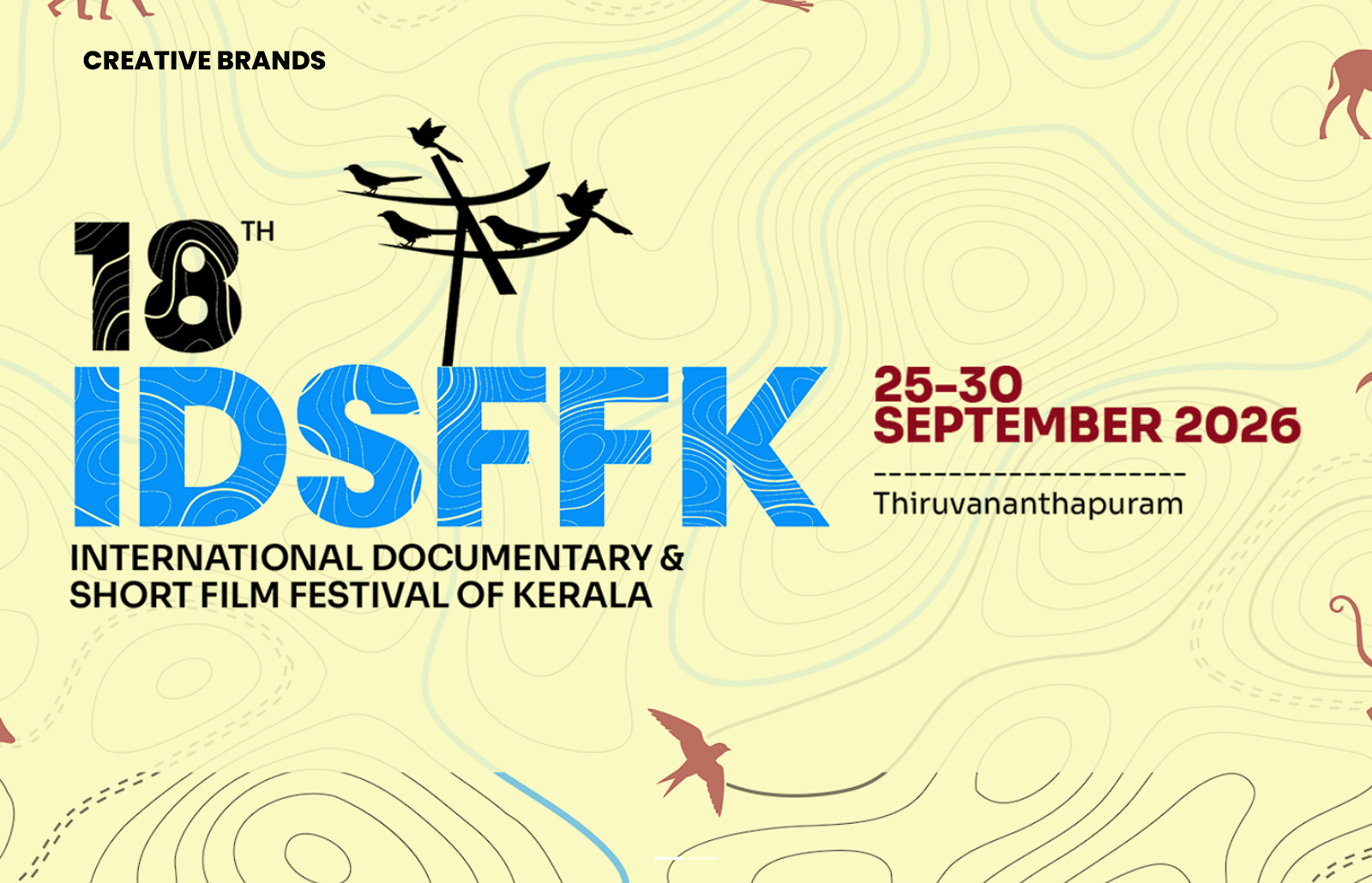
The International Documentary and Short Film Festival of Kerala has evolved into one of India’s most important platforms for documentary and short filmmaking. Organised by the Kerala State Chalachitra Academy, the festival celebrates diverse voices, technological democratisation and socially relevant storytelling, bringing filmmakers and audiences together for cinema, conversation and change.
In an age dominated by blockbuster budgets, streaming algorithms and the relentless race for attention, some of cinema’s most powerful stories continue to emerge from smaller screens, modest productions and independent voices. The International Documentary and Short Film Festival of Kerala, popularly known as IDSFFK, stands as a reminder that the size of a film does not determine the scale of its impact.
Over the years, the festival has grown into a significant platform for documentary and short filmmaking in India. Organised by the Kerala State Chalachitra Academy on behalf of the Department of Cultural Affairs, Government of Kerala, IDSFFK represents a sustained effort to encourage a vibrant movement in documentary and short cinema. Its larger purpose goes beyond screening films. It seeks to create a space where filmmakers, students, professionals and audiences can encounter stories that question, challenge, document and interpret the world around them.
The festival arrives at a particularly important moment in the history of moving images. Technology that was once available only to major studios and established production houses has become increasingly accessible. Cameras are more affordable, editing tools are widely available and digital platforms have opened new possibilities for filmmakers to create and share their work. The result has been an extraordinary expansion in the number of people capable of telling stories through the moving image.
This democratisation of technology lies at the heart of the changing world that IDSFFK seeks to represent. Filmmaking is no longer confined to those with large financial resources or access to traditional institutions. People from different social backgrounds and geographical locations can now use film to record their experiences, explore ideas and raise questions that may otherwise remain unheard.
For documentary filmmakers, this transformation has been particularly significant. Documentary cinema has always occupied a unique position between art and reality. It observes life, investigates events and gives shape to voices and experiences that may not find adequate space in mainstream media. A documentary can examine politics, society, history, the environment, culture or the intimate details of everyday life. A short film, meanwhile, can compress an idea, emotion or social observation into a brief but memorable cinematic experience.
IDSFFK provides a meeting ground for these forms of expression. The festival’s stated mission recognises the expanding nature of the medium and the growing role of filmmaking as a tool for expression, experimentation, learning and social change. It seeks to map the many dimensions of a medium that is constantly changing, embracing both creativity and resistance.
That word — resistance — is especially important. Independent filmmaking has often flourished because filmmakers have chosen to look where others have not. They have documented communities at the margins, questioned established narratives, preserved disappearing traditions and brought uncomfortable realities into public discussion. Documentary and short films frequently operate outside the commercial pressures that shape mainstream cinema, allowing creators greater freedom to experiment with form and subject.
For audiences, this makes a festival such as IDSFFK more than a cultural event. It becomes an opportunity to encounter unfamiliar worlds. A film may take viewers into a remote village, an urban neighbourhood, a family home, a workplace or a forgotten chapter of history. It may challenge assumptions or simply encourage audiences to see ordinary life differently.
The importance of this interaction between filmmaker and viewer is central to the philosophy of IDSFFK. The festival aims to encourage the participation of both film professionals and audiences through programmes designed to generate dialogue and debate. In doing so, it recognises that cinema does not end when the screen goes dark. The conversation that follows can be as important as the film itself.
For young filmmakers and students, such festivals also serve as an informal classroom. They offer exposure to different cinematic languages, storytelling methods and approaches to reality. A student who watches a carefully constructed documentary may learn about research, observation, editing, sound and narrative structure. Another may discover that a powerful film can be made from a deeply personal idea rather than an elaborate production.
The Kerala State Chalachitra Academy, which owns the official IDSFFK portal and organises the festival as part of its wider film activities, has positioned film festivals as an important element of Kerala’s cultural and cinematic ecosystem. Its objectives include conducting major film festivals, supporting film education and preserving and propagating Malayalam cinema.
The official IDSFFK portal itself reflects the festival’s attempt to make information more accessible. The revamped platform provides classification of films and programmes, along with separate sections for downloading festival-related documents and accessing information about different editions.
As filmmaking continues to change under the influence of smartphones, artificial intelligence, digital editing and online distribution, the fundamental challenge remains unchanged: finding a story worth telling and telling it with honesty and imagination. Technology may place a camera in more hands, but meaningful filmmaking still requires curiosity, sensitivity and a willingness to look closely at the world.
That is where the continuing relevance of IDSFFK lies. It celebrates not merely the documentary or the short film as formats, but the freedom to observe, question and create. In a media environment increasingly shaped by speed and spectacle, the festival offers space for another kind of cinema — one that pauses, listens and remembers.
The stories may be short. The films may be made with limited resources. Yet their questions can remain long after the audience leaves the theatre. And perhaps that is the enduring power of IDSFFK: it proves that when diverse voices are given a screen, even a small film can open a much larger conversation.
Discover more from Creative Brands Mag
Subscribe to get the latest posts sent to your email.











Leave a comment