


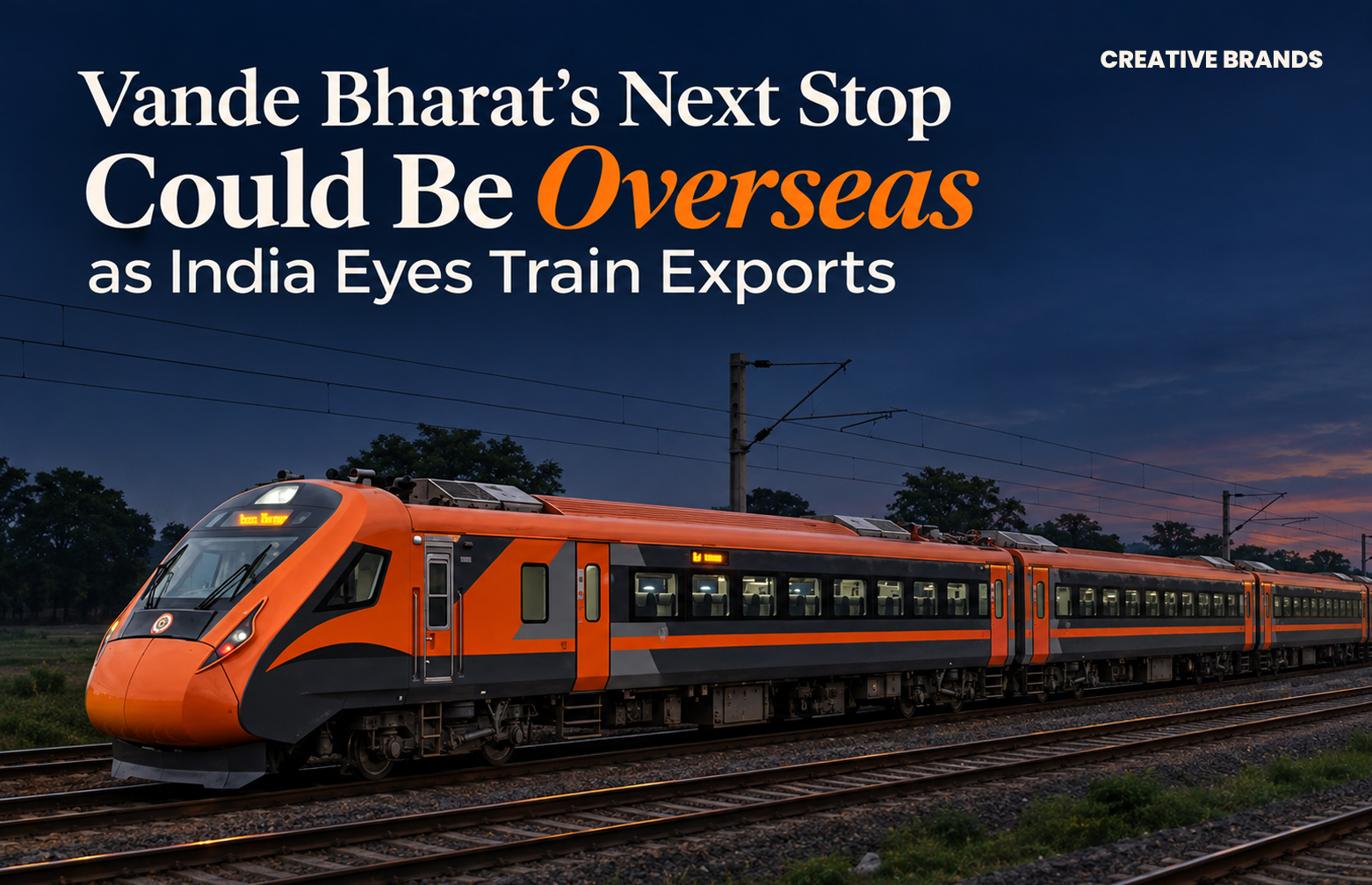
India is preparing to export its indigenous Vande Bharat trains within the next three to four years, according to Railway Minister Ashwini Vaishnaw. The announcement reflects growing confidence in the train’s performance and highlights Indian Railways’ continuing efforts to refine and upgrade the flagship service with every new generation.
India’s flagship Vande Bharat train could soon be heading beyond the country’s borders, with Railway Minister Ashwini Vaishnaw announcing that India is expected to begin exporting the indigenous train set within the next three to four years.
AI Generated.
The minister made the remarks after flagging off the Bengaluru-Mumbai Vande Bharat Sleeper train, describing the prospect of exports as a significant milestone for India’s rail manufacturing ambitions. The statement underlines the growing confidence of Indian Railways in a train that has become a symbol of the country’s push towards modern, home-grown transport solutions.
Vaishnaw expressed satisfaction with the performance of the latest generation of Vande Bharat trains, noting that the service had evolved considerably since its introduction. He said Indian Railways had focused on continuous improvement, with lessons from earlier models incorporated into successive versions to enhance passenger comfort, safety and operational efficiency.
The Vande Bharat programme has been one of the most visible outcomes of India’s efforts to modernise its rail network while promoting domestic manufacturing. Designed and built in India, the semi-high-speed train has steadily expanded its presence across the country, connecting major cities and offering faster travel times compared with many conventional services.
The launch of the Bengaluru-Mumbai Vande Bharat Sleeper train marks another step in that evolution. Unlike the chair-car versions that currently operate on several routes, the sleeper variant is intended for longer journeys, offering passengers the benefits of modern train technology on overnight services.
According to Vaishnaw, the latest generation reflects the cumulative improvements made over multiple iterations. Indian Railways has sought to refine various aspects of the train, ranging from design and onboard facilities to performance and reliability. The minister indicated that this process of constant upgrading would continue as the railway system responds to passenger expectations and operational requirements.
The prospect of exporting Vande Bharat trains also signals India’s ambition to establish itself as a competitive player in the global rail manufacturing market. If realised, exports would represent an important achievement for the country’s engineering and manufacturing sectors, showcasing a product that has been developed and tested in one of the world’s largest rail networks.
For Indian Railways, the move would be more than a commercial opportunity. It would serve as recognition of the technological capabilities built around the Vande Bharat project and reinforce the broader goal of positioning India as a supplier of advanced transport solutions.
While specific export destinations have not yet been identified, the government’s confidence in the train’s potential reflects the progress made since the first Vande Bharat services entered operation. With new versions continuing to roll out and sleeper services now joining the network, the train is poised to play an even greater role in India’s railway story.
If current plans proceed as envisaged, the next chapter for Vande Bharat may not be confined to Indian tracks. Within a few years, a train conceived and built in India could be carrying passengers in overseas markets, extending the reach of one of the country’s most prominent transport innovations.
Discover more from Creative Brands Mag
Subscribe to get the latest posts sent to your email.















Leave a comment