


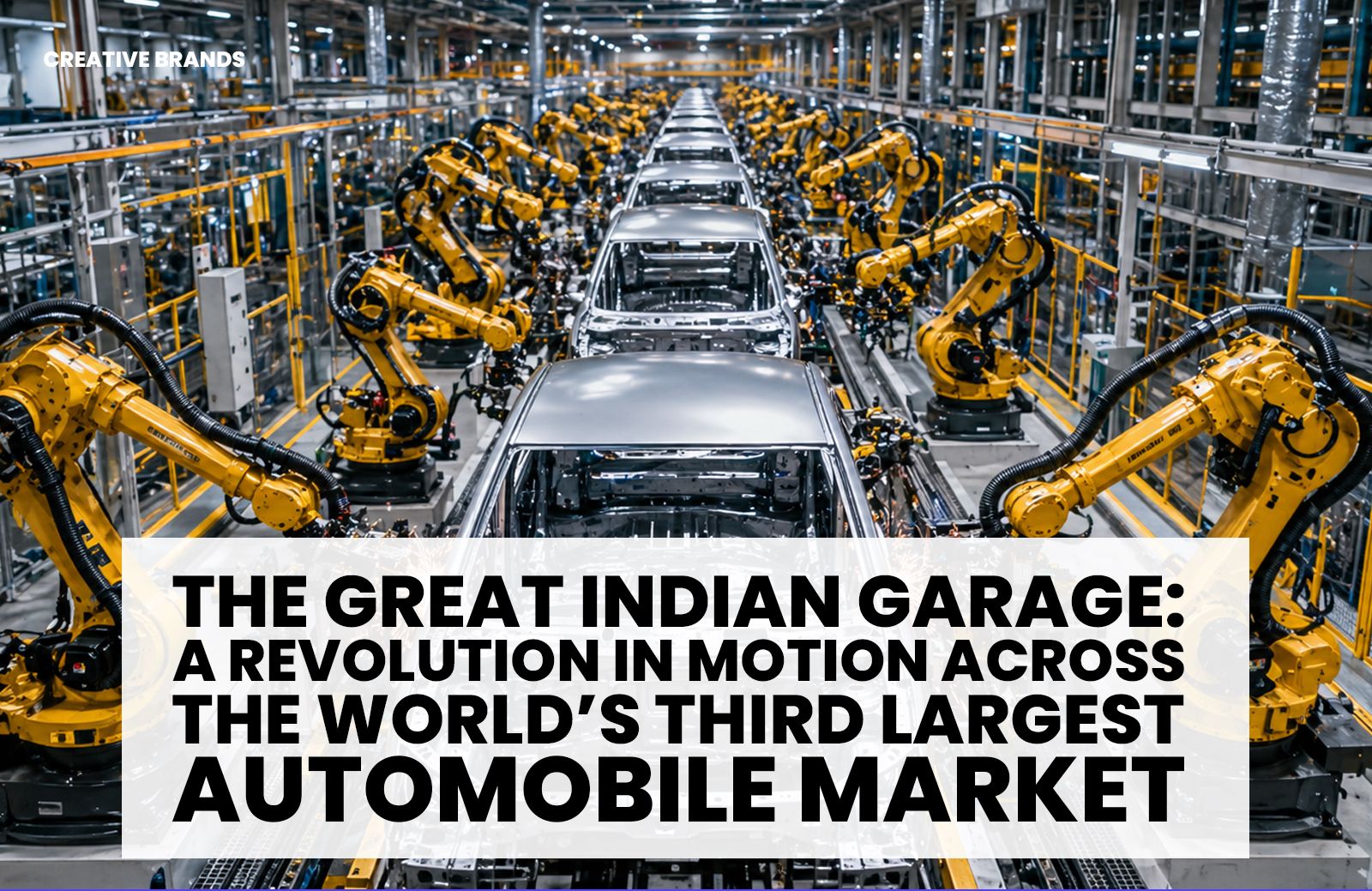
In 2026, India’s automobile sector will undergo a seismic shift, prioritising safety, electric mobility, and premium features. From Maruti Suzuki’s electric debut to Tata’s dominance in the EV sphere and the rise of “Born Electric” SUVs from Mahindra, this report explores the leadership, offerings, and evolving behaviours of the Indian consumer.
The dust has finally settled on the old highways of the subcontinent, replaced by the quiet hum of electric motors and the sophisticated chime of Advanced Driver Assistance Systems. As we traverse through 2026, the Indian automobile industry has not merely grown; it has matured into a sophisticated, multi-layered ecosystem that reflects the aspirations of a billion people. No longer just the world’s back-office, India has solidified its position as the third-largest automobile market globally, serving as a high-stakes battlefield where domestic champions and global titans clash for the loyalty of an increasingly discerning middle class.
At the heart of this transformation is a radical shift in the Indian psyche. The age-old question of “Kitna deti hai?” (How much mileage does it give?) has been replaced by “How many stars does it have?” and “What is the software interface like?” This evolution is driven by a cohort of visionary leaders who are navigating the delicate balance between traditional internal combustion engines and the relentless march of electrification.
Leading the charge is the perennial market leader, Maruti Suzuki India Limited. Under the operational guidance of Hisashi Takeuchi, the Managing Director and Chief Executive Officer, and the strategic chairmanship of the venerable R.C. Bhargava, Maruti Suzuki has finally broken its “EV silence.” For decades, the brand was synonymous with fuel-efficient hatchbacks, but the 2026 landscape sees them pivoting toward a more premium, high-tech identity. Their new flagship, the e Vitara—the production iteration of the long-awaited eVX—has become the symbol of this transition. It represents a bold step into the mid-SUV electric segment, designed to retain their massive customer base that is now looking for greener alternatives.
The company continues to bridge the gap with its Strong Hybrid technology, seen in the runaway success of the Grand Vitara and the premium Invicto. On their official portal, the company emphasises its commitment to the consumer experience, stating, “Accelerate into the world of Arena with the latest updates… An all-new loyalty program where customers are treated like family.” This focus on “family” remains the bedrock of their strategy, even as they modernise their fleet to include 4×4 capabilities and advanced safety suites across their “Nexa” and “Arena” outlets.
Across the metaphorical aisle stands Tata Motors, a company that has redefined itself as the pioneer of the Indian EV revolution. Led by Shailesh Chandra, the Managing Director of Passenger Vehicles and Electric Mobility, and under the chairmanship of Natarajan Chandrasekaran, Tata Motors has captured the imagination of the youth. Their 2026 portfolio is a masterclass in “Desi” ruggedness blended with global aesthetics. The Sierra EV, a nostalgic yet futuristic revival of a classic brand, and the Harrier EV, equipped with all-wheel-drive capabilities, have set new benchmarks for what an Indian car can achieve. Tata’s strategy has been to democratise electric mobility, and their website reflects a transparent, performance-driven culture, urging stakeholders to “Connect with our investor relations team and stay updated on our financial performance.” The Tata success story is rooted in the “Vocal for Local” movement, where safety ratings—consistently hitting the five-star mark in Bharat NCAP tests—have become their primary competitive advantage.
Mahindra & Mahindra, the “SUV specialists,” have taken a different but equally ambitious path. Under the leadership of CEO and MD Anish Shah and the charismatic Chairman Anand Mahindra, the company has launched its “Born Electric” range. The BE.05 and the XEV 9e are not just cars; they are digital entities on wheels, boasting some of the most radical designs seen in the Indian market. The company’s philosophy has always been about more than just machinery; as their official site notes, “Our Purpose: Drive positive change in the lives of our communities.” This community-centric approach, coupled with the cult-like following of the Thar and Scorpio-N, has allowed Mahindra to command a premium in the market.
The global players are not sitting idly by. Hyundai Motor India made history recently by appointing Tarun Garg as its first Indian Managing Director and CEO, a move that signals the importance of local leadership in understanding the nuances of the Indian buyer. Garg, as described on the company’s platform, “is a firm believer of People First leadership, underscoring empathy, collaboration and empowerment as the cornerstones of organisational success.” Hyundai’s 2026 lineup is headlined by the Creta EV, a vehicle that has the potential to become the highest-selling electric SUV in the country, given the legendary status of its internal combustion predecessor.
Similarly, Toyota Kirloskar Motor, led by Masakazu Yoshimura, has doubled down on its “Hybrid First” strategy. By focusing on the Innova Hycross and the Urban Cruiser Taisor, Toyota has tapped into the segment of buyers who want the efficiency of an EV without the range anxiety. Their website highlights their success in “Securing new customers, new technology agreements, and significant order booking,” a sentiment echoed by their customer-first approach.
Honda Cars India, under the leadership of President and CEO Takashi Nakajima, is navigating a path of resurgence. While the Elevate remains their mainstay, the push toward an Elevate EV and a new sub-compact SUV shows a brand that is listening to the market’s demand for high-riding vehicles. Meanwhile, the luxury segment is being redefined by Mercedes-Benz India. Managed by MD and CEO Santosh Iyer, the brand has successfully brought “Top End Luxury” to India with the EQS SUV and the new long-wheelbase E-Class.
The two-wheeler market, the true lifeline of Indian mobility, is experiencing its own radical transformation. Bajaj Auto, led by the outspoken Rajiv Bajaj, has stunned the world with the Freedom 125, the world’s first mass-produced CNG motorcycle. This innovation addresses the rising cost of fuel for the common man while their Chetak electric scooters cater to the urban elite.
Hero MotoCorp, with Niranjan Gupta as CEO and Pawan Munjal as Chairman, has pivoted toward premium motorcycles like the Mavrick 440 and the expansion of their Vida EV brand.
Not to be outdone, TVS Motor Company, led by K.N. Radhakrishnan, has become the “performance” choice for the youth. The Apache RTR 310 and the iQube ST variants are dominant forces.
In the commercial and niche sectors, Ashok Leyland and Force Motors are driving the nation’s infrastructure and specialised transport. Ashok Leyland, under Shenu Agarwal and Chairman Dheeraj Hinduja, is leading the green hydrogen and electric bus revolution through their Switch Mobility arm.
Force Motors, led by Prasan Firodia and Chairman Abhay Firodia, has found immense success with the 5-door Gurkha and their near-monopoly in the ambulance and school bus segments with the Traveller.
What connects all these disparate companies is the evolving Indian consumer. In 2026, the buyer is younger, more tech-savvy, and remarkably less brand-loyal than previous generations. They are influenced by digital reviews, social media presence, and the availability of “smart” features like ventilated seats, 360-degree cameras, and large infotainment screens. There is a palpable shift toward “Premiumisation.” Even entry-level buyers are willing to stretch their budgets for better safety kits and sunroofs. The success of Bharat NCAP has created a culture where a car’s structural integrity is a point of pride, moving the conversation away from just aesthetics to genuine engineering quality.
Furthermore, the “SUV-ification” of the Indian road is complete. Over half of all passenger vehicles sold in 2026 fall into the SUV or Crossover category. This preference is driven by India’s diverse topography—where high ground clearance is a practical necessity—and a psychological desire for a “commanding” driving position. The rise of rural wealth has also expanded the market for brands like Mahindra and Maruti, as the hinterlands demand vehicles that are both rugged and status-symbolic.
As we look toward the latter half of the decade, the infrastructure for electric vehicles is finally catching up with the ambition of the manufacturers. Thousands of fast-chargers now dot the national highways, making inter-city EV travel a reality rather than a risk. The government’s continued support through production-linked incentive (PLI) schemes has encouraged local manufacturing of battery cells, which is expected to bring down the cost of EVs even further in the coming years.
The Indian automobile industry in 2026 is a testament to resilience and rapid adaptation. Whether it is the hydrogen-powered ambitions of Ashok Leyland, the CNG innovations of Bajaj, or the luxury electric glitz of Mercedes-Benz, the message is clear: India is no longer following global trends; it is setting them. The leaders mentioned—from Hisashi Takeuchi to Anish Shah—are not just selling cars; they are selling a new Indian dream that is safe, sustainable, and undeniably high-tech. For the investor, the enthusiast, or the daily commuter, the road ahead has never looked more promising, or more electric.
Discover more from Creative Brands Mag
Subscribe to get the latest posts sent to your email.











Leave a comment