


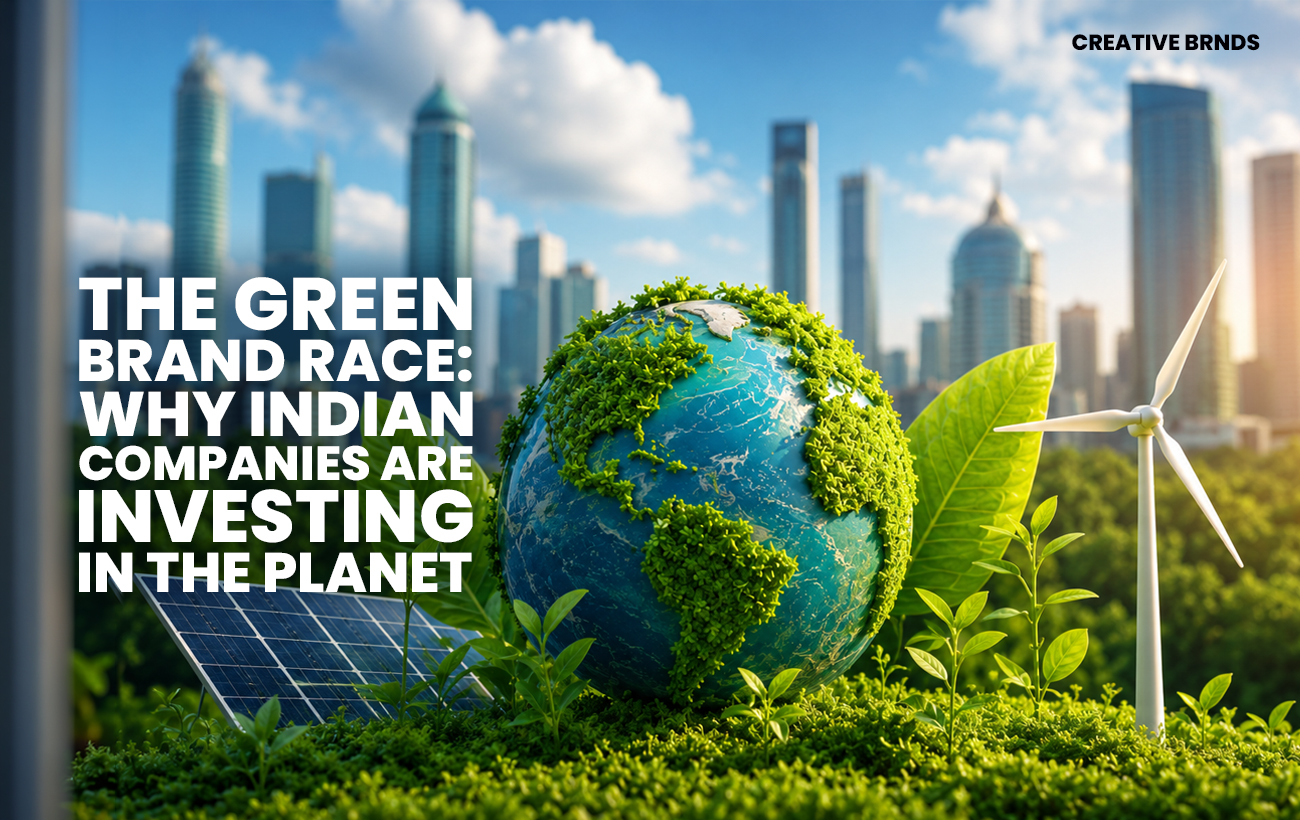
Every year, World Environment Day prompts Indian brands to showcase their environmental commitments. While some campaigns are symbolic, many companies are investing significant CSR funds in afforestation, water conservation, renewable energy and sustainable packaging. As climate concerns grow, environmental responsibility is increasingly becoming a core business strategy rather than merely a public relations exercise.
World Environment Day, observed annually on 5 June, has evolved from a calendar event into a major platform for corporate sustainability. Across India, companies use the occasion to launch environmental campaigns, announce green initiatives, unveil sustainability reports and showcase their Corporate Social Responsibility (CSR) projects. Yet an important question remains: are Indian brands genuinely committed to protecting the environment, or are they merely using the day for brand visibility?
The answer lies somewhere in between. While a few companies continue to rely on symbolic plantation drives and social media campaigns, a growing number of Indian brands have integrated environmental protection into their long-term business strategies. Increasing regulatory pressure, investor expectations, consumer awareness and climate-related risks have pushed sustainability from the margins to the boardroom.
India’s CSR framework, introduced through the Companies Act, 2013, has played a crucial role in this transformation. Companies meeting specified financial thresholds are required to spend at least two per cent of their average net profits on CSR activities. Environmental sustainability, ecological balance, conservation of natural resources and biodiversity protection are among the approved CSR categories. As a result, substantial corporate funding now flows into environmental projects across the country.
World Environment Day often serves as the public face of these efforts. It is the day when companies showcase achievements, announce new commitments and engage consumers in sustainability conversations.
Among India’s most notable environmental success stories is the Tata Group. Sustainability has long been embedded within the group’s corporate philosophy. Through various Tata companies and trusts, extensive afforestation programmes, watershed management projects and renewable energy investments have been undertaken across India. Research examining CSR-driven carbon sequestration projects has highlighted Tata’s large-scale afforestation efforts as a significant contribution to environmental conservation. These initiatives demonstrate how environmental responsibility can extend beyond compliance into long-term ecological restoration.
Another frequently cited example is ITC Limited. Once associated primarily with tobacco products, ITC has emerged as one of India’s most recognised sustainability leaders. Its watershed development programmes have helped improve water availability in drought-prone regions while supporting agricultural communities. The company’s integrated approach combines water conservation, soil enrichment and sustainable farming practices. Through collaborations with governments, institutions and local communities, ITC has demonstrated how environmental protection can generate both ecological and economic benefits.
The Mahindra Group offers another compelling case study. Its flagship afforestation initiative, Project Hariyali, has become one of India’s longest-running corporate tree-planting programmes. Launched in 2007, the project has reportedly resulted in the planting of millions of trees across multiple states. More importantly, the initiative has evolved from simple plantation targets towards ecosystem restoration, focusing on biodiversity, native species and long-term environmental impact.
Reliance Industries has increasingly positioned itself as a sustainability-focused conglomerate. While the company continues to invest heavily in renewable energy infrastructure, it also uses World Environment Day to promote circular economy initiatives. In 2025, its sustainable textile brand introduced Earth Tee 7.0, produced using recycled PET bottles collected from major public events. The initiative reflected a growing trend among Indian brands to address plastic waste through innovative product design and recycling.
The consumer goods sector has become particularly active in linking environmental action with business operations. Marico, one of India’s leading FMCG companies, marked World Environment Day by launching a Packaging Material Circularity Score framework. The initiative seeks to evaluate the environmental impact of packaging materials and identify opportunities to improve sustainability across product lines. Such efforts indicate a shift from isolated CSR activities towards integrating environmental objectives directly into product development and supply chains.
Packaging sustainability is increasingly becoming a key battleground for Indian brands. Ahead of World Environment Day 2026, Mother Dairy launched what it described as India’s first naturally degradable milk pouch. The innovation aims to address one of the country’s most pressing environmental challenges: plastic waste. As consumers become more environmentally conscious, sustainable packaging solutions are emerging as both a business opportunity and a social responsibility.
The automotive industry has also embraced environmental responsibility as a strategic priority. Companies are investing in electric mobility, renewable energy and carbon reduction initiatives. Manufacturers such as Toyota Kirloskar Motor have aligned their sustainability programmes with global carbon-neutrality goals while focusing on cleaner manufacturing practices, resource conservation and community-based environmental projects.
World Environment Day has become a showcase for such commitments. Corporate announcements often include targets related to carbon neutrality, renewable energy adoption, water positivity and waste reduction. Bharat Aluminium Company (BALCO), for example, used the occasion to highlight its renewable energy initiatives, water conservation efforts and afforestation projects while reiterating long-term climate goals.
Despite these encouraging developments, critics argue that not all corporate environmental campaigns are equally meaningful. Environmentalists frequently point out that large-scale plantation drives announced on World Environment Day often focus on the number of saplings planted rather than their survival rates. Similarly, social media campaigns can sometimes create an impression of environmental commitment without corresponding long-term action.
The challenge of “greenwashing” remains a concern globally and in India. Consumers today are increasingly sceptical of sustainability claims that are not supported by measurable outcomes. Consequently, companies are under pressure to provide transparent reporting on carbon emissions, water usage, waste management and biodiversity impacts.
Encouragingly, many Indian corporations have responded by publishing detailed sustainability reports and adopting internationally recognised environmental standards. Investors are also paying closer attention to Environmental, Social and Governance (ESG) performance. Companies that fail to demonstrate credible environmental action may find themselves facing reputational risks and reduced investor confidence.
Another significant trend is the shift from charity-based CSR to strategic sustainability investments. Earlier CSR activities often centred on one-time tree plantations or awareness campaigns. Today’s leading companies are investing in renewable energy projects, watershed development, sustainable agriculture, circular economy models and climate resilience programmes that generate long-term environmental benefits.
The business case for environmental responsibility is becoming increasingly clear. Research has suggested a positive relationship between environmental spending and corporate performance, indicating that sustainability investments can support profitability while enhancing reputation and stakeholder trust.
World Environment Day therefore serves a dual purpose. It remains a platform for awareness and public engagement, but it also acts as an annual accountability moment for companies. Consumers, investors and regulators use the occasion to assess whether brands are making meaningful progress towards environmental goals.
India’s environmental challenges are immense. Air pollution, water scarcity, biodiversity loss, waste management and climate change continue to threaten sustainable development. Government action alone cannot solve these problems. Corporate participation, supported by CSR investments and sustainable business practices, has become an essential part of the solution.
The most successful Indian brands increasingly understand that environmental stewardship is no longer optional. It is becoming a business imperative. Consumers expect it. Investors demand it. Regulators encourage it. Employees value it.
As World Environment Day continues to grow in significance, the distinction between marketing and meaningful action will become even more important. The companies that succeed in the coming decades are likely to be those that move beyond symbolic gestures and embed sustainability into every aspect of their operations.
For many Indian brands, that journey has already begun. The challenge now is to ensure that the green promises made every 5 June translate into measurable environmental gains throughout the other 364 days of the year.
Discover more from Creative Brands Mag
Subscribe to get the latest posts sent to your email.
















Leave a comment