


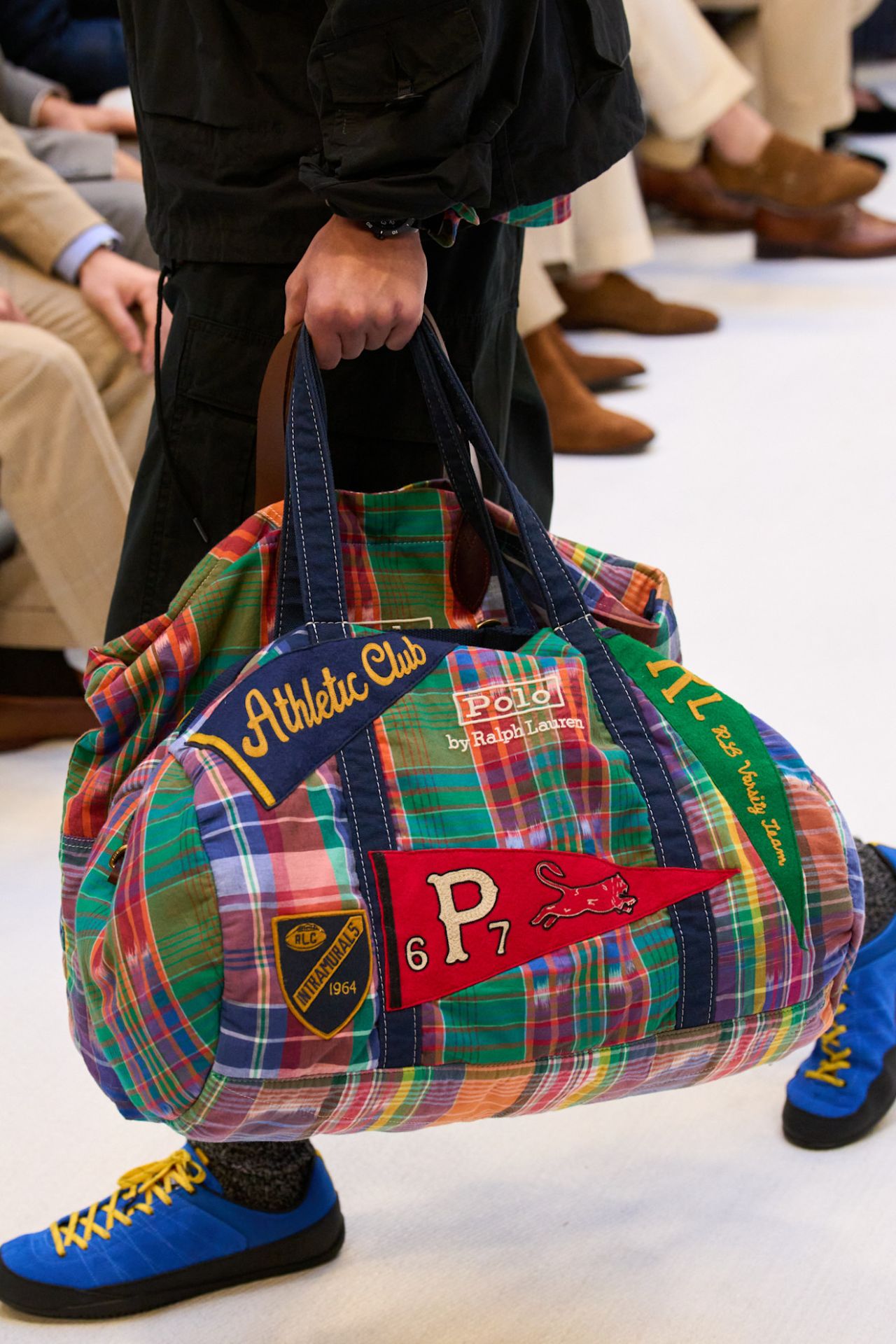
The spring/summer 2027 men’s shows in Paris and Milan confirmed bags as central to luxury fashion. Dior and Ralph Lauren showcased oversized totes, Armani unveiled soft leather hobos, while Louis Vuitton and AMI PARIS elevated drawstrings. Dries Van Noten and Taakk redefined functionality, positioning men’s bags as cultural and commercial drivers.
The spring/summer 2027 men’s runway shows in Paris and Milan confirmed that bags have moved beyond accessory status to become strategic drivers for luxury houses. From Dior’s oversized woven totes to Louis Vuitton’s sculptural drawstrings, designers redefined functionality and form, positioning men’s bags as central to fashion’s evolving narrative.
The men’s collections unveiled across Paris and Milan this season underscored a decisive shift in luxury fashion: men’s bags are no longer peripheral adornments but pivotal statements of identity, commerce and creativity. Once considered secondary to tailoring or footwear, bags now command the spotlight, shaping both the aesthetic and strategic direction of leading houses.
Christian Dior Couture Homme, under Jonathan Anderson, and Ralph Lauren set the tone with oversized woven totes that balanced practicality with grandeur. These expansive designs spoke to a modern lifestyle where mobility and visibility converge, offering men a bag that is both functional and emblematic of status. Giorgio Armani, meanwhile, softened the narrative with plush leather hobo silhouettes, their supple construction evoking ease and intimacy, a counterpoint to the structured dominance of traditional men’s accessories.
Pharrell Williams at Louis Vuitton and Alexandre Mattiussi at AMI PARIS injected sculptural energy into casual closures, elevating the humble drawstring into an object of design intrigue. Their interpretations suggested that even the most relaxed forms can be reimagined as luxury statements, blurring the line between utility and artistry.
Elsewhere, Julian Klausner at Dries Van Noten and Takuya Morikawa at Taakk challenged conventional notions of functionality. Klausner’s folded clutches introduced a new vocabulary of compact elegance, while Morikawa’s architectural top-handle carry-alls fused geometry with craftsmanship, offering men accessories that are as much about design innovation as they are about daily use.
The collective impact of these presentations was unmistakable. Bags emerged not as afterthoughts but as central protagonists in the storytelling of each house. They embodied the evolving desires of male consumers, who increasingly seek accessories that reflect individuality, versatility and cultural relevance. For luxury brands, the bag has become a strategic cornerstone, driving desirability and commercial growth in equal measure.
Critics noted that the season’s emphasis on bags reflects broader shifts in consumer behaviour. As men embrace accessories with greater confidence, designers are responding with collections that prioritise bags as vehicles of expression. The oversized tote, the sculptural drawstring, the folded clutch and the architectural carry-all each represent a facet of contemporary masculinity, refracted through the lens of luxury.
In Paris and Milan, the spring/summer 2027 shows thus marked a turning point. Men’s bags have transcended their role as functional companions to become cultural artefacts, shaping the narrative of modern luxury. For the houses that unveiled them, the message was clear: the future of men’s fashion will be carried not just in the cut of a suit, but in the bag slung over the shoulder or clasped in the hand.
Discover more from Creative Brands Mag
Subscribe to get the latest posts sent to your email.















Leave a comment