


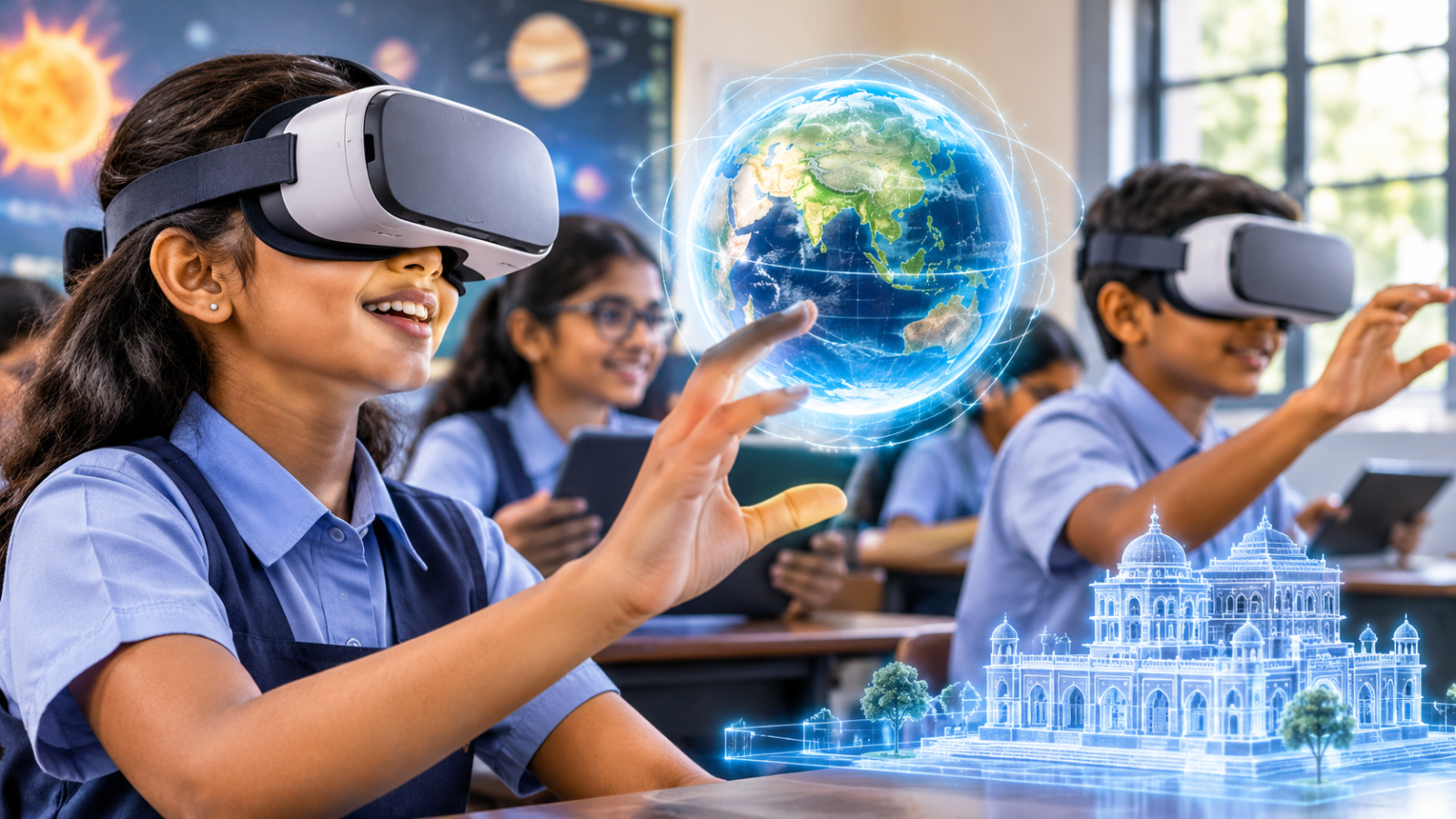
India is witnessing a gradual transformation in education and public spaces through augmented and virtual reality. As immersive technologies enter classrooms, museums and urban planning, access to reliable devices is becoming essential. Kachhua Solutions is addressing this challenge with more than 600 Lenovo K Series tablets, enabling consistent AR/VR learning experiences.
India is quietly embracing a technological transformation that could redefine how people learn, experience culture and interact with the world around them. Beyond the familiar advances in smartphones, digital payments and financial technology, augmented reality (AR) and virtual reality (VR) are beginning to find a place in classrooms, museums and urban planning offices. These immersive technologies are opening up new possibilities, changing the way information is presented, understood and experienced.
Unlike conventional digital tools, AR and VR offer experiences that go beyond viewing information on a screen. Augmented reality adds digital elements to the physical environment, while virtual reality transports users into computer-generated surroundings. Together, they are creating opportunities for more interactive and engaging ways of learning, exploring and visualising complex ideas.
In education, the potential is particularly significant. Traditional classroom teaching often relies on textbooks, diagrams and verbal explanations to communicate concepts. Immersive technologies can make these lessons more experiential, allowing students to explore subjects through three-dimensional visualisations and interactive environments. Scientific processes, historical events and geographical landscapes, for instance, can become easier to understand when students can experience them rather than simply read about them.
However, introducing immersive learning into classrooms involves more than developing innovative software or creating engaging digital content. The technology must also be accessible, dependable and consistent across the devices used by students and teachers. Differences in hardware capabilities can affect the quality of the experience, making device compatibility an important consideration in the successful adoption of AR and VR.
This is where Kachhua Solutions is positioning itself as an enabler of immersive education. The company has deployed more than 600 Lenovo K Series tablets to support the delivery of augmented and virtual reality lessons across the classrooms it serves. The initiative addresses a practical challenge in digital education: ensuring that immersive learning experiences function consistently across multiple devices.
The deployment highlights the importance of reliable hardware in making emerging educational technologies accessible. When students in different classrooms use compatible devices, teachers can deliver lessons with greater consistency, while learners can engage with the same digital experiences without significant variations in performance.
The Lenovo K Series tablets, therefore, represent more than an addition to classroom equipment. They form part of the technological infrastructure required to translate the promise of immersive learning into everyday educational practice.
The applications of AR and VR, meanwhile, extend well beyond schools. Museums can use augmented reality to provide additional information about exhibits and recreate historical settings, offering visitors a more engaging understanding of cultural heritage. In urban planning, virtual reality can help professionals visualise proposed buildings, public spaces and infrastructure before construction begins. Such applications demonstrate how immersive technologies could influence several aspects of public life.
India’s growing engagement with these technologies also raises important questions about accessibility, affordability and infrastructure. For immersive learning to reach a wider student population, institutions need appropriate devices, dependable connectivity, suitable digital content and trained educators. Technology must complement teaching rather than become an end in itself.
The transition is unlikely to happen overnight. Yet initiatives such as Kachhua Solutions’ deployment of more than 600 Lenovo tablets indicate how the foundations for wider adoption are being established.
India’s digital transformation is entering a new phase, one in which technology is no longer limited to connecting people or delivering information. It is increasingly about creating experiences that allow people to explore, understand and interact with knowledge in different ways. As AR and VR move from experimental applications into everyday environments, the classroom could become one of the most important places where this transformation takes shape.
Discover more from Creative Brands Mag
Subscribe to get the latest posts sent to your email.















Leave a comment