


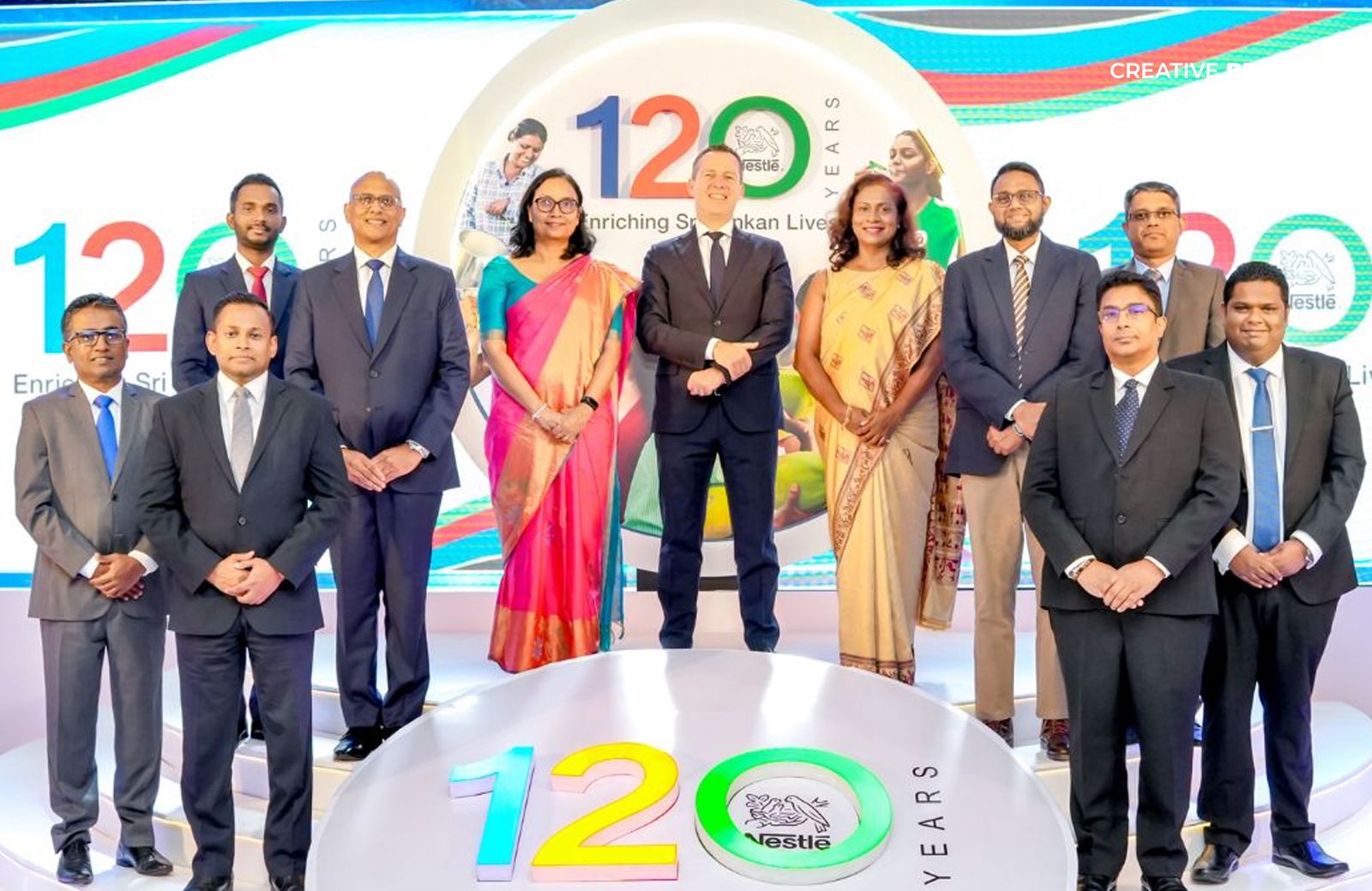
Nestlé Lanka will invest around Rs. 9 billion in expanding manufacturing operations as it marks 120 years in Sri Lanka. The move aims to boost global exports of coconut-based products while reinforcing the country’s role as a regional hub, underscoring the company’s long-term confidence in Sri Lanka’s market potential.
As it celebrates 120 years of operations in Sri Lanka, Nestlé Lanka has announced plans to invest approximately Rs. 9 billion over the coming years to expand its manufacturing capabilities, reinforcing both its export ambitions and its long-standing commitment to the island nation.
The investment will focus primarily on strengthening the company’s production capacity for coconut-based products, particularly coconut milk powder, which has seen growing demand across international markets. According to Nestlé, Sri Lanka’s reputation for producing high-quality coconut products positions the country as a natural export hub within the company’s regional network.
Bernie Stefan, Chairman and Managing Director of Nestlé Lanka, said the planned expansion reflects the company’s confidence in Sri Lanka’s long-term potential, even after a period marked by significant economic challenges. The country has experienced one of the most difficult economic phases in its recent history, yet Nestlé continued to invest in its local operations throughout the downturn.
“Even during the very challenging economic period over the past few years, we did not stop investing,” Stefan said. “That reflects our confidence in Sri Lanka and the long-term potential of this market.”
The multinational food and beverage company’s relationship with Sri Lanka stretches back more than a century, making it the oldest market for Nestlé within its South Asia cluster. The region, which includes Sri Lanka, India and Bangladesh, forms a key part of the company’s growth strategy, but Sri Lanka holds a distinctive place within that portfolio.
“Sri Lanka is a very important market within our South Asia region,” Stefan noted. “Among these three countries — Sri Lanka, India and Bangladesh — Sri Lanka is our oldest market. Nestlé entered Sri Lanka before India, and Bangladesh came much later.”
That early entry has allowed the company to build a deeply entrenched presence in the country, supported by strong consumer recognition and a mature product ecosystem. Unlike many emerging markets in the region, Sri Lanka has evolved into one of Nestlé’s most developed consumer bases in South Asia.
Stefan pointed to per-capita consumption as evidence of the country’s relative maturity. On that measure, revenue generated from Sri Lanka is significantly higher than from its much larger neighbours.
“On a per-capita basis, revenue from Sri Lanka is about eight times higher than in India or Bangladesh,” he explained.
The mature nature of the market, he added, opens up opportunities for innovation and premiumisation — two areas increasingly central to the company’s global strategy. Rather than focusing solely on volume growth, Nestlé sees scope to introduce more advanced products and value-added offerings to Sri Lankan consumers.
This approach aligns with wider shifts in the global food and beverage industry, where companies are increasingly investing in differentiated products, functional ingredients and premium positioning to capture evolving consumer preferences.
At the same time, Sri Lanka’s agricultural strengths continue to play a vital role in Nestlé’s export ambitions. The country’s coconut industry in particular offers a strong competitive advantage, enabling the company to supply high-quality coconut milk powder and related products to international markets.
By expanding manufacturing capacity locally, Nestlé aims to tap into rising global demand while supporting Sri Lanka’s position as a strategic production and export base.
Although the company’s cumulative investment in Sri Lanka over its 120-year history is difficult to quantify, Stefan noted that Nestlé has consistently contributed to the country’s economic development through employment, supply chain partnerships and export revenues.
Over the decades, the company has built extensive relationships with local farmers and suppliers, helping to integrate Sri Lankan agricultural products into global value chains. These linkages have become increasingly important as international demand grows for sustainably sourced and traceable ingredients.
The latest investment commitment signals that Nestlé sees Sri Lanka not only as a mature consumer market but also as a long-term manufacturing hub capable of serving regional and global demand.
As the company enters its second century in the country, the Rs. 9 billion expansion represents both a continuation of its historic presence and a forward-looking bet on Sri Lanka’s role in the global food supply chain. For Nestlé, the island’s legacy market status is now coupled with renewed strategic importance — one shaped by export potential, innovation opportunities and enduring consumer loyalty.
Discover more from Creative Brands Mag
Subscribe to get the latest posts sent to your email.














Leave a comment