


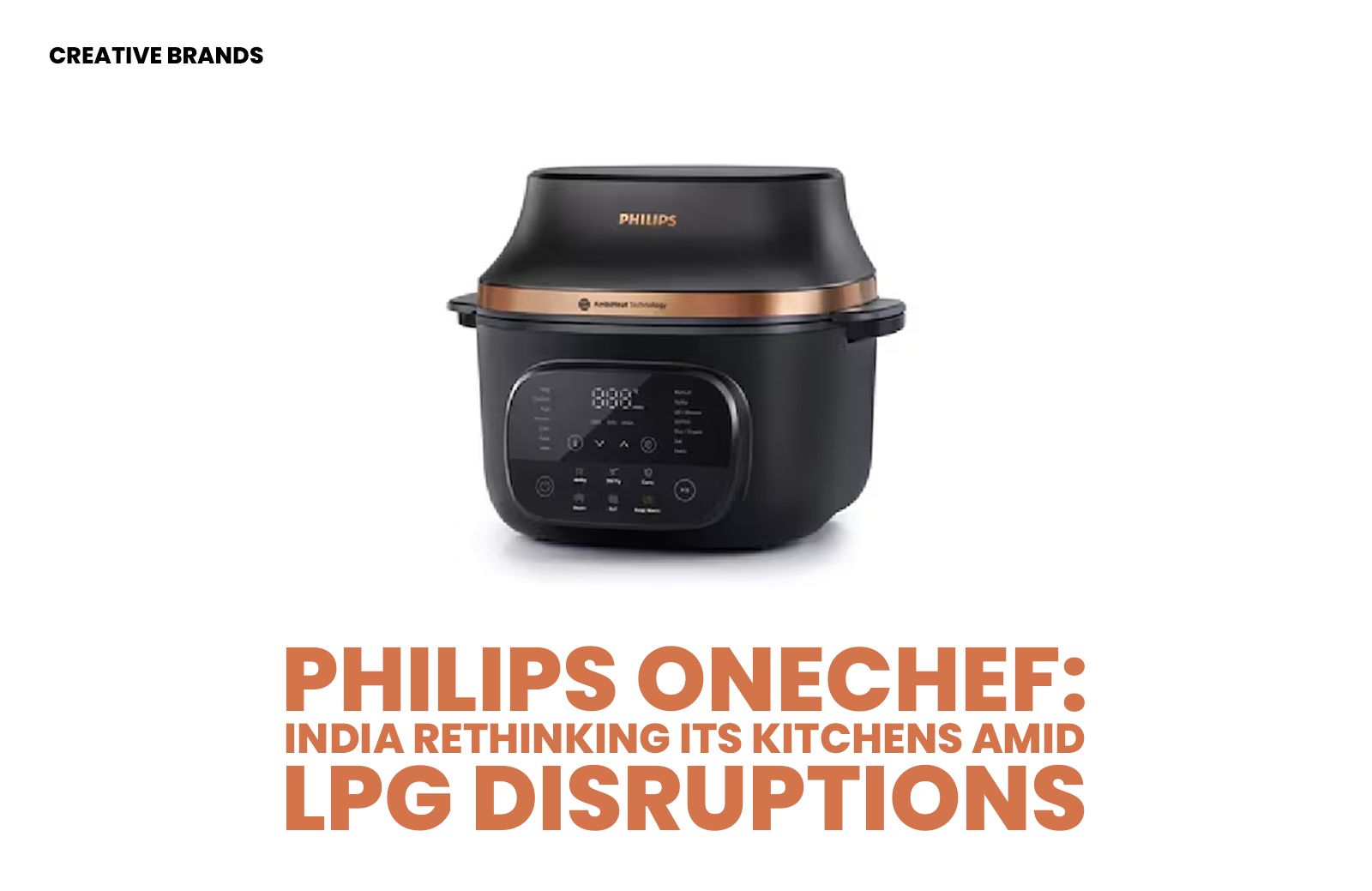
Philips has launched its OneChef appliance in India as LPG shortages disrupt household cooking. Triggered by geopolitical tensions and supply chain constraints, the crisis is pushing consumers towards electric alternatives. The launch highlights a broader shift in cooking habits, with multifunctional electric appliances emerging as practical solutions in uncertain energy conditions.
As Indian households confront an increasingly uncertain supply of cooking gas, Philips has introduced its latest all-in-one kitchen appliance, OneChef, positioning it as a future-ready solution for a rapidly changing domestic landscape. The company maintains that the launch is not linked to current events, yet the timing has inevitably drawn attention as the country navigates a deepening LPG crisis.
The disruption stems largely from escalating tensions in West Asia, particularly the ongoing conflict between the United States and Iran. The geopolitical fallout has severely impacted the Strait of Hormuz, a narrow but critical maritime corridor through which nearly 90 per cent of India’s LPG imports typically pass. With blockades and heightened security risks constraining shipping movements, India’s energy supply chains have come under visible strain.
For millions of Indian households reliant on subsidised LPG cylinders, the consequences have been immediate and tangible. Delays in cylinder deliveries have become commonplace, while refill costs have climbed due to the need for alternative sourcing from more distant and expensive markets. In response, the government has prioritised domestic consumption and initiated rationing measures, attempting to cushion the impact on vulnerable households while managing limited supplies.
Against this backdrop, the introduction of OneChef appears to align closely with an emerging consumer need. Electric cooking solutions, once seen as supplementary or aspirational, are now gaining traction as practical alternatives. Induction cooktops, electric pressure cookers, and multifunctional appliances are witnessing renewed interest, driven not just by convenience but by necessity.
Philips’ OneChef enters this evolving ecosystem as a device designed to consolidate multiple cooking functions into a single unit. By reducing dependence on LPG and offering versatility across cooking styles, such appliances cater to urban consumers seeking efficiency as well as to households exploring backup solutions in the face of supply disruptions. The company’s messaging around “future-ready kitchens” resonates more strongly in the current climate, where energy reliability has become a central concern.
Industry observers suggest that crises of this nature often act as inflection points for behavioural change. Much like earlier shifts towards digital payments or renewable energy adoption, the present LPG shortage could accelerate a transition towards electric cooking infrastructure in India. While affordability, electricity access, and cultural cooking preferences remain factors influencing adoption, the urgency created by supply instability is likely to reshape consumer attitudes.
Retail trends are already beginning to reflect this shift. Appliance stores and e-commerce platforms have reported increased enquiries for electric cooking devices, with consumers seeking both standalone induction units and integrated solutions like OneChef. The appeal lies not only in reducing dependence on LPG but also in the promise of consistent availability and predictable operating costs.
However, the transition is not without its challenges. Electricity tariffs, power reliability in semi-urban and rural regions, and the initial cost of appliances could limit widespread adoption in the short term. Moreover, traditional cooking practices in India, deeply rooted in the use of flame-based methods, may slow the pace of change despite the current pressures.
Even so, the convergence of geopolitical instability and domestic energy demand is forcing a reassessment of long-held habits. What was once a gradual shift towards modern kitchen technologies is now being accelerated by necessity. In this context, Philips’ OneChef is less a standalone product launch and more a reflection of a broader transition underway in Indian kitchens.
Whether the LPG crisis proves temporary or signals a longer-term structural challenge, its immediate impact is already visible in how consumers are thinking about cooking. As households adapt to uncertainty, the rise of electric kitchens may move from possibility to inevitability, reshaping not just appliances but the very rhythms of daily life.
Discover more from Creative Brands Mag
Subscribe to get the latest posts sent to your email.












Leave a comment