


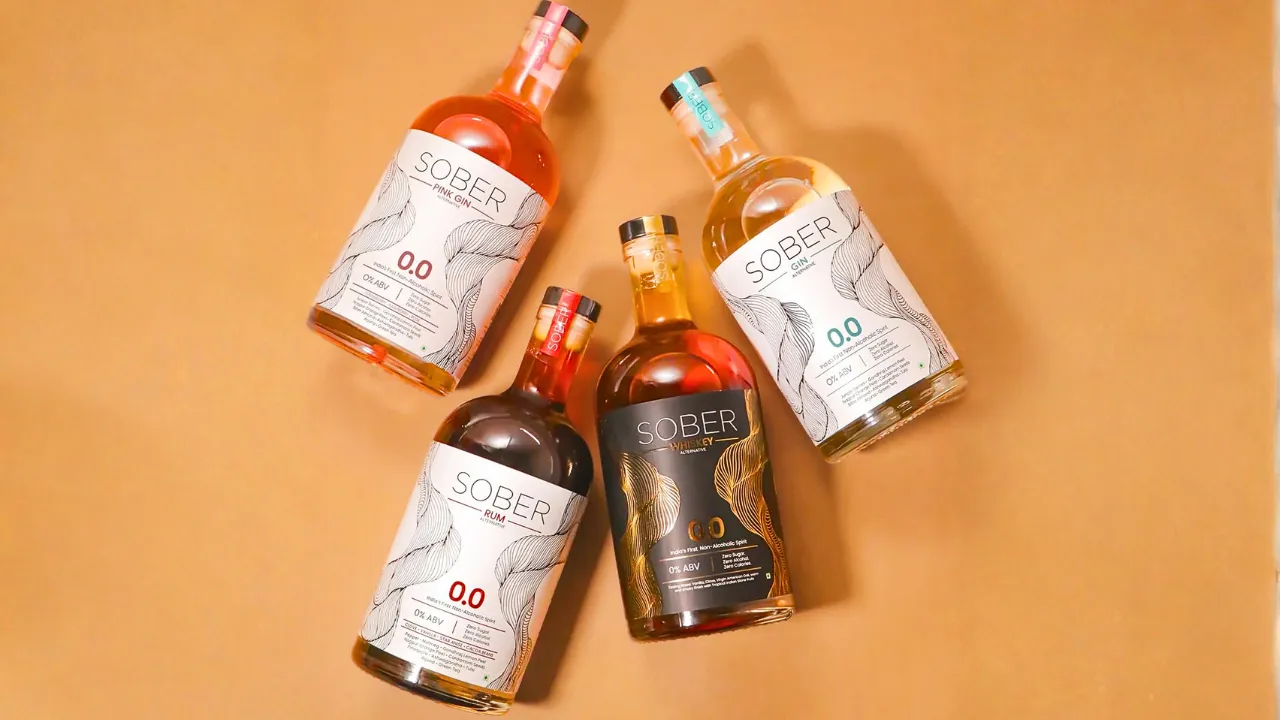
United Spirits Ltd., owned by Diageo, has increased its stake in V9 Beverages—the company behind zero-alcohol brand Sober—from 15% to 25%. The ₹3.20 crore investment, executed through CCPS subscription and expected to close by February 20, signals a deeper push into India’s growing premium no-alcohol beverage segment.
United Spirits Ltd. (USL), the Diageo-owned beverage giant, has moved to deepen its footprint in India’s fast-rising zero-alcohol drinks segment with a fresh investment in V9 Beverages Pvt. Ltd., the owner of the emerging brand Sober. The company disclosed through a regulatory filing that its board has approved a strategic increase in its stake in V9, signalling a more assertive play in a category that has gained meaningful global and domestic traction in recent years. The initiative underscores Diageo’s ambition to diversify and future-proof its portfolio at a time when consumers are increasingly seeking alternatives that blend flavour, sophistication and health-conscious moderation.
Under the approved proposal, United Spirits will invest an additional ₹3.20 crore in V9 Beverages, raising its shareholding from 15 percent to 25 percent on a fully diluted basis. The latest outlay will take place through a subscription of 1,762 Compulsory Convertible Preference Shares (CCPS) for a total consideration of ₹3.20 crore. According to the company, the transaction will be executed through cash consideration and is slated to close on or before February 20, contingent on the satisfaction of customary conditions precedent outlined in definitive agreements between the parties. While modest in absolute value, the investment carries strategic significance as it strengthens USL’s exposure to the evolving non-alcoholic craft beverage space and signals confidence in the category’s long-term commercial promise.
For Diageo and its subsidiaries, the push into premium non-alcohol alternatives is neither sudden nor isolated. Globally, the company has experimented with launches like Seedlip, a distilled non-alcoholic spirit that helped define the modern “no-proof” mixology trend, as well as other innovations intended to capture consumers who are cutting back without compromising on taste or social rituals. In India, as in other markets, Gen Z and Millennial cohorts have proved particularly influential in driving so-called mindful drinking, abstinence months and reduced alcohol frequency as lifestyle choices. The rise of zero-alcohol beers, botanical mixers and crafted spirit alternatives is seen as a structural shift rather than a fleeting fad, even if the segment remains nascent relative to the broader alcohol market.
V9 Beverages and its flagship brand Sober have attempted to position themselves at the intersection of urban trend culture, mixology and wellness—appealing to consumers seeking elevated drinking experiences without alcohol content. While detailed financials of the private company are limited in public disclosures, Sober has developed a distinct niche in bars, premium retail and online marketplaces, aided by the pandemic-era acceleration of direct-to-consumer beverage models. For United Spirits, which remains one of the country’s dominant liquor companies by volume and distribution reach, the strategic attraction lies not only in the non-alcohol proposition but also in the brand-building approach employed by V9, which resonates with an increasingly sophisticated metropolitan audience.
The growth of the no/low-alcohol category has also attracted interest from global beverage conglomerates seeking to hedge portfolio concentration and tap new consumption occasions. A 2023 industry report estimated that the worldwide no/low-alcohol market could expand at mid-to-high single-digit compound annual rates through the decade, driven by innovation, beverage premiumisation and improved availability in on-trade channels. India, though earlier in its adoption curve, has witnessed parallel movements in craft sodas, non-alcoholic beers and aperitif-style alternatives. The sector has also benefited from broader wellness and fitness narratives, as well as shifts in nightlife culture toward inclusion and moderation.
Regulatory landscape and taxation structures play a noteworthy role in shaping the economics of the non-alcohol space. While alcohol is subject to high excise duties in India, non-alcoholic beverages fall within a different tax regime, providing competitive pricing flexibility and enabling a more accessible pathway for trial among younger consumers. This dynamic has allowed emerging brands to innovate more aggressively, experiment with natural ingredients and embrace premium design—all of which align with global mixology trends and social media-driven beverage aesthetics.
For United Spirits, the incremental move toward a 25 percent stake could also provide strategic optionality in the future. By tightening its equity relationship, the company gains deeper visibility into the innovation pipeline of V9 and the performance of the Sober brand while also positioning itself for potential future integration should the category mature at scale. Such staged or multi-step investment strategies are common in beverage M&A, where early bets allow large corporations to monitor emerging brands without full acquisition commitments. Diageo itself has executed variations of this approach globally across craft spirits, ready-to-drink cocktails and non-alcoholic beverages.
The board approval and associated regulatory disclosures reflect a continued recalibration occurring across the broader alcoholic beverage industry. While spirits remain a dominant profit center, diversification into adjacent categories is increasingly seen as a hedge against evolving consumption patterns. In markets like India, where demographic shifts, wellness priorities and premiumisation converge, companies with robust distribution infrastructure and brand portfolios may find synergistic opportunities to shape new preferences and categories rather than merely respond to them.
With the transaction expected to close by late February, focus will shift to how V9 deploys the capital infusion as well as how United Spirits leverages its strategic stake. Whether through scaled production, expanded distribution, strengthened marketing or on-trade activation, the next phase will test both execution and consumer appetite. If momentum sustains, Diageo’s expanded investment could represent not just a financial decision but a signal of where the future of the Indian beverage market is headed: toward plurality, experimentation and a redefinition of what a drink must contain to be considered worthy of the glass.
Discover more from Creative Brands Mag
Subscribe to get the latest posts sent to your email.







Leave a comment