


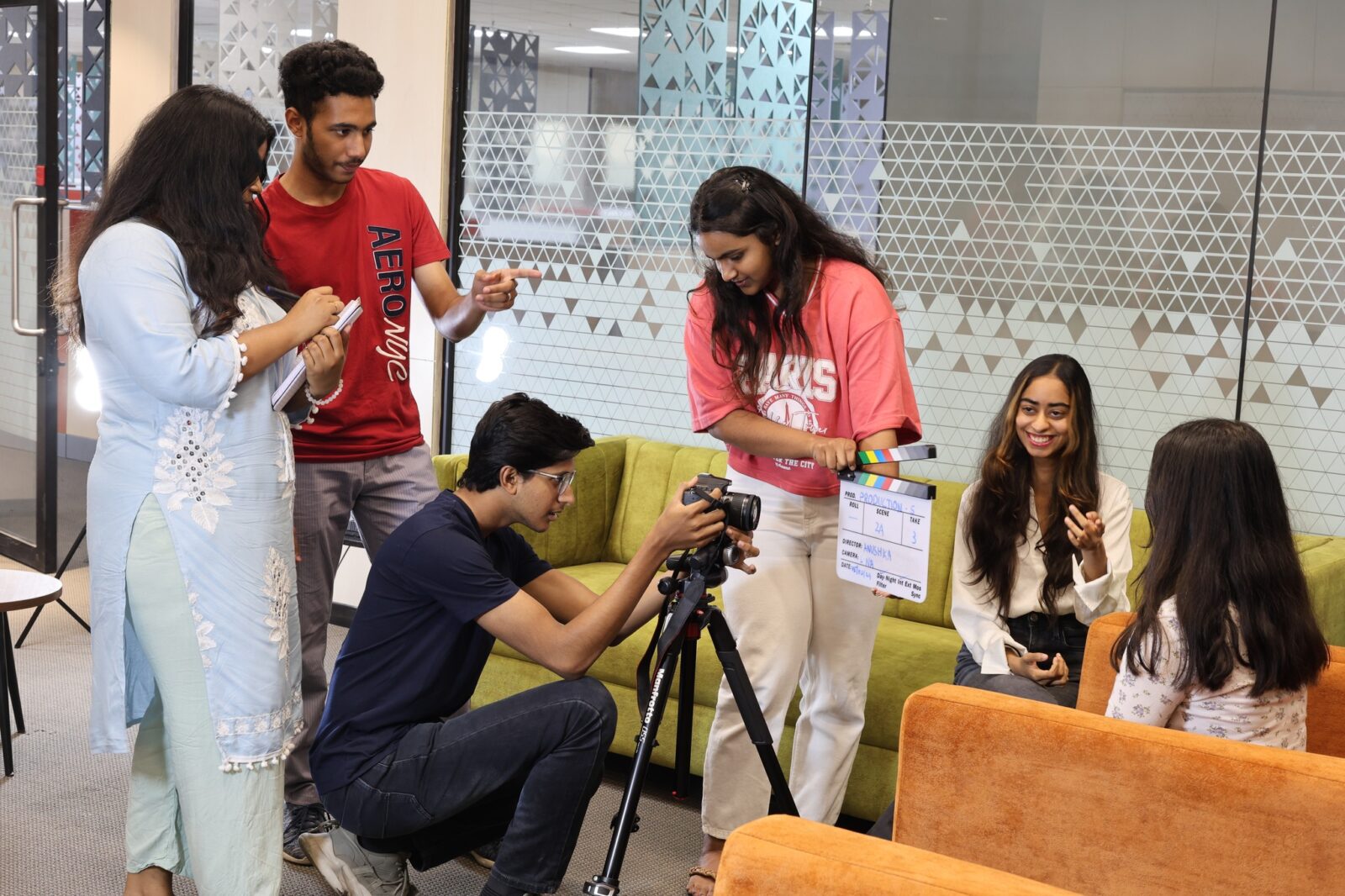
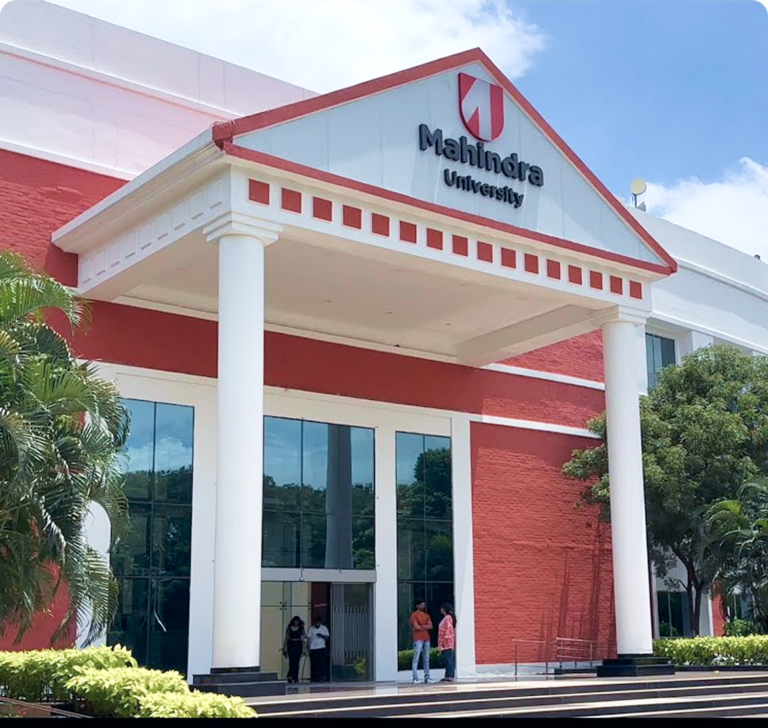
Mahindra University’s School of Digital Media and Communication in Hyderabad is redefining media education through an interdisciplinary, ethical and industry-focused approach. By combining theoretical grounding with practical experience and global awareness, SDMC prepares students to become adaptable, responsible professionals capable of shaping and responding to the rapidly evolving media and communication landscape.
At a time when the global media landscape is undergoing rapid transformation, Mahindra University’s School of Digital Media and Communication (SDMC) is positioning itself as a forward-looking institution that blends academic rigour with real-world relevance. Conceived at the intersection of media, technology and social change, the School is focused on nurturing graduates who are not only industry-ready but also ethically grounded and globally aware.
SDMC’s vision extends beyond conventional employability. While students are trained in industry-relevant tools and practices, equal emphasis is placed on critical thinking and systemic improvement. The School encourages learners to question established norms, engage with emerging technologies, and develop solutions that address contemporary challenges in meaningful ways. This approach ensures that graduates are equipped to contribute across a wide spectrum of industries, including game design, special effects, digital marketing, entertainment technology, public relations, advertising, animation, journalism, filmmaking, media production and corporate communication.
Central to SDMC’s pedagogy is a student-first methodology that integrates vision, mission and academic practice into a cohesive learning experience. The curriculum is designed to balance professional readiness with strong theoretical grounding, while also fostering an entrepreneurial mindset. Through a blend of hybrid professional-academic programmes, interdisciplinary research-led learning and project-based progression, students are exposed to both conceptual frameworks and hands-on applications.
The School’s emphasis on evidence-driven learning ensures that students are not merely passive recipients of knowledge but active participants in their educational journeys. By engaging with real-world projects and applying emerging media technologies, learners develop practical problem-solving skills alongside analytical depth. This integrated approach prepares them to navigate and shape an increasingly complex media ecosystem.
A defining feature of SDMC’s framework is its focus on building communicative societies. The institution aims to produce individuals who are capable of engaging across sociocultural boundaries while remaining rooted in national values. In doing so, it fosters a global mindset that is essential in today’s interconnected world. Graduates are encouraged to see themselves as agents of change, capable of influencing both local and global narratives.
The School’s objectives reflect this holistic vision. It seeks to build ethical, rigorous and thoughtful competency among students, align individual aptitude with evolving industry demands, and support reflective communicative practices. Interdisciplinarity is promoted as a key driver of innovation, while a general-to-specific learning approach ensures that students develop a broad foundation before specialising in their chosen fields.
At the heart of SDMC’s academic philosophy lies what it describes as the “tripod of competencies”: conceptual, professional and ethical. The conceptual component provides students with a strong theoretical foundation, enabling them to understand the broader contexts of media and communication. The professional dimension focuses on practical application, equipping learners with the skills required to succeed in dynamic work environments. Meanwhile, the ethical pillar underscores the importance of values and social responsibility, ensuring that graduates remain mindful of the societal impact of their work.
“Mahindra University’s School of Digital Media and Communication is a unique media school that offers India’s first B.Tech. in Computation and Media as well as a BA in Journalism and Mass Communication. We also have a robust Master’s program and a PhD. We have academic rigour coupled with industry focus, based on the triadic competencies—conceptual, professional, and ethical. One of our B.Tech students, Kishan, has a paid internship at a VR Lab in France. Our school is led by Dean Prof (Dr) Shashidhar Nanjundaiah. We have also launched the Centre for Interdisciplinary Research in Communication and Media, headed by Prof (Dr) Vinod Pavarala,” said Prof (Dr) Rahul Dass of the School of Digital Media and Communication at Mahindra University.
Together, these competencies aim to cultivate adaptable, well-rounded individuals who can respond effectively to the demands of a rapidly evolving industry. The emphasis on ethical responsibility is particularly significant in an era marked by misinformation, digital disruption and shifting audience behaviours.
SDMC’s academic offerings further reinforce its comprehensive approach to education. The School provides undergraduate, postgraduate and doctoral programmes tailored to diverse interests and career aspirations. These include a three-year and four-year Bachelor of Journalism and Mass Communication, a four-year Bachelor of Technology in Computation and Media, a Master’s programme in Journalism and Mass Communication, and a PhD in Media and Communication.
By integrating technology, creativity and critical inquiry, SDMC is carving out a distinctive space within India’s higher education landscape. Its commitment to producing ethically responsible and globally relevant media professionals reflects a broader shift in how communication education is being reimagined in the 21st century.
As industries continue to evolve and the boundaries between disciplines blur, institutions like SDMC are playing a crucial role in shaping the next generation of communicators—individuals who are not only skilled and innovative but also conscious of their responsibility in influencing society.
Discover more from Creative Brands Mag
Subscribe to get the latest posts sent to your email.
















Leave a comment