


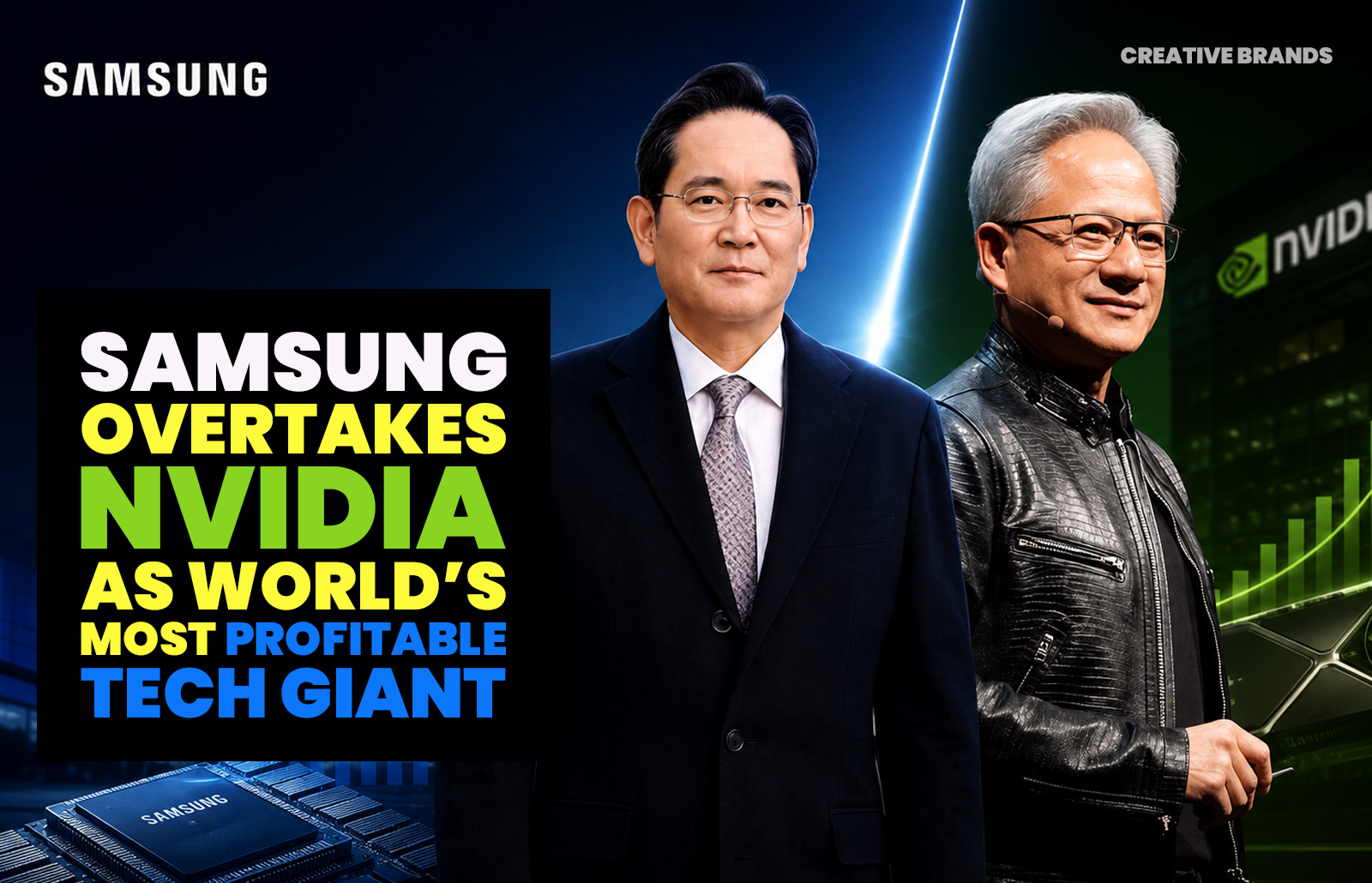
Samsung Electronics has overtaken NVIDIA as the world’s most profitable tech company, posting a record Q2 operating profit of 89.4 trillion won ($58.6 billion). Driven by soaring AI memory chip demand, revenue hit 171 trillion won. Despite the milestone, shares fell 7% amid investor concerns over sustainability and volatility.
Samsung Electronics has surged past NVIDIA to become the world’s most profitable technology company, reporting a record quarterly operating profit of 89.4 trillion won ($58.6 billion) in Q2 2026. The 1,810% year-on-year leap was fuelled by unprecedented demand for AI memory chips, driving revenue to an all-time high of 171 trillion won.
This milestone marks a significant shift in the AI boom, as profitability moves from AI processor makers to memory chip manufacturers. Samsung’s Q2 operating profit now eclipses NVIDIA’s previous record of $53.5 billion, positioning the South Korean giant to potentially achieve full-year profits of $217 billion—greater than its cumulative earnings over the past four decades.
The extraordinary performance underscores Samsung’s dominance in the semiconductor industry, where AI-driven demand for advanced memory solutions has reshaped the competitive landscape. Analysts note that the company’s ability to capitalise on this trend has redefined the balance of power in global technology markets, signalling a new era where memory innovation drives profitability.
Yet, despite the historic achievement, investor sentiment proved cautious. Samsung shares fell as much as 7% in early trading on the South Korean stock exchange, reflecting concerns over sustainability, market volatility, and the cyclical nature of the semiconductor sector. The sharp decline highlights the tension between record-breaking financial results and investor apprehension about long-term stability.
Samsung’s triumph over NVIDIA is more than a financial headline—it is a turning point in the AI revolution. As demand for memory chips accelerates, the company’s performance suggests that the next phase of technological growth may be defined not by processors alone, but by the infrastructure that enables AI systems to scale.
Discover more from Creative Brands Mag
Subscribe to get the latest posts sent to your email.
















Leave a comment