


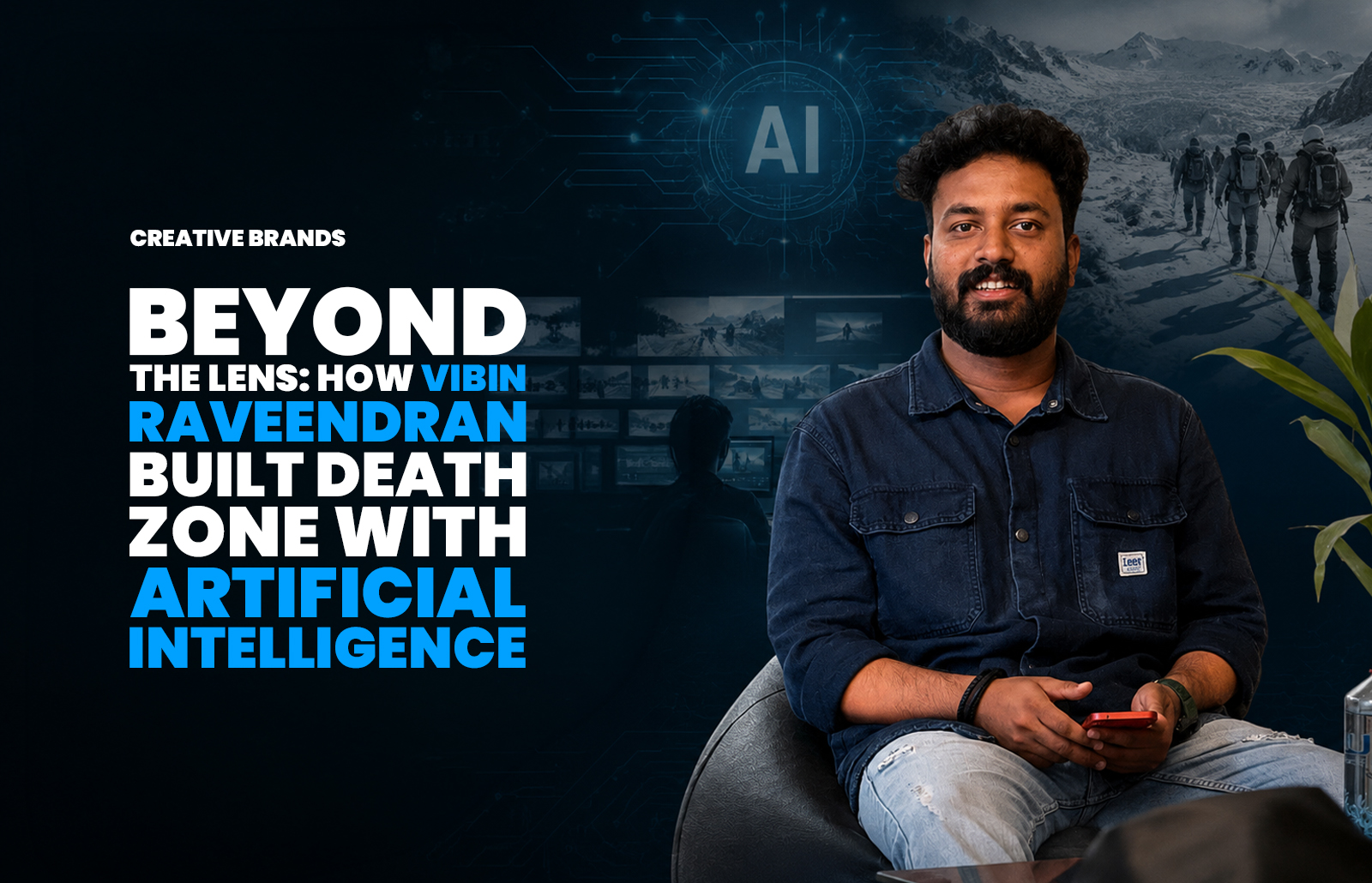
Mathrubhumi Senior Visualizer Vibin Raveendran has created Death Zone, an AI-powered visualisation series that demonstrates how artificial intelligence can transform cinematic storytelling. Combining AI-generated visuals, sound design and post-production, the project showcases the growing role of AI as a creative partner in producing immersive and emotionally engaging digital narratives.
Artificial intelligence is steadily transforming the creative industries, reshaping the way stories are imagined, designed and produced. While AI-generated images and videos have become increasingly common across social media and advertising, a growing number of creative professionals are exploring how these technologies can move beyond novelty to deliver meaningful cinematic experiences. Among them is Vibin Raveendran, Senior Visualizer at Mathrubhumi, whose ambitious AI visualisation project, Death Zone, demonstrates how artificial intelligence can be used to create immersive visual narratives without the traditional constraints of large-scale film production.
The first chapter of Death Zone introduces audiences to a mysterious and dangerous world crafted entirely through artificial intelligence. Rather than relying on conventional cameras, elaborate film sets or live actors, every visual frame in the project was generated using AI-powered creative tools. The accompanying sound design, atmospheric effects and audio elements were also produced with artificial intelligence, making the project a fully AI-driven visual experience.
The result is not merely a demonstration of emerging technology but an experiment in storytelling. Through cinematic imagery, carefully constructed visual sequences and AI-generated soundscapes, Death Zone seeks to immerse viewers in an unfamiliar environment shaped by isolation, danger and mystery. The project explores how AI can be used to evoke emotion and atmosphere while maintaining the visual consistency expected from high-quality cinematic productions.
For Raveendran, the project is both a creative exercise and an exploration of the future of digital content creation. His objective is to investigate how artificial intelligence can support artists in developing compelling stories rather than replacing the imagination that drives creative work. The emphasis remains on human creativity, with AI acting as a sophisticated production partner capable of translating ideas into visually rich experiences.
The release of the second chapter takes this vision a step further. Building on the foundations established in the first instalment, Part 2 of the Death Zone AI Visualisation Series expands the cinematic ambition of the project. Every frame has been designed to portray the harshness, loneliness and unforgiving beauty of one of the world’s most dangerous environments. The visual language draws inspiration from feature films, blending dramatic composition with atmospheric lighting and carefully maintained continuity across scenes.
Unlike many AI-generated videos that often struggle with consistency or coherent storytelling, Death Zone demonstrates the growing maturity of AI-assisted production workflows. Raveendran combines multiple technologies to achieve a polished cinematic result, integrating AI image generation, scene composition, visual continuity techniques and professional post-production processes into a unified creative pipeline.
The project illustrates how today’s AI ecosystem enables creators to move seamlessly between idea generation, visual development and final editing. Instead of relying on a single platform, Raveendran employs a carefully selected collection of AI and creative software, each contributing to different stages of production. ChatGPT assists in developing concepts and refining prompts, while Google Gemini contributes to creative ideation. Seedance AI and Kling AI generate cinematic visual sequences, Magnific AI enhances image quality, Adobe Photoshop supports detailed image refinement, and Adobe Premiere Pro brings the individual elements together through professional video editing.
This multi-tool workflow reflects a significant shift in modern creative practice. Increasingly, AI projects are no longer defined by one application but by the ability of creators to integrate several specialised technologies into a coherent production process. The human creator remains at the centre, directing the creative vision while AI accelerates execution and expands artistic possibilities.
Raveendran’s professional background has played an important role in shaping this approach. As Senior Visualizer at Mathrubhumi, he has spent more than four years developing visual designs and graphics for one of Kerala’s leading media organisations. His earlier professional experience at bookmytripholidays and Qunexa Infosolutions Private Limited further strengthened his expertise in graphic design and digital communication.
His educational background also contributes to his interdisciplinary perspective. Holding a Bachelor of Science degree in Electronics from the University of Calicut, he combines technical understanding with artistic sensibilities. This blend of engineering knowledge and visual creativity enables him to adopt emerging technologies quickly while maintaining a strong focus on aesthetics, storytelling and audience engagement.
Within Mathrubhumi, Raveendran’s work reflects a broader trend of media organisations embracing artificial intelligence not simply as a productivity tool but as a creative resource. News organisations across the world have already begun experimenting with AI for content production, automated journalism, audience engagement and visual design. Projects such as Death Zone demonstrate that AI’s influence extends well beyond newsroom automation into experimental filmmaking, digital art and immersive storytelling.
The emergence of AI-powered visualisation also raises important questions about the future of creative professions. Rather than eliminating the need for designers and artists, projects like Death Zone suggest that the role of creative professionals is evolving. Success increasingly depends on the ability to conceptualise ideas, craft effective prompts, curate AI-generated outputs, maintain narrative coherence and apply professional editing techniques that transform raw AI content into polished visual experiences.
Prompt engineering, visual direction and AI workflow management are becoming valuable creative skills. The artist’s role shifts from manually producing every element to orchestrating complex interactions between multiple AI systems while preserving originality and emotional depth.
At the same time, AI-generated filmmaking presents new opportunities for independent creators. Traditional film production often demands significant budgets, specialised equipment and large production teams. AI-powered workflows can reduce many of these barriers, allowing individual creators or small teams to produce visually sophisticated content that would previously have required extensive resources.
However, the technology also introduces challenges. Maintaining visual consistency across scenes, avoiding artificial artefacts, ensuring ethical use of AI-generated content and preserving authentic artistic expression remain ongoing concerns within the creative industry. Projects like Death Zone contribute to this wider conversation by demonstrating both the potential and the practical realities of AI-assisted production.
For audiences, AI-generated visualisation opens new possibilities for experiencing stories. Immersive environments, imaginative worlds and cinematic sequences can now be developed at unprecedented speed while still reflecting a distinctive artistic vision. Rather than replacing traditional filmmaking, AI is emerging as an additional creative medium capable of expanding the vocabulary of visual storytelling.
Raveendran views Death Zone as an evolving journey rather than a finished destination. By inviting viewers to share their thoughts and feedback, he positions the series as an ongoing exploration of what artificial intelligence can achieve when guided by human imagination. Each chapter represents another step in understanding how AI can enhance narrative, atmosphere and emotional engagement without diminishing the role of the storyteller.
As artificial intelligence continues to redefine creative industries worldwide, projects such as Death Zone highlight the importance of experimentation. They reveal that the future of visual communication may not lie in choosing between human creativity and machine intelligence, but in combining the strengths of both. Through thoughtful integration of AI tools with artistic vision, creators like Vibin Raveendran are helping to shape a new language of digital storytelling—one where imagination remains human, while technology expands the canvas on which it can be expressed.
Discover more from Creative Brands Mag
Subscribe to get the latest posts sent to your email.












Leave a comment