


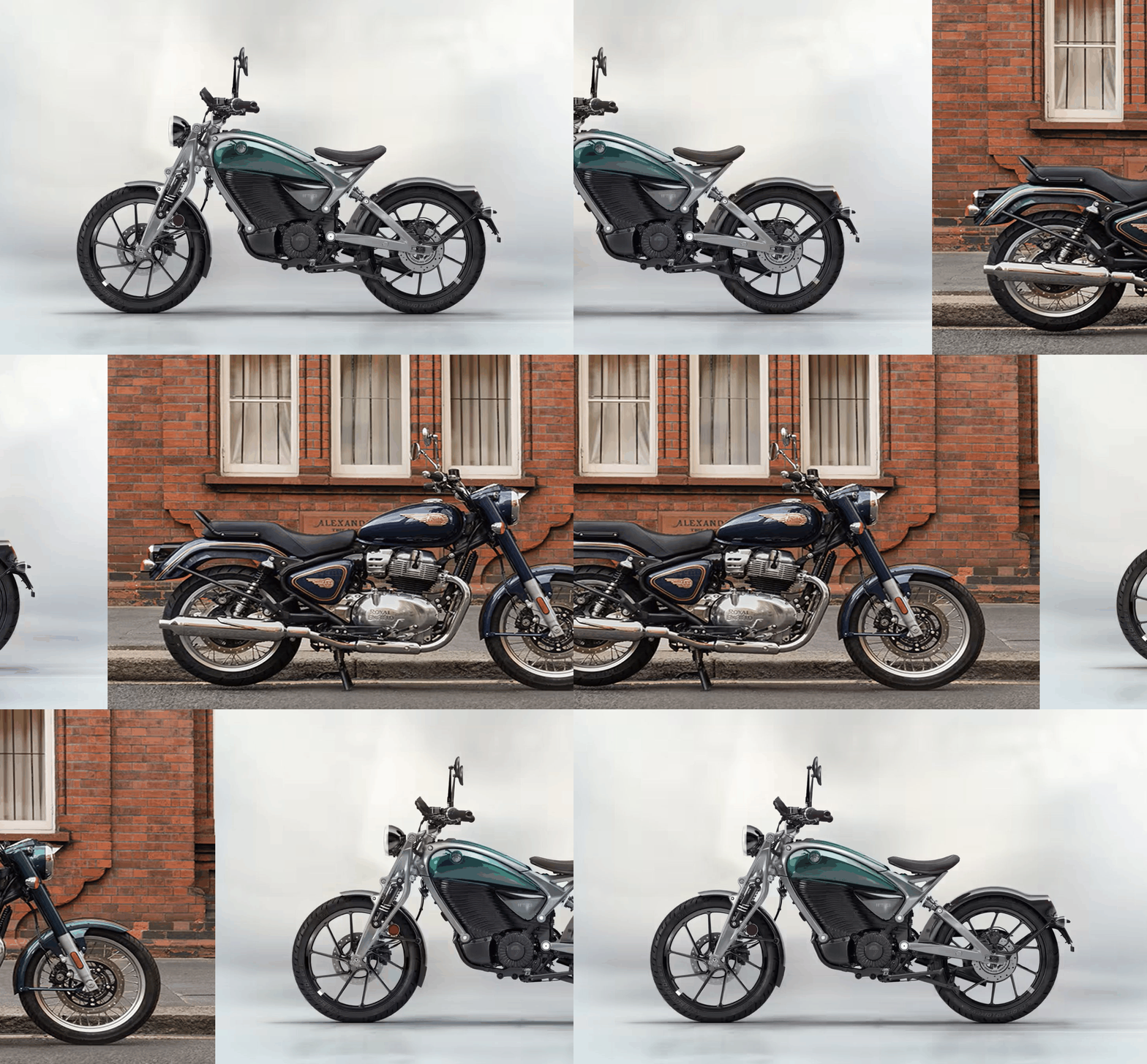
Royal Enfield, the storied motorcycle maker synonymous with thumping petrol engines and timeless design, has taken its first decisive step into the electric era. The launch of the Flying Flea C6, a compact urban commuter positioned in the City+ segment, signals a cautious yet deliberate pivot towards electrification. For a brand steeped in legacy, the move is as much about safeguarding relevance as it is about embracing innovation.
The Flying Flea C6 began retail distribution in April 2026, with Bengaluru chosen as the initial launchpad before a phased rollout across India and Europe. Early sales figures, modest but promising, suggest that Royal Enfield’s loyalists are willing to experiment with a new kind of motorcycling experience. A scrambler-styled sibling, the FF.S6, is already in the pipeline, hinting at a family of electric offerings designed to appeal to younger riders and urban commuters.
Yet, the company is under no illusion about the risks. In its annual report, parent firm Eicher Motors flagged the dangers of over-reliance on internal combustion engines. With consumer sentiment shifting and regulatory pressures mounting, Royal Enfield acknowledged that failing to adapt could render its brand outdated. At the same time, executives remain wary of rushing headlong into electrification. As Executive Chairman Siddharth Lal observed, moving too slowly risks irrelevance, but betting too heavily too soon could be equally damaging.
The balancing act is delicate. Managing Director B. Govindarajan noted that one in three Royal Enfield customers is now under 25, underscoring the importance of staying aspirational for a new generation. The Flying Flea C6, with its lightweight frame and urban-friendly design, is clearly aimed at this demographic. But the company continues to invest heavily in its petrol portfolio, reporting record annual sales of 1.2 million motorcycles in FY26. Domestic sales rose 23 per cent, international sales 20 per cent, and expansion plans include a ₹958 crore brownfield project at Cheyyar to double production capacity by FY28, alongside a new greenfield plant in Andhra Pradesh.
Regulatory uncertainty adds another layer of complexity. With emissions standards tightening and EV policies evolving rapidly, Royal Enfield has flagged compliance as a key risk. Its Advanced Engineering team is tasked with anticipating future regulations, managing emissions, and fast-tracking projects to ensure readiness. Engagement with industry bodies such as SIAM and ACEM further reflects its proactive stance.
The broader market context is compelling. India’s electric motorcycle sector is projected to grow from $0.784 billion in 2024 to $2.41 billion by 2035, at a CAGR of 10.76 per cent. Royal Enfield’s cautious entry positions it to capture this growth while preserving the heritage that defines its brand. The Flying Flea C6 is more than a product launch; it is a strategic statement, a bridge between the past and the future of motorcycling.
Royal Enfield, the storied motorcycle maker synonymous with thumping petrol engines and timeless design, has taken its first decisive step into the electric era. The launch of the Flying Flea C6, a compact urban commuter positioned in the City+ segment, signals a cautious yet deliberate pivot towards electrification. For a brand steeped in legacy, the move is as much about safeguarding relevance as it is about embracing innovation.
The Flying Flea C6 began retail distribution in April 2026, with Bengaluru chosen as the initial launchpad before a phased rollout across India and Europe. Early sales figures, modest but promising, suggest that Royal Enfield’s loyalists are willing to experiment with a new kind of motorcycling experience. A scrambler-styled sibling, the FF.S6, is already in the pipeline, hinting at a family of electric offerings designed to appeal to younger riders and urban commuters.
Yet, the company is under no illusion about the risks. In its annual report, parent firm Eicher Motors flagged the dangers of over-reliance on internal combustion engines. With consumer sentiment shifting and regulatory pressures mounting, Royal Enfield acknowledged that failing to adapt could render its brand outdated. At the same time, executives remain wary of rushing headlong into electrification. As Executive Chairman Siddharth Lal observed, moving too slowly risks irrelevance, but betting too heavily too soon could be equally damaging.
The balancing act is delicate. Managing Director B. Govindarajan noted that one in three Royal Enfield customers is now under 25, underscoring the importance of staying aspirational for a new generation. The Flying Flea C6, with its lightweight frame and urban-friendly design, is clearly aimed at this demographic. But the company continues to invest heavily in its petrol portfolio, reporting record annual sales of 1.2 million motorcycles in FY26. Domestic sales rose 23 per cent, international sales 20 per cent, and expansion plans include a ₹958 crore brownfield project at Cheyyar to double production capacity by FY28, alongside a new greenfield plant in Andhra Pradesh.
Regulatory uncertainty adds another layer of complexity. With emissions standards tightening and EV policies evolving rapidly, Royal Enfield has flagged compliance as a key risk. Its Advanced Engineering team is tasked with anticipating future regulations, managing emissions, and fast-tracking projects to ensure readiness. Engagement with industry bodies such as SIAM and ACEM further reflects its proactive stance.
The broader market context is compelling. India’s electric motorcycle sector is projected to grow from $0.784 billion in 2024 to $2.41 billion by 2035, at a CAGR of 10.76 per cent. Royal Enfield’s cautious entry positions it to capture this growth while preserving the heritage that defines its brand. The Flying Flea C6 is more than a product launch; it is a strategic statement, a bridge between the past and the future of motorcycling.
Discover more from Creative Brands Mag
Subscribe to get the latest posts sent to your email.
















Leave a comment