


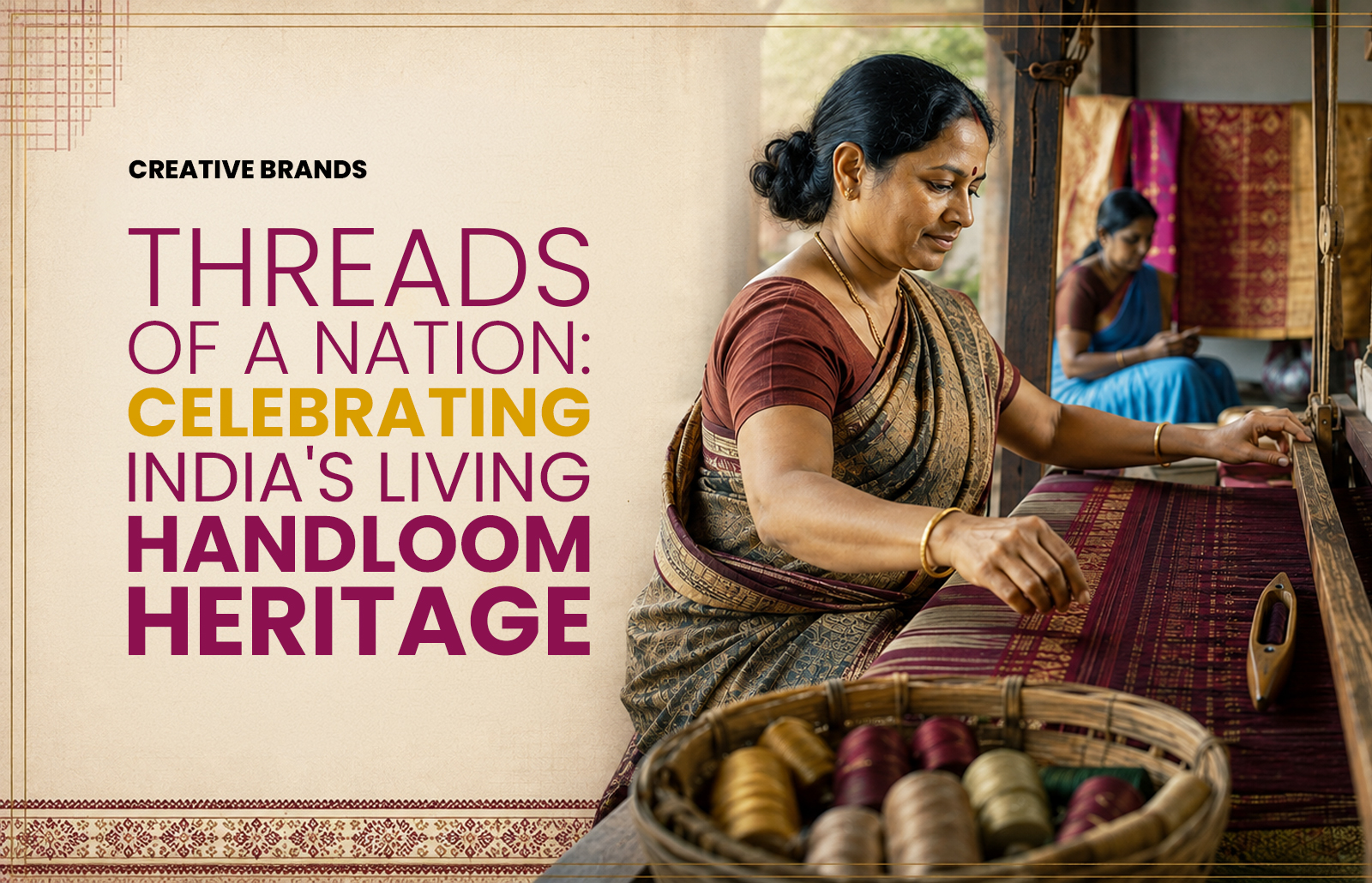
National Handloom Day, observed every year on August 7, is more than a celebration of fabric and fashion. It is a tribute to India’s weaving communities, their artistry and resilience, and the enduring spirit of the Swadeshi movement that transformed handwoven cloth into a symbol of national pride and self-reliance.
The story of India’s handlooms is woven into the story of the nation itself. Every thread carries the memory of a village, every motif reflects the character of a region, and every piece of cloth represents generations of skill passed from one pair of hands to another. It is this extraordinary legacy that India celebrates every year on August 7, observed as National Handloom Day.
The date is not merely symbolic. It commemorates the launch of the Swadeshi Movement on August 7, 1905, when Indians rejected imported goods and embraced products made within the country. Handwoven fabrics became powerful symbols of resistance, self-reliance and national identity. More than a century later, those ideals continue to resonate as India seeks to strengthen local industries and promote sustainable development.
The Government of India formally introduced National Handloom Day in 2015 to recognise the contribution of weavers and to preserve one of the country’s most cherished traditions. Today, the sector supports millions of people, with official figures indicating that more than 3.5 million handloom workers depend on the industry for their livelihoods. Remarkably, women account for more than 70 per cent of the workforce, making the handloom sector a powerful engine of rural employment and economic empowerment.
India’s diversity is reflected vividly in its textiles. From the elegant Kanchipuram silks of Tamil Nadu and the intricate Banarasi weaves of Uttar Pradesh to the vibrant Pochampally ikats of Telangana and the timeless Kasavu sarees of Kerala, every region has developed its own distinctive style. These fabrics are more than garments; they are expressions of history, geography, belief and culture.
In recent years, the handloom industry has also embraced innovation. The Ministry of Textiles has organised initiatives such as the “Weaves of India” festival in New Delhi, where 116 traditional weaving styles have been showcased, allowing visitors to experience the richness and diversity of India’s textile heritage. Meanwhile, the Handloom Hackathon 2026 has encouraged designers, entrepreneurs and technologists to develop new ideas that can strengthen the sector’s future.
National Handloom Day celebrations have also found a new audience among younger generations. Social media campaigns, online exhibitions and the growing popularity of “Get Ready With Me” videos featuring handloom clothing have transformed traditional attire into a contemporary statement of identity and sustainability. Prime Minister Narendra Modi has urged citizens to celebrate the occasion with the same enthusiasm often reserved for popular cultural events, emphasising that every purchase made from a local artisan strengthens the fabric of the nation itself.
At a time when fast fashion dominates global markets, handloom products offer an alternative rooted in craftsmanship, sustainability and authenticity. Each piece is unique, bearing the subtle variations that only human hands can create. In a world increasingly shaped by automation and artificial intelligence, these imperfections have become symbols of beauty and individuality.
National Handloom Day ultimately reminds Indians that the nation’s heritage is not confined to museums and archives. It lives in homes, workshops and villages where the rhythmic sound of looms continues to echo through the generations. Those sounds tell a story of creativity, perseverance and pride, proving that some traditions are too valuable to fade away.
Discover more from Creative Brands Mag
Subscribe to get the latest posts sent to your email.
















Leave a comment