


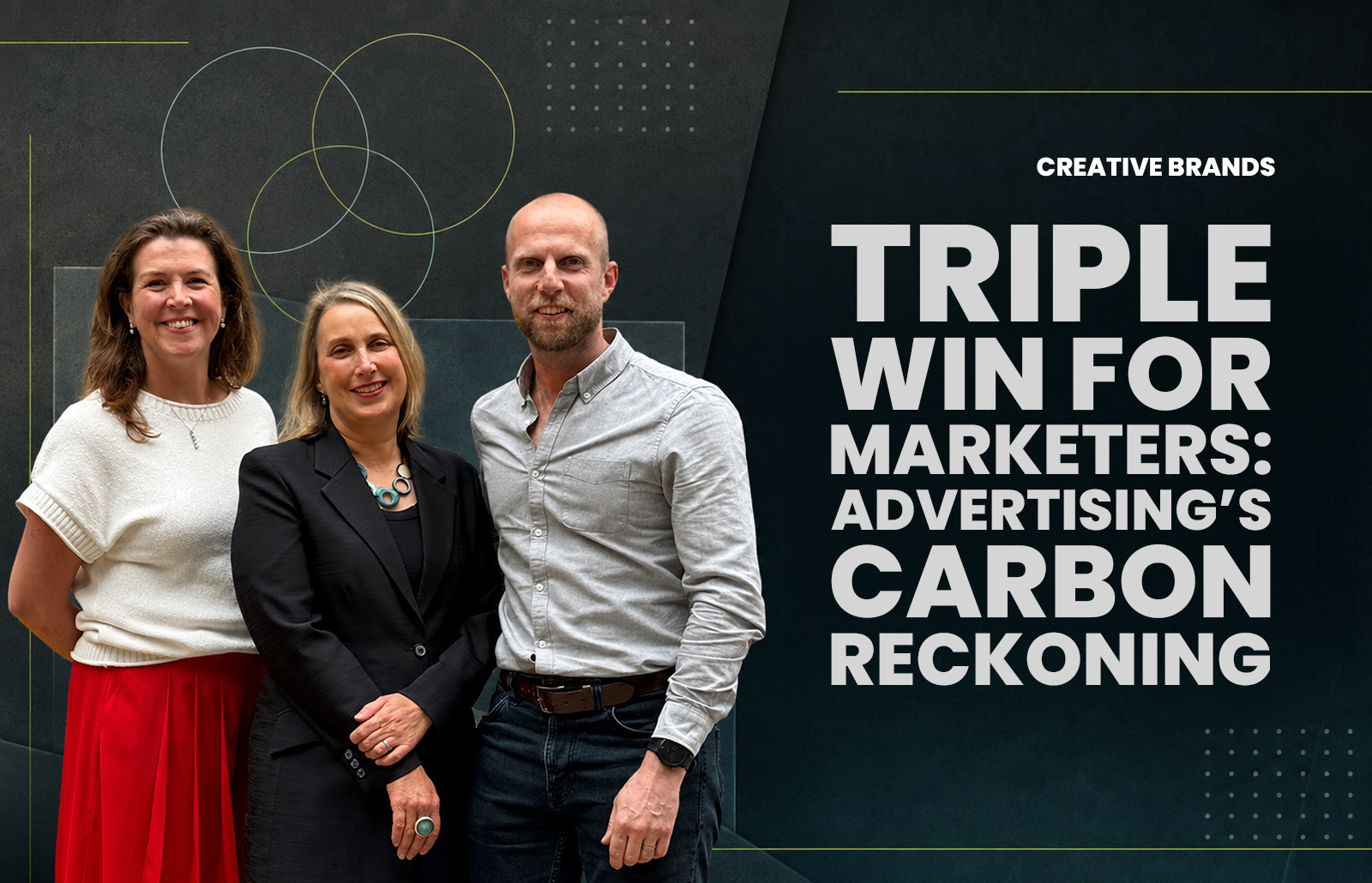
Ad Net Zero’s “Triple Win For Marketers” Whitepaper, developed with 2XE, reveals advertising contributes over 5% of Australian businesses’ Scope 3 emissions, rising to 16% in some sectors. Case studies from Australian Ethical and SBS show emissions can be reduced without compromising performance, making marketing a genuine sustainability priority.
Ad Net Zero has released a landmark Australian Whitepaper, “Triple Win For Marketers”, that for the first time quantifies advertising’s contribution to supply chain emissions. Developed with climate and carbon disclosure specialists 2XE, the research finds advertising accounts for an average of more than 5% of upstream Scope 3 emissions, rising to 16% in sectors such as government, infrastructure and public services.
The findings arrive as mandatory climate reporting under AASB S2 brings new scrutiny to how businesses measure and disclose emissions across their value chains. Marketing, often dismissed as immaterial, is now firmly on the radar of corporate boards and sustainability teams. Ad Net Zero Australia Lead Arum Nixon said the data underscored why marketers must engage directly with sustainability strategies rather than risk having emissions calculated and cut for them. “For a long time, marketing has sat outside the emissions conversation, often delegating these questions to a risk or finance team. This report shows that’s no longer tenable – in some sectors, advertising is one of the largest sources of Scope 3 emissions a business has,” Nixon said.
Crucially, the Whitepaper challenges the notion that reducing emissions must come at the expense of campaign performance. Nixon argued that moving from broad spend-based estimates to granular activity-based data allows organisations to identify waste and improve efficiency. “The good news is that marketers who get ahead of this issue have a genuine opportunity, not just a compliance burden,” he said. “You can often tackle waste while improving campaign performance at the same time. That’s a far better position than simply being told to cut spend.”
2XE co-founder and CEO Nick Palousis, who led the analysis, said the scale of the numbers warranted immediate attention. “When a supply chain emissions source averages over 5%, it is showing up on the pie chart and deserves a plan,” he noted. “Advertising can sit alongside, and in some cases exceed, other familiar Scope 3 sources such as waste or business travel. The difference is that action can often start without major capital deployment or impact on the organisation.”
The Whitepaper features case studies from Australian Ethical and SBS, illustrating how brands are tackling the issue. Working with Benedictus Media and oOh!media, Australian Ethical cut out-of-home emissions per dollar spent by 63% and per thousand impacts by 82% through better targeting, renewable-powered inventory, recyclable materials and energy-efficient creative. This contributed to a 21% reduction in overall paid media emissions and a 50% stronger uplift in brand awareness than its previous campaign. “Finding a solution that reduced our advertising emissions without impacting campaign performance was important to us,” said Emma Grainge, Head of Brand & Communications. “We see it as a strategic advantage to future-proof our business.”
SBS, working with Hearts & Science, reduced marketing’s share of its Scope 3 emissions from 6% (FY22, spend-based) to 3% (FY25, using hybrid measurement), with a goal of reaching 100% activity-based data. Its Premium Drama campaign used Hearts & Science’s Renewables Ad Engine to serve BVOD ads at times when renewable energy was more available, cutting carbon intensity by 24.6% compared to baseline delivery. “Marketing emissions are a material part of SBS’s carbon footprint, so reducing them is an important part of our sustainability journey,” said Abi Thomas, Head of Sustainability.
The Whitepaper concludes with a five-step playbook for marketers: establish a baseline, improve data quality, adopt a consistent methodology such as the GMSF, build carbon into planning decisions, and set targets with embedded accountability. For an industry long focused on creativity and reach, the message is clear: sustainability is now part of the brief.
Discover more from Creative Brands Mag
Subscribe to get the latest posts sent to your email.















Leave a comment