


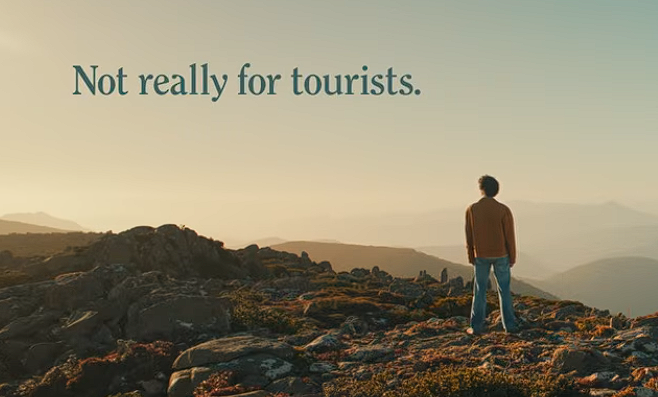
Tourism Tasmania has launched ‘Not Really For Tourists’, a new domestic campaign developed by BMF that encourages Australians to rethink modern travel habits. Using humour and provocative storytelling, the campaign challenges trend-driven tourism and promotes deeper, more meaningful experiences, supported by research, social activations and prize-led engagement.
Tourism Tasmania is taking an unconventional approach to attracting visitors, declaring the island state is “Not Really For Tourists” in a new domestic marketing campaign that challenges Australians to reconsider how they travel and what they seek from a holiday.
Launched today, the campaign represents the latest evolution of Tourism Tasmania’s award-winning “Come Down For Air” brand platform, created by creative agency BMF. Rather than discouraging visitors, the deliberately irreverent and tongue-in-cheek campaign uses humour to question the habits and behaviours that often define modern tourism.
At the heart of the initiative is the idea that travellers can become so focused on ticking off attractions, chasing social media trends and following online recommendations that they miss authentic experiences. The campaign playfully critiques familiar travel behaviours, from meticulously overplanning itineraries and standing in lengthy queues for viral attractions to prioritising content creation over genuine connection with a destination.
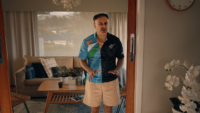
The centrepiece of the campaign is a hero film titled The Line Up, which follows a tourist waiting in an endless queue for a highly sought-after pastry in an unnamed city. As the queue stretches seemingly without end, it carries him across oceans and ultimately into Tasmania. By the time he arrives, the original reason for joining the line has faded from memory. Confronted by the absurdity of his pursuit, he steps away from the crowd and begins to explore his surroundings, discovering a more rewarding and meaningful experience.
The film concludes with the tagline “Not Really For Tourists”, a provocative statement designed to spark reflection rather than rejection. Across the broader campaign, the slogan is reinforced through a series of witty creative executions that poke fun at aspects of contemporary tourism culture while encouraging Australians to engage more deeply with the places they visit.
Tourism Tasmania said the campaign is intended to hold up a mirror to the mindsets and behaviours that can prevent travellers from fully experiencing a destination. By encouraging people to slow down and move beyond the pursuit of trends and approval, the organisation hopes to position Tasmania as a place where visitors can reconnect with what travel is meant to be about.
The campaign extends well beyond traditional advertising. An integrated programme encompassing public relations activity, social media content and partnerships has been developed to amplify the message and encourage participation.
Supporting the campaign is new nationally representative consumer research that points to changing attitudes towards travel identity. According to the findings, three in four Australians, or 75 per cent, would prefer to be described as a “traveller” rather than a “tourist”, highlighting a widespread desire for more authentic and personal travel experiences.
Among the campaign’s other features are five “De-Tourist Trails”, designed to encourage visitors to explore beyond conventional tourist routes. The initiative also includes a series of quirky short-form videos featuring cult Australian media personality Lee Lin Chin, alongside collaborations with advocates and content creators.
To further drive engagement, Tourism Tasmania is offering four Australians the chance to win a Tasmanian holiday for two, providing an opportunity to “de-tourist” themselves and experience the state from a different perspective.
With its playful self-awareness and unconventional message, “Not Really For Tourists” positions Tasmania not as a destination to be consumed, but as one to be genuinely experienced.
Discover more from Creative Brands Mag
Subscribe to get the latest posts sent to your email.









Leave a comment