


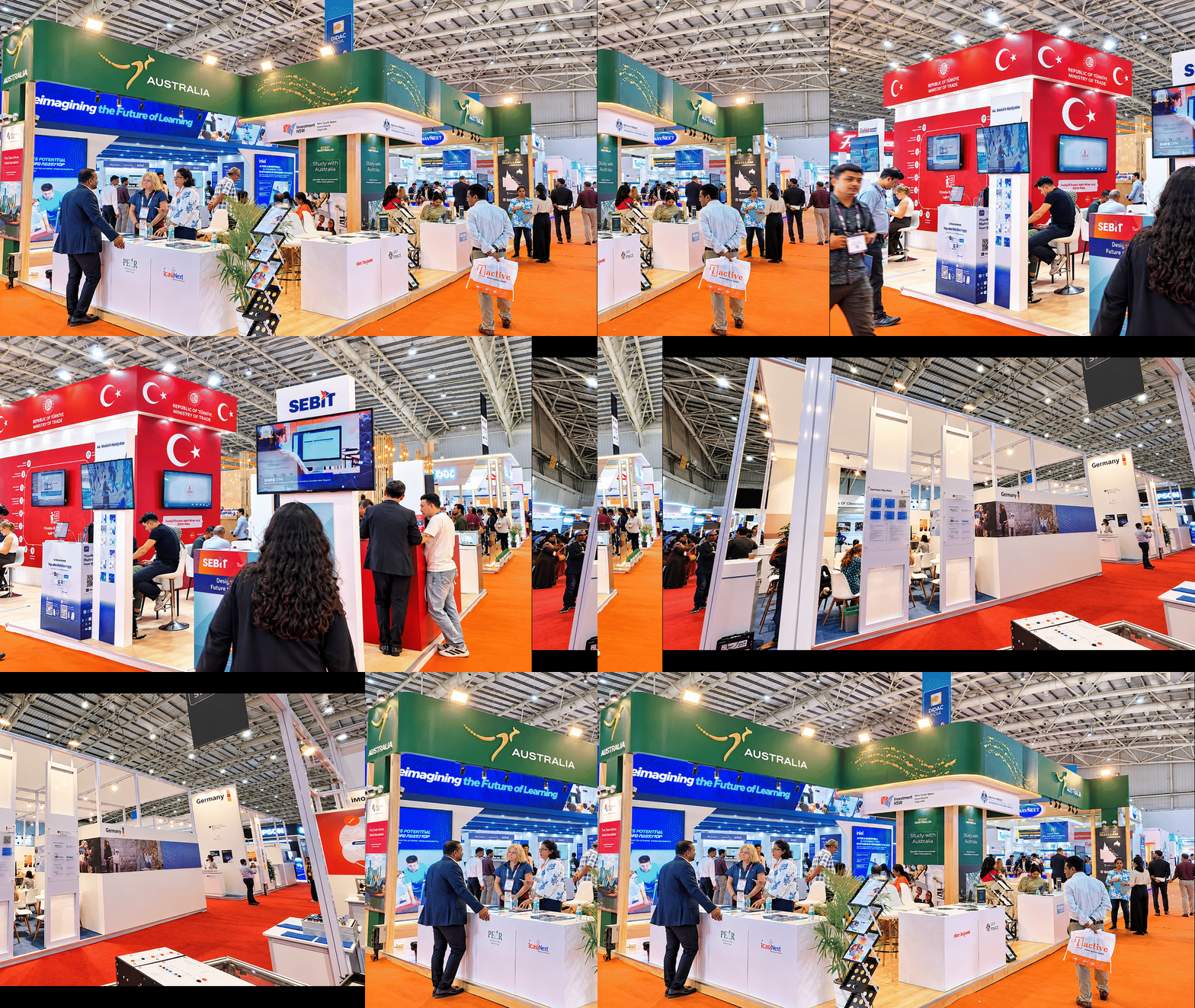
DIDAC India and DIDAC Skills 2026 have attracted growing international participation, highlighting India’s emergence as a key global education and skills market. Delegations from Germany, Australia, Türkiye, Maldives and other countries are exploring collaborations, technology partnerships and workforce development initiatives aimed at strengthening future-ready education and vocational training.
India’s growing influence in global education and skills development was on full display at DIDAC India and DIDAC Skills 2026, as education leaders, policymakers and industry representatives from around the world gathered in Bengaluru to forge new partnerships and explore opportunities in one of the sector’s fastest-growing markets.
Jointly organised by the India Didactics Association and Landesmesse Stuttgart GmbH & Co. KG, the 16th edition of the event, held from 25 to 27 November at the Bangalore International Exhibition Centre, brought together more than 500 exhibitors from over 20 countries, including more than 120 companies from the skilling sector. The scale and diversity of participation underscored India’s rising status as a destination for education innovation, workforce development and international collaboration.
Among the strongest displays of international engagement was the German Pavilion, reflecting deepening educational ties between India and Germany. Dr Hans-Joachim Prinz, President of the Didacta Association, highlighted the importance of equipping learners with the skills and competencies needed for lifelong learning.
“Together, we have to think about how students gain the skills and competences to keep learning throughout their lives,” he said.
Prinz noted that German companies bring decades of experience in education and vocational training, offering practical solutions for schools and skills institutions. He said closer collaboration could help prepare Indian learners for employment opportunities in Germany through language training, cultural understanding and industry-relevant skills, while also helping Germany address its demand for skilled workers.
Australia also arrived with a significant presence. The Australian Trade and Investment Commission (Austrade) led a 21-member delegation of education technology and skilling organisations on a week-long mission centred on DIDAC.
According to Vik Singh, Trade and Investment Commissioner for Education and Skills, South Asia at Austrade, the relationship between the two countries is evolving beyond a traditional buyer-seller model.
“India’s ambition to become a global skilling capital, supported by national and state initiatives, creates significant opportunities for our countries to work together,” he said.
Singh pointed to emerging collaborations already taking shape, including AI training programmes being integrated into school curricula, mental wellbeing initiatives in Indian schools and cybersecurity content being embedded into university degree programmes. Such partnerships, he said, demonstrate how both countries can combine strengths to develop workforce capabilities with global relevance.
Representatives from Türkiye highlighted similar opportunities for cooperation. Dr Bilgehan Özbaylanlı, Head of the R&D and Ed-Tech Ecosystem Department at the Turkish Ministry of Education, said India and Türkiye could learn from one another’s digital learning platforms and large-scale education initiatives.
She highlighted Türkiye’s World Bank-supported Education for Job Market Readiness Project, which is modernising learning environments, expanding AI-powered personalised learning and supporting EdTech innovation. India’s experience in delivering education at scale and nurturing a vibrant startup ecosystem, she added, provides valuable lessons for preparing young people for future jobs.
The Maldives also reaffirmed its longstanding engagement with the event. Education Minister Dr Ismail Shafeeu attended DIDAC India for the sixth time, emphasising the importance of education and skills cooperation between the two countries. While the Maldives has achieved universal primary and secondary education and maintains literacy rates above 99 per cent, challenges remain in retaining students through Year 12. Shafeeu also stressed the need for specialised programmes focused on climate adaptation and resilience.
Aditya Gupta, CEO of the India Didactics Association, said India has become an increasingly important market for global education providers and technology companies seeking long-term partnerships. As education systems place greater emphasis on quality learning, digital transformation and future-ready skills, DIDAC is emerging as a key platform where international innovation connects with the practical needs of Indian institutions.
With participation from countries including Germany, Australia, Türkiye, Maldives, China and Mauritius, DIDAC India and DIDAC Skills 2026 reflected a shared belief that global cooperation will play a central role in shaping the next chapter of education and workforce transformation.
Discover more from Creative Brands Mag
Subscribe to get the latest posts sent to your email.















Leave a comment