


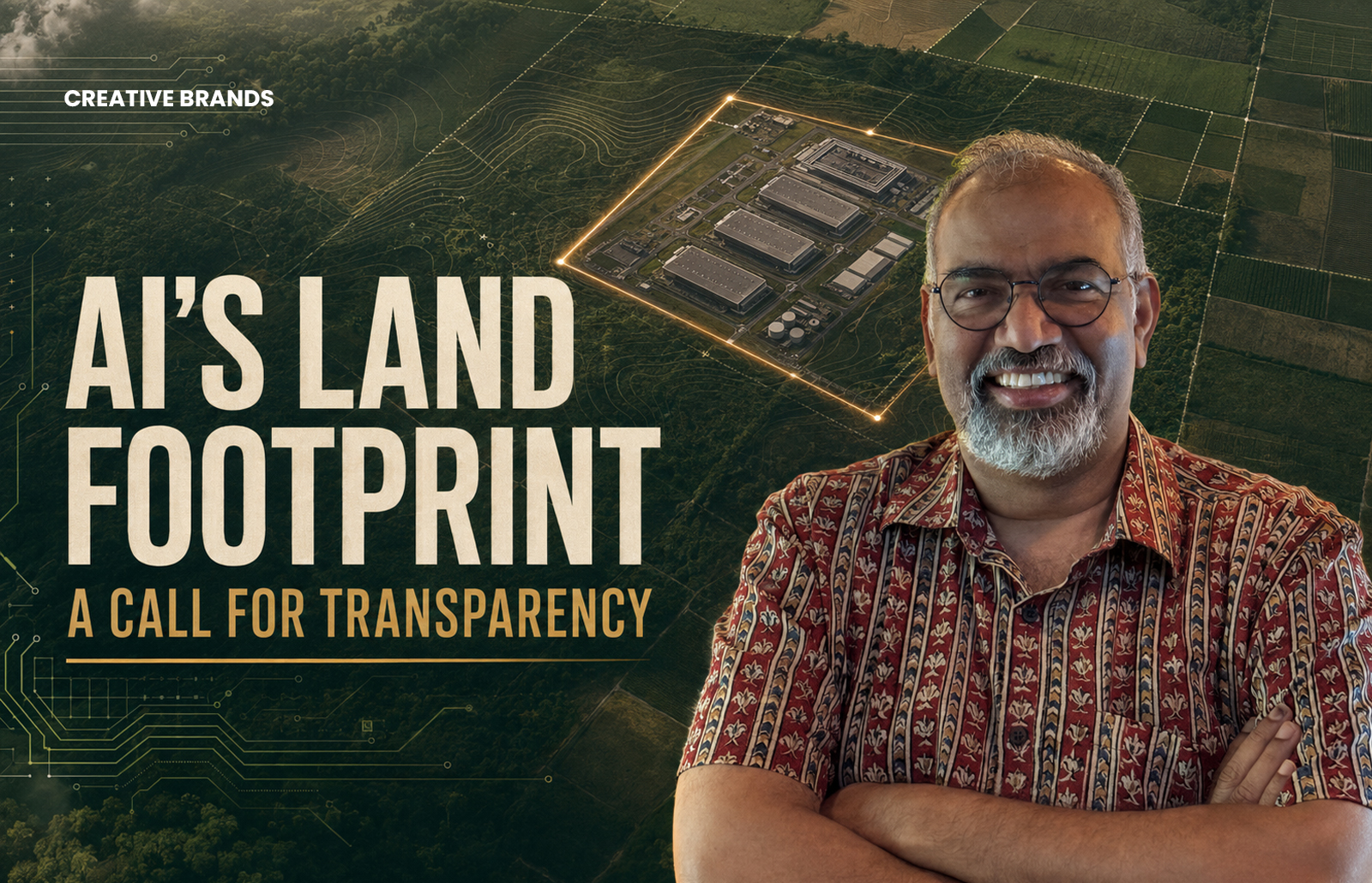
Artificial intelligence promises breakthroughs for land restoration, yet its environmental cost is mounting. At the AI for Good Summit in Geneva, Muralee Thummarukudy of the G20 Global Land Initiative warned of AI’s vast land and water footprint, urging transparency, governance, and balance between innovation and ecological responsibility.
Artificial intelligence is advancing at extraordinary speed, but its environmental consequences are only beginning to be understood. At the AI for Good Summit in Geneva, Muralee Thummarukudy, Director of the G20 Global Land Initiative, reflected on the paradox of AI as both a tool for land restoration and a potential threat to the very resources it seeks to protect.
Thummarukudy described AI as a double-edged sword, noting that governance is struggling to keep pace with technological innovation. While the Summit showcased remarkable applications, including initiatives he helped launch in 2019, the prevailing anxiety was clear: the debate has shifted from what AI can do for land to what it is already doing to land and people.
Three challenges dominated the discussions. Job displacement looms large, with uncertainty over whether new opportunities will offset losses. More pressing for land restoration advocates is AI’s environmental footprint. Hyperscale data centres consume vast amounts of water and power, requiring significant land that often competes with agriculture and natural habitats. Intellectual property concerns add complexity, as creators whose data trained AI models face questions of compensation.
For the Global Land Initiative, the priority is to treat land as a non-renewable resource and to bring AI’s footprint into the light. At UNCCD COP17, a side event with the United Nations University will establish clear metrics for assessing land use when data centres are proposed. The aim is to ensure that arable land and critical ecosystems are not sacrificed without scrutiny.
Despite these risks, Thummarukudy emphasised AI’s operational potential. Near real-time, high-resolution monitoring of land degradation and restoration is now possible, enabling precise tracking of vegetation and land-use changes. AI can also accelerate knowledge-sharing, breaking down language barriers and allowing successful restoration techniques to be replicated globally in days rather than years.
The UNCCD’s next steps focus on governance and transparency. By joining the UN Secretary-General’s AI Environmental Transparency Initiative, the organisation seeks to ensure land and water impacts are reported alongside carbon emissions. Partnerships forged at COP17 will advocate for mandatory environmental disclosures for AI infrastructure. As Thummarukudy stressed, trust and interoperability begin with transparency, and the UNCCD must lead by example.
Discover more from Creative Brands Mag
Subscribe to get the latest posts sent to your email.
















Leave a comment