


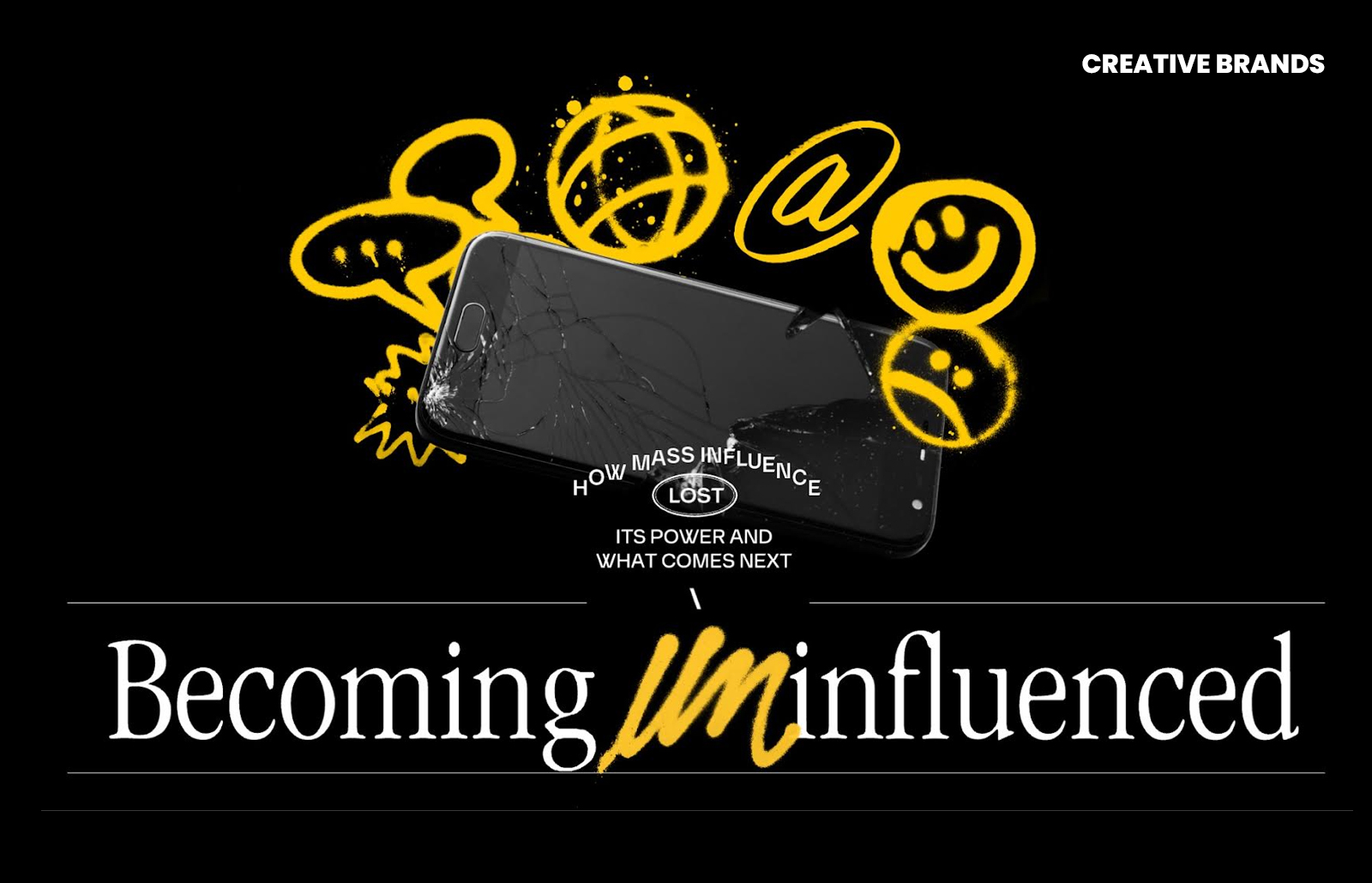
TBWA’s Backslash report Becoming Uninfluenced reveals consumers now aspire to be hard to influence, with 62% rejecting mass popularity. Virality is viewed with suspicion, and distinct taste outranks follower counts. Brands must pivot from scale to concentrated credibility, earning cultural relevance through authenticity, affinity and genuine trust.
TBWA’s cultural intelligence unit Backslash has unveiled its latest report, Becoming Uninfluenced, which signals a striking shift in consumer attitudes towards influence, virality and cultural relevance. The findings suggest that the age of mass popularity as a marker of status is waning, replaced by a new aspiration: being difficult to influence.
According to the study, 62% of respondents now consider being hard to influence more aspirational than being an influencer. This reversal of cultural hierarchy reflects growing scepticism about the authenticity of online popularity. Virality, once celebrated as proof of cultural resonance, is increasingly viewed with suspicion. Three-quarters of respondents assume viral content is either brand-engineered or artificially boosted, with only a quarter believing it reflects genuine enthusiasm. Backslash describes this phenomenon as “taste paranoia” — the anxiety that personal preferences are no longer truly one’s own, but shaped by algorithms and manufactured influence.
This scepticism is reshaping admiration and identity. Highly specific taste now outranks follower counts as a marker of cultural interest. When asked what makes a brand relevant, respondents placed distinct point of view and unique taste at the top, while mass popularity ranked last. Cecelia Girr, Head of Strategy at Backslash, explained: “Influence isn’t disappearing. People still want recommendations and discovery. What they’re rejecting is influence that feels imposed on them. When popularity can be manufactured, distinct taste and finding things for yourself carry more cultural currency.”
For brands, the implications are profound. Traditional growth strategies built on scale and visibility are increasingly insufficient. Backslash argues that the next era of brand building will be defined by “concentrated credibility” — metrics such as deep affinity, participation, physical presence and share of trust. Emmanuel Sabbagh, Chief Strategy Officer of TBWA\Singapore and Omnicom Advertising Asia, noted: “Asia has become the world’s most sophisticated playground for engineered influence. But consumers are becoming equally sophisticated at seeing through it. The harder brands try to manufacture desirability, the less desirable they risk becoming. The next era won’t be won by those who manufacture the most attention, but by those who earn the most genuine affection.”
The report outlines three guiding principles for brands navigating this shift: the further from the feed, the greater the trust; things that feel genuinely discovered are most desirable; and brands should stop manufacturing culture, instead building places for it to happen naturally. Drawing on cultural analysis, expert interviews and a proprietary survey of more than 700 respondents across the US and UK, Becoming Uninfluenced positions itself as a wake-up call for marketers. In an era where virality is suspect and taste is reclaimed, cultural relevance will be earned not through mass exposure but through authenticity, distinctiveness and trust.
Discover more from Creative Brands Mag
Subscribe to get the latest posts sent to your email.













Leave a comment