


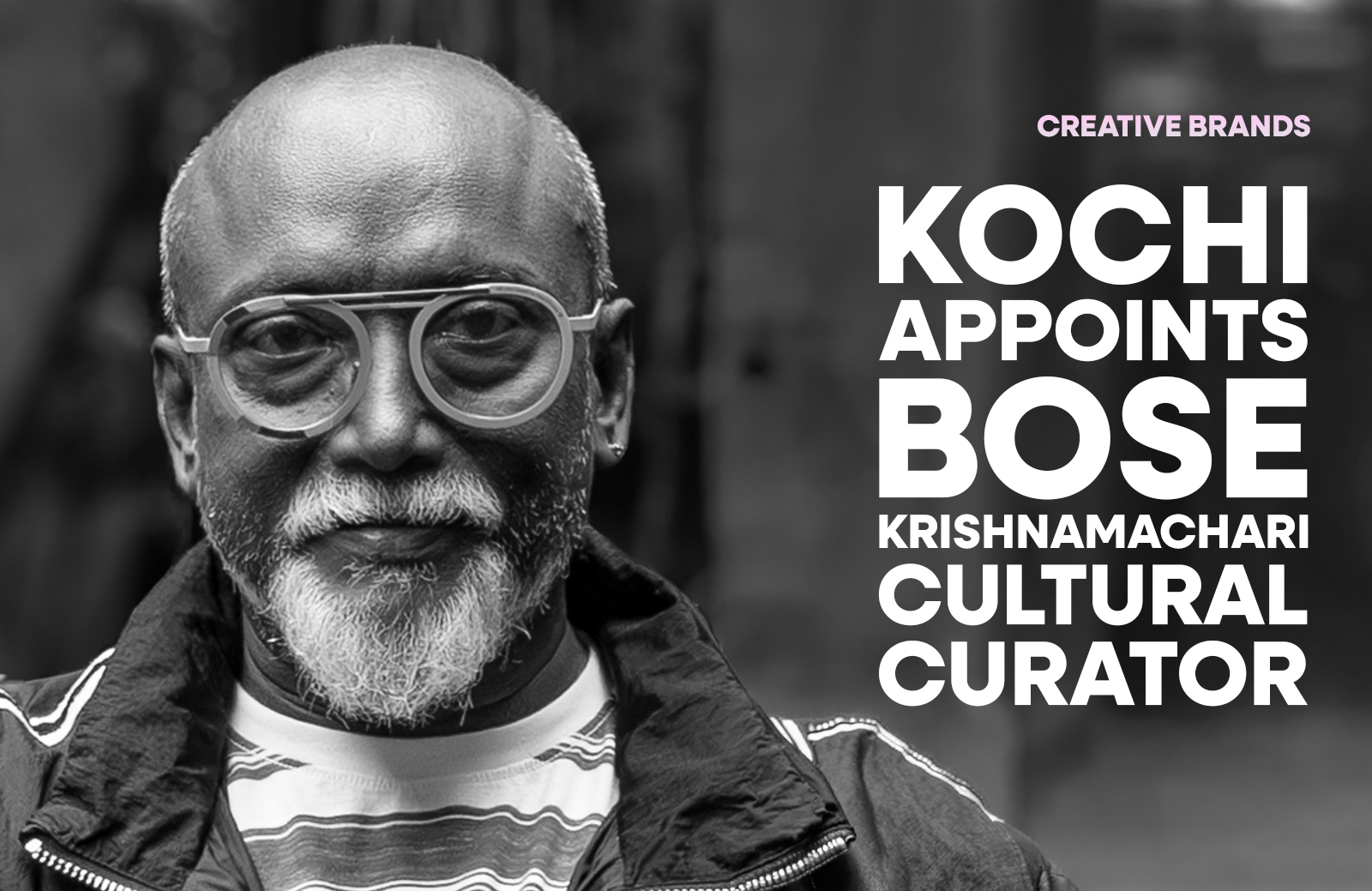
The Kochi Municipal Corporation has appointed artist and curator Bose Krishnamachari as Cultural Curator of the city. The move signals Kochi’s ambition to deepen its cultural identity, strengthen public art initiatives, and build on the international reputation created by the Kochi-Muziris Biennale.
In a move that reflects the growing recognition of culture as an essential dimension of urban life, the Kochi Municipal Corporation has appointed noted artist and curator Bose Krishnamachari as the Cultural Curator of the city of Kochi. The decision marks a significant step in the city’s efforts to strengthen its cultural identity and expand the role of art, architecture and public engagement in shaping the future of one of India’s most historically vibrant port cities.
Krishnamachari, widely recognised for his role in transforming Kochi into a global cultural destination, expressed deep gratitude to the municipal leadership for entrusting him with the responsibility. The appointment was formally supported by the city’s civic leadership including Mayor Minimol V. K. and Deputy Mayor Deepak Joy, along with Member of Parliament Hibi Eden and several legislators representing the region.
In acknowledging the honour, Krishnamachari highlighted Kerala’s long tradition of cultural awareness and social progressiveness. Within that landscape, Kochi occupies a distinctive place as a historic trading port where cultures, ideas and communities have met for centuries. From the spice trade era to the present day, the city’s layered history has been shaped by interactions between local traditions and global influences.
For Krishnamachari, the appointment represents not just personal recognition but also a continuation of a cultural journey that has been closely tied to the city for more than a decade. His association with the internationally celebrated Kochi-Muziris Biennale has played a central role in redefining Kochi’s contemporary cultural identity. Since its inception in 2012, the biennale has grown into one of Asia’s most significant art events, drawing artists, curators and visitors from across the world.
The biennale emerged as a collective cultural movement rather than merely an art exhibition. Organised by the Kochi Biennale Foundation, the event has transformed heritage spaces, warehouses and waterfront structures across the historic district of Fort Kochi into platforms for artistic experimentation and public dialogue.
Through installations, performances, workshops and community programmes, the festival has created a dynamic interface between art and everyday life. It has also introduced a wide audience to contemporary art practices while simultaneously revitalising neglected urban spaces. Many observers credit the biennale with placing Kochi firmly on the global cultural map.
Krishnamachari believes that the spirit of the biennale — often described as the “People’s Biennale” — has helped nurture a broader cultural confidence within the city. According to him, the decision by the municipal corporation to appoint a practising artist as cultural curator reflects a progressive civic imagination that recognises the transformative power of culture in shaping urban environments.
The role of cultural curator, though relatively new in the context of Indian city administration, carries significant possibilities. In many global cities, cultural strategists work alongside planners and civic leaders to integrate creative thinking into urban development. Public art programmes, cultural districts, heritage conservation initiatives and community-driven creative projects often form part of this approach.
By inviting an artist-curator to help guide its cultural vision, Kochi appears to be signalling its intention to explore similar possibilities. The aim, according to Krishnamachari, is to bring together art, architecture, public space and civic vision in ways that enrich the everyday experiences of residents and visitors alike.
In practical terms, the initiative could lead to new collaborations between municipal authorities and a wide range of creative professionals. Krishnamachari has indicated that he looks forward to working with cultural institutions, embassies, artists, architects, designers and scholars to develop projects that strengthen the city’s cultural fabric.
Such partnerships could open doors to international cultural exchanges, interdisciplinary research and innovative public art installations. They could also help integrate creative thinking into urban planning processes, ensuring that future development projects pay attention not only to infrastructure but also to cultural and social vitality.
Kochi’s unique geography and history provide fertile ground for such initiatives. Situated along the Arabian Sea, the city has long been shaped by maritime trade and migration. Arab, Chinese, European and Jewish influences have left their mark on its architecture, cuisine and cultural practices, creating a mosaic that continues to evolve.
In recent decades, Kochi has also emerged as a major economic hub in Kerala, driven by port activities, tourism, information technology and international commerce. Yet even as the city expands and modernises, questions about preserving heritage and nurturing cultural life have gained increasing prominence.
Urban planners and cultural advocates often argue that creative spaces and cultural programming can play a crucial role in maintaining the identity of rapidly growing cities. Public art projects, cultural festivals and heritage conservation efforts not only attract tourism but also strengthen community belonging.
Krishnamachari’s vision appears to align with this broader understanding of culture as a central component of urban sustainability. By encouraging dialogue between diverse creative disciplines, knowledge systems and scientific thinking, he hopes to help imagine new possibilities for the city’s public spaces and cultural institutions.
The initiative could also encourage greater participation from citizens. Cultural development, he suggests, is most meaningful when it emerges from collective engagement rather than top-down planning. Workshops, exhibitions, educational programmes and community art projects may therefore become important tools in shaping Kochi’s evolving cultural landscape.
Observers note that Kochi already enjoys a strong foundation upon which such ambitions can be built. The international visibility generated by the biennale has drawn artists, scholars and tourists from across the world. At the same time, local cultural organisations, educational institutions and independent art spaces have expanded steadily over the past decade.
This growing ecosystem has created an environment where creative experimentation can thrive. The city’s historic neighbourhoods, waterfronts and warehouses offer distinctive settings that inspire artists and architects alike. With the support of civic authorities, these spaces could potentially become vibrant cultural corridors.
For Krishnamachari, the appointment is therefore both an acknowledgement of the past and an invitation to imagine the future. The journey that began with the biennale, he believes, can now evolve into a broader civic movement where creativity shapes not only galleries and exhibitions but the very character of the city.
If successful, the initiative could position Kochi as a pioneer in India’s urban cultural policy. By placing artistic thinking at the heart of city planning, Kochi may attempt something few Indian cities have tried before — building an urban identity that integrates heritage, creativity and inclusive public engagement.
Krishnamachari sees the next chapter as an opportunity to deepen the relationship between culture and everyday life. With collaboration, openness and imagination, he believes Kochi can move beyond being merely a host city for a major art festival and emerge as a living laboratory of cultural innovation.
In his words, the ambition is clear: after the remarkable journey of the biennale, Kochi now moves toward becoming India’s first truly creative city.
Discover more from Creative Brands Mag
Subscribe to get the latest posts sent to your email.











Leave a comment