


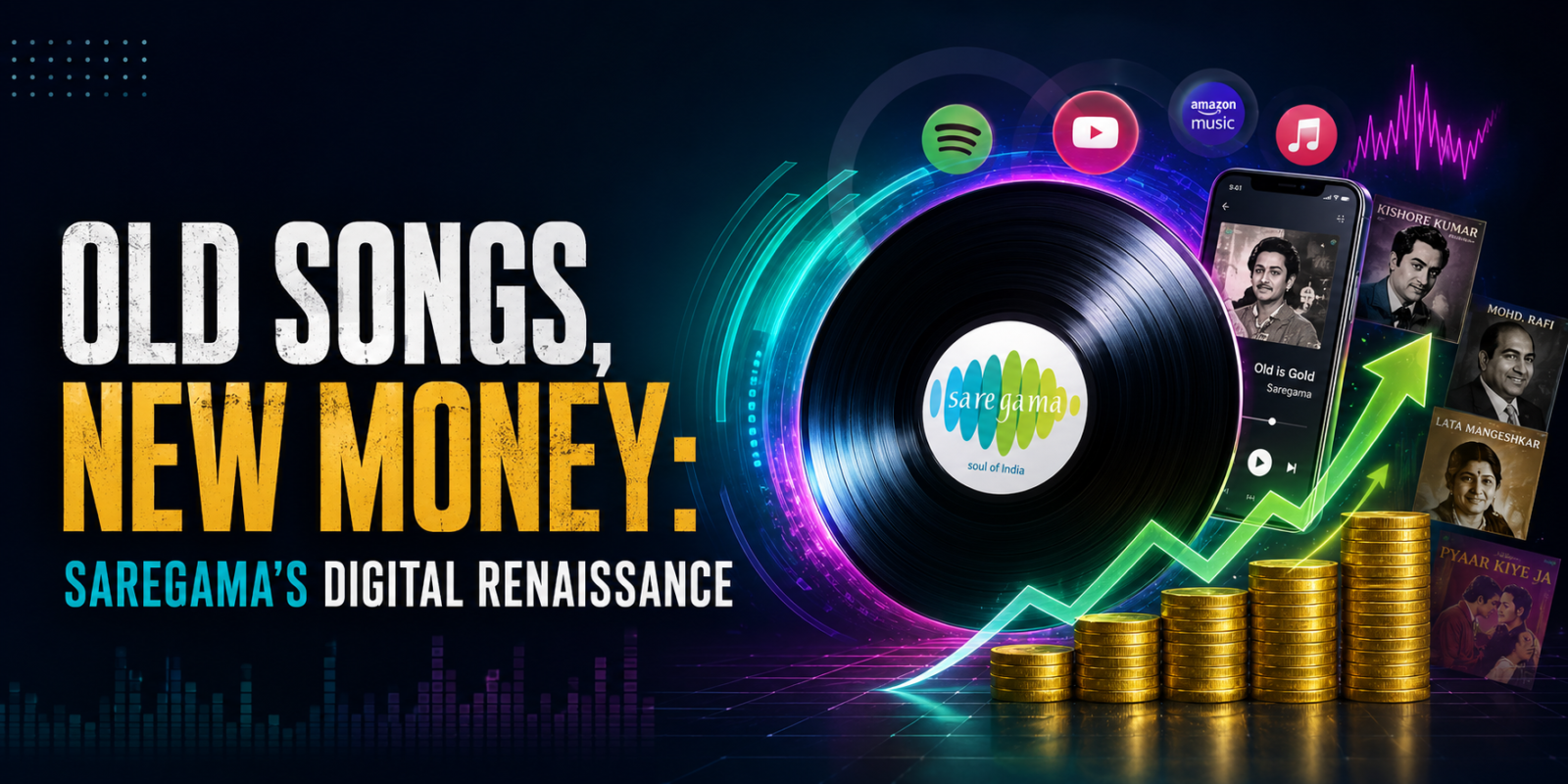
Saregama India Ltd., the country’s oldest music label, surged nearly 15% after reporting Q4 profits beyond ₹74 crore. Built in the radio era, the company has reinvented itself for the digital age, turning nostalgia into a thriving business through streaming royalties, viral remixes, Carvaan speakers, and content licensing.
India’s oldest music label has just demonstrated that nostalgia is not only timeless but also highly profitable. Saregama India Ltd. surged nearly 15% after posting strong Q4 results, with profits rising beyond ₹74 crore. For a company born in the radio era, its ability to thrive in today’s digital-first economy is a striking case study in reinvention.
Saregama’s catalogue of Bollywood classics and retro hits has long been a cultural treasure, but what’s remarkable is how those songs are now powering a modern business model. Every viral remix, trending audio clip, and creator reel on Instagram or YouTube is helping old music generate new revenue streams. In an age where digital platforms dictate consumption, owning timeless content has become one of the smartest businesses possible.
The company’s strategy is multi-pronged. Streaming royalties from platforms like Spotify, Apple Music, and YouTube have created a steady flow of income, while content licensing ensures that Saregama’s music continues to appear in films, advertisements, and television. Social media has amplified this further, with reels and shorts breathing new life into tracks that were recorded decades ago. The viral nature of digital content means that a song from the 1970s can suddenly become the soundtrack to millions of short videos, creating fresh monetisation opportunities.
Beyond digital platforms, Saregama has also innovated with physical products. Its Carvaan speakers—preloaded with thousands of classic songs—have become a nostalgic yet practical device for older audiences, bridging the gap between analogue memories and digital convenience. This product line has not only strengthened brand loyalty but also diversified revenue beyond streaming.
The company’s success reflects a broader truth about the internet economy: content ownership is king. While newer players scramble to produce fresh hits, Saregama sits on a goldmine of timeless recordings that continue to resonate across generations. The digital era has democratised distribution, but it has also magnified the value of archives. For Saregama, every remix, every reel, and every viral moment is a reminder that nostalgia can be endlessly repackaged for contemporary audiences.
What makes this story compelling is not just the financial surge but the cultural resonance. Saregama has managed to turn memory into money, proving that heritage brands can thrive if they adapt intelligently. In a market often obsessed with novelty, the company has shown that legacy, when paired with digital savvy, can be just as powerful.
As India’s creative economy continues to expand, Saregama’s model offers lessons for other heritage institutions. The past, when digitised and distributed smartly, can become a sustainable future. For investors, creators, and audiences alike, the company’s Q4 performance is more than a financial headline—it is proof that nostalgia, when harnessed strategically, is one of the most enduring assets in the digital age.
Discover more from Creative Brands Mag
Subscribe to get the latest posts sent to your email.














Leave a comment