


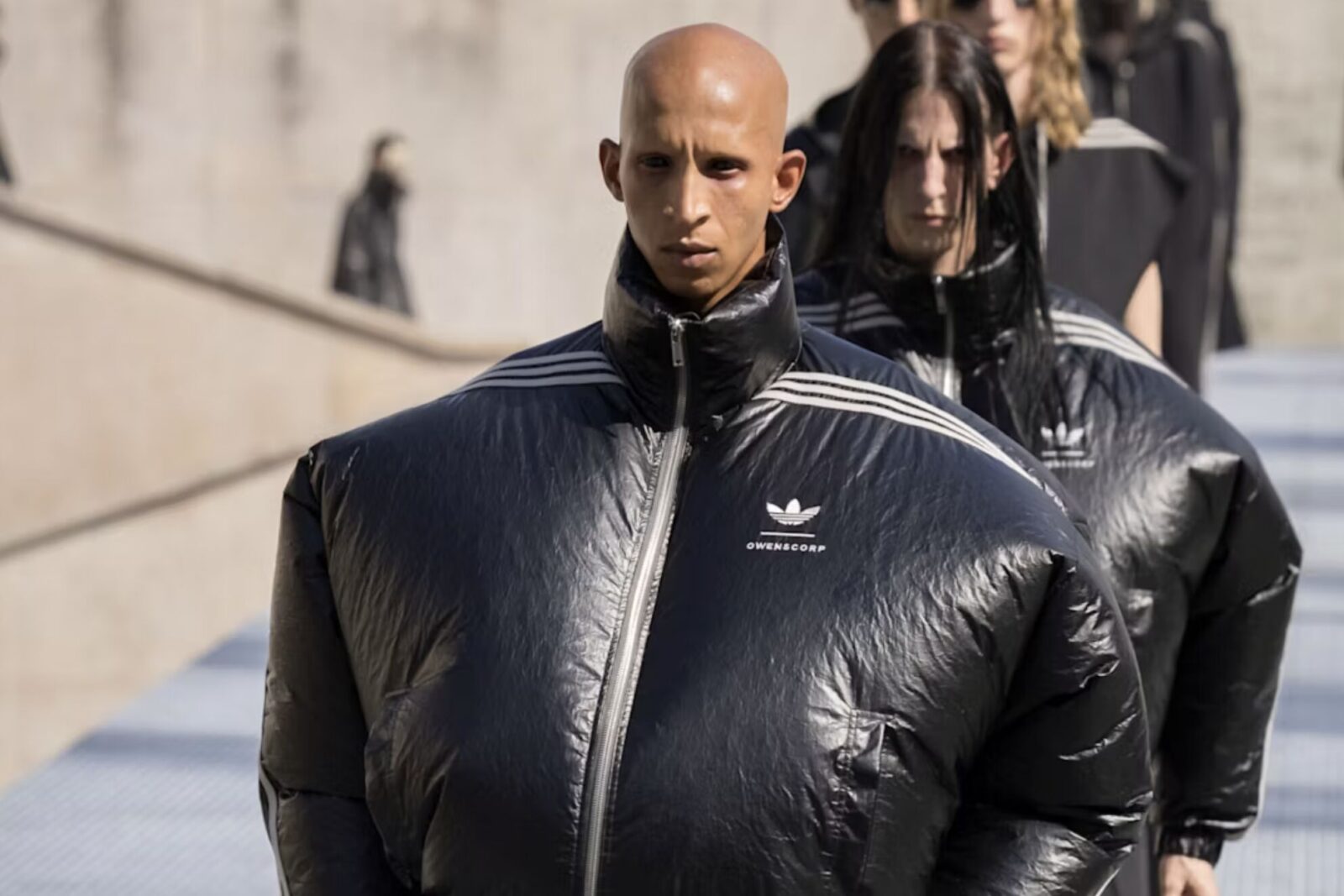
Rick Owens has reunited with adidas for Spring/Summer 2027, unveiling inflatable track jackets with integrated fans powered by adidas’ Climacool system. The collaboration, staged during a heatwave, reframes climate adaptation as a design and merchandising challenge, signalling how fashion can merge function and spectacle in a single product story.
Performance innovation has crossed an unexpected threshold, moving from the football pitch to the luxury runway. Rick Owens, the avant-garde designer known for his uncompromising vision, has reunited with adidas nearly a decade after their last collaboration to present a collection that makes climate adaptation a central theme.


The highlight of the Spring/Summer 2027 show was a series of inflatable track jackets fitted with integrated fans, built on adidas’ Climacool system. Originally developed for motorsport and recently introduced for the Football World Cup, the technology is designed to regulate body temperature under extreme conditions. Owens’ decision to incorporate it into fashion garments underscores how functionality is becoming inseparable from spectacle.
The timing of the collaboration was no accident. With a heatwave sweeping across Europe, Owens was forced to move his show to 10am to avoid the worst of the midday sun. Against this backdrop, the garments became more than aesthetic statements; they were responses to environmental realities. By embedding cooling systems into couture, Owens framed climate adaptation not as a styling choice but as a fundamental design and merchandising question.
For adidas, the partnership extends its narrative of performance technology beyond sport. By placing Climacool at the centre of a luxury collaboration, the brand demonstrates how innovations born in athletic contexts can be reimagined for lifestyle and cultural relevance. The jackets are not simply functional—they are theatrical, inflating and ventilating in ways that capture attention while serving a practical purpose.
Owens, meanwhile, continues to challenge the boundaries of fashion by treating garments as tools for survival as much as expressions of identity. His collaboration with adidas suggests a future where fashion responds directly to climate pressures, offering products that are both protective and performative.
The collection signals a broader shift in how brands approach design. Function and spectacle, once seen as opposing forces, now share a single product story. In an era where climate change is reshaping daily life, the fusion of technology and aesthetics is no longer optional—it is essential. Owens and adidas have shown that adaptation can be beautiful, dramatic, and commercially viable, setting a precedent for how fashion might evolve in the years ahead.
Discover more from Creative Brands Mag
Subscribe to get the latest posts sent to your email.














Leave a comment