


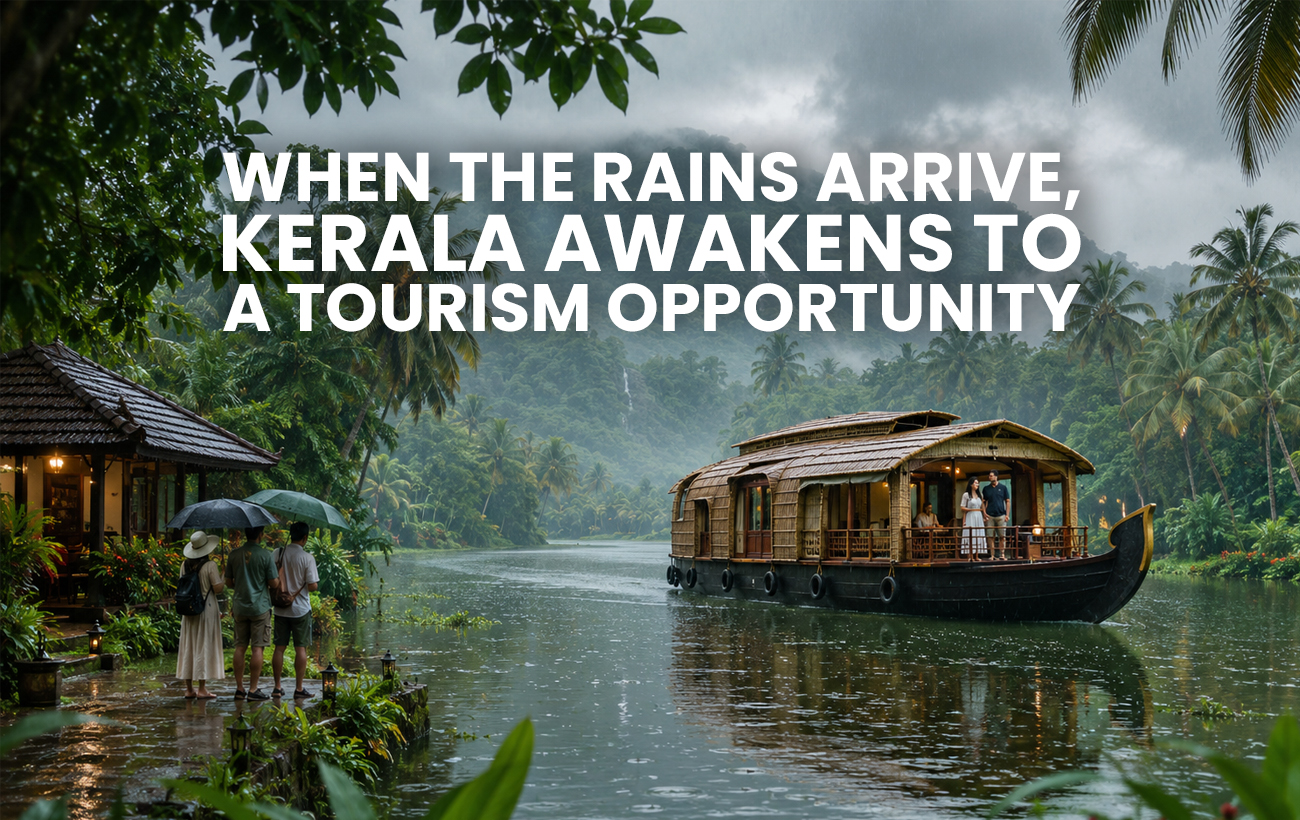
Kerala’s monsoon is increasingly emerging as a powerful tourism attraction rather than an off-season setback. With travellers seeking wellness, nature and emotional escape, the State has a major opportunity to build a sustainable rain-tourism economy. However, success will depend on infrastructure, hospitality standards, environmental care and coordinated planning across destinations.
For generations, Kerala’s monsoon was associated more with caution than celebration. Tourism brochures preferred bright skies, sunny beaches and postcard-perfect landscapes bathed in tropical light. Travel businesses traditionally viewed the rainy months as a difficult period marked by fewer bookings, reduced movement and declining commercial activity. Today, however, a quiet transformation is taking place. The arrival of the rains is no longer seen merely as a climatic event. Increasingly, it is becoming a tourism experience in itself.
The changing preferences of travellers have opened a fresh opportunity for Kerala. Across the world, tourists are beginning to move away from hurried sightseeing schedules and crowded destinations. Many are searching instead for emotional comfort, wellness, silence and meaningful experiences. In that search, Kerala’s monsoon possesses a natural advantage that few destinations can match. The sight of rain drifting across paddy fields, clouds descending upon hill stations and rivers swelling through green landscapes creates an atmosphere that appeals deeply to modern travellers seeking relief from urban pressure.
The emotional connection people have with rain is powerful. For some, it brings memories of childhood and simpler times. For others, it represents peace and reflection. In an age shaped by work stress, screen fatigue and constant digital distraction, the monsoon offers something rare — permission to slow down. Kerala’s tourism industry has begun recognising that this emotional experience itself can become a valuable product.
The State’s geography gives monsoon tourism extraordinary diversity. In the hill districts, rain transforms forests into living theatres of mist and movement. Waterfalls regain their strength and mountain roads acquire dramatic beauty. The backwaters take on a different rhythm under grey skies, offering quieter and more intimate travel experiences. Coastal villages appear calmer and more reflective during rainy weather, attracting visitors who prefer solitude over crowds. Even city tourism changes character during the monsoon, with cafés, heritage spaces and cultural venues gaining a special atmosphere.
Health and wellness tourism stand to benefit significantly from this shift. Kerala’s Ayurveda sector has long promoted the monsoon as the ideal season for rejuvenation therapies because the cooler climate and higher humidity are believed to support the body’s healing processes. Wellness retreats, yoga centres and nature-based resorts have already started integrating rain-focused experiences into their offerings. For many travellers, a holiday today is no longer about luxury alone. It is about restoration of mind and body. Kerala’s monsoon naturally aligns with that global trend.
Domestic tourism is also changing rapidly. Younger travellers are more willing to travel during unconventional seasons if the experience feels authentic and visually memorable. Social media has amplified this shift. Rain-drenched photographs from Kerala often receive strong engagement online, helping reshape public imagination about monsoon travel. A mist-covered tea plantation or a narrow village road lined with swaying coconut trees can now become powerful tourism marketing tools without expensive advertising campaigns.
Yet opportunity alone does not guarantee success. Kerala’s tourism industry faces an important test: whether it can convert seasonal beauty into a reliable and organised economic model. The challenge begins with infrastructure. Travellers may enjoy the romance of rain, but they do not enjoy dangerous roads, traffic disruptions or poor sanitation. Many tourism destinations in Kerala continue to face recurring monsoon-related problems including potholes, waterlogging and inadequate drainage systems. These issues damage not only roads but also the reputation of destinations.
The approach roads leading to tourist centres require immediate attention before the peak rainy weeks begin. Smooth transport connectivity remains essential for both domestic and international visitors. Tourists planning monsoon holidays expect reliable access to hill stations, resorts, cultural centres and ecotourism locations. If journeys become exhausting or unsafe, travellers are unlikely to return regardless of how beautiful the destination may be.
Public infrastructure around tourism centres also demands improvement. Covered waiting areas, hygienic public washrooms, emergency medical support, proper lighting and clear signage become especially important during adverse weather conditions. Rain intensifies even small inconveniences. A destination that appears manageable during summer can quickly become frustrating if basic facilities collapse under heavy rainfall.
Hotels and restaurants must also rethink their approach to monsoon hospitality. Rain changes customer expectations. Travellers spending long hours indoors seek warmth, comfort and attentive service. Interiors matter more during this season. Cleanliness, indoor ambience, hot local cuisine and personalised hospitality become key factors influencing visitor satisfaction. Resorts that treat the monsoon merely as a low-occupancy season risk missing a growing market segment.
Food tourism presents another untapped opportunity. Kerala’s cuisine becomes particularly attractive during rainy weather. Traditional dishes, seafood delicacies, spicy snacks and local beverages can all become part of carefully designed monsoon experiences. Culinary festivals linked to seasonal traditions could draw visitors interested in culture as much as climate. Restaurants that highlight regional recipes and local ingredients may discover that monsoon tourism creates opportunities extending far beyond accommodation bookings.
Tour guides and tourism workers remain central to the visitor experience. Modern travellers increasingly value storytelling over information alone. Visitors want to understand local traditions, environmental practices, agricultural life and cultural history. A guide who can explain how monsoon rhythms shape Kerala’s farming communities or temple festivals adds depth to the journey. Skill development and language training therefore become important investments for the tourism sector.
The monsoon season can also strengthen Kerala’s local economy through the promotion of art and craft. Tourism destinations often attract visitors searching for products connected to local identity. Handwoven textiles, wood carvings, coir products, mural paintings, bamboo work and handmade jewellery can generate significant income if properly marketed. Instead of limiting shopping to commercial centres, Kerala can integrate craft villages and artisan workshops into tourism circuits.
Cultural tourism too can flourish during the rainy season. Traditional music performances, dance forms, theatre and folk arts can provide indoor attractions that complement nature-based travel. Many tourists are willing to spend on authentic cultural experiences if they are presented professionally. Small cultural venues, community spaces and heritage buildings could become active centres of monsoon tourism rather than remaining underused.
However, the industry must avoid the mistake of promoting monsoon tourism without strengthening safety measures. Kerala’s rainy season can be unpredictable. Landslides, flooding and strong currents occasionally threaten vulnerable areas. Tourists unfamiliar with local conditions may underestimate risks. Authorities therefore need effective communication systems, weather alerts and emergency response mechanisms to ensure visitor safety.
Environmental sustainability is equally critical. Kerala cannot afford a tourism model that damages forests, rivers or fragile hill ecosystems. Unregulated construction, plastic waste and overcrowding have already created pressure in several destinations. If monsoon tourism expands without environmental safeguards, the very landscapes attracting visitors may suffer long-term damage. Responsible tourism policies must therefore become part of every development strategy.
Local communities should benefit directly from tourism growth. Residents living near tourism destinations often bear the burden of increased traffic, waste and rising costs. Inclusive tourism planning can help ensure that local people gain employment opportunities and business income from visitor activity. Homestays, community-led tours, local transport services and artisan markets can distribute economic benefits more fairly across society.
Kerala’s tourism authorities have in recent years attempted to position the State as an all-season destination rather than one dependent solely on winter travel. The monsoon can become a central pillar of that vision. Unlike artificial attractions created through massive investment, rain tourism relies primarily on Kerala’s natural and cultural strengths. This gives the State a competitive advantage that cannot easily be replicated elsewhere.
Internationally, destinations offering climate-based experiences are gaining popularity. Snow tourism in Europe, cherry blossom tourism in Japan and autumn tourism in parts of North America demonstrate how seasonal identity can shape successful travel economies. Kerala’s monsoon possesses similar potential if marketed intelligently. The State has the ability to create a globally recognised tourism brand built around rain, wellness and ecological beauty.
Technology and digital storytelling will play an important role in that transformation. Tourism campaigns today depend heavily on visual narratives shared through mobile phones and online platforms. Kerala’s rain-soaked landscapes naturally lend themselves to cinematic imagery. Carefully planned digital campaigns featuring local stories, seasonal experiences and responsible travel could help attract younger audiences from India and abroad.
Still, marketing cannot replace preparedness. A tourist who encounters poor service or damaged infrastructure is unlikely to recommend the experience to others. In the age of online reviews, a single negative experience can influence hundreds of potential travellers. Consistency therefore matters as much as beauty.
The tourism industry must also address the issue of seasonality in employment. Many workers face uncertain incomes during slower months. If monsoon tourism succeeds, it could create more stable year-round opportunities for hotel staff, guides, drivers, artisans and small business owners. This would strengthen local economies while reducing financial instability within the sector.
There is also a larger psychological dimension to Kerala’s relationship with rain. For residents, the monsoon has always shaped agriculture, festivals, literature and daily life. It is deeply woven into the State’s cultural identity. Tourism offers a chance to present that identity to the world in a meaningful way. Rather than hiding the rains, Kerala can embrace them as part of its story.
The question, however, remains urgent and practical. Is Kerala fully prepared to welcome travellers during the monsoon with the same seriousness shown during peak tourist seasons? Beauty alone will not sustain long-term growth. Roads must be repaired before they fail. Waste must be managed before destinations become polluted. Services must improve before visitors arrive.
Kerala already possesses the rain, the landscapes and the emotional appeal. What it now requires is coordination, planning and vision. If government agencies, tourism businesses, local communities and cultural organisations work together, the monsoon could become one of the State’s strongest economic and cultural assets.
As clouds continue to gather over the Western Ghats and the scent of wet earth spreads across villages and towns, Kerala stands before an important opportunity. The rains are coming, as they always do. Whether the State can transform them into a sustainable tourism success story is a question that will shape the future of its travel industry for years to come.
Discover more from Creative Brands Mag
Subscribe to get the latest posts sent to your email.















Leave a comment