


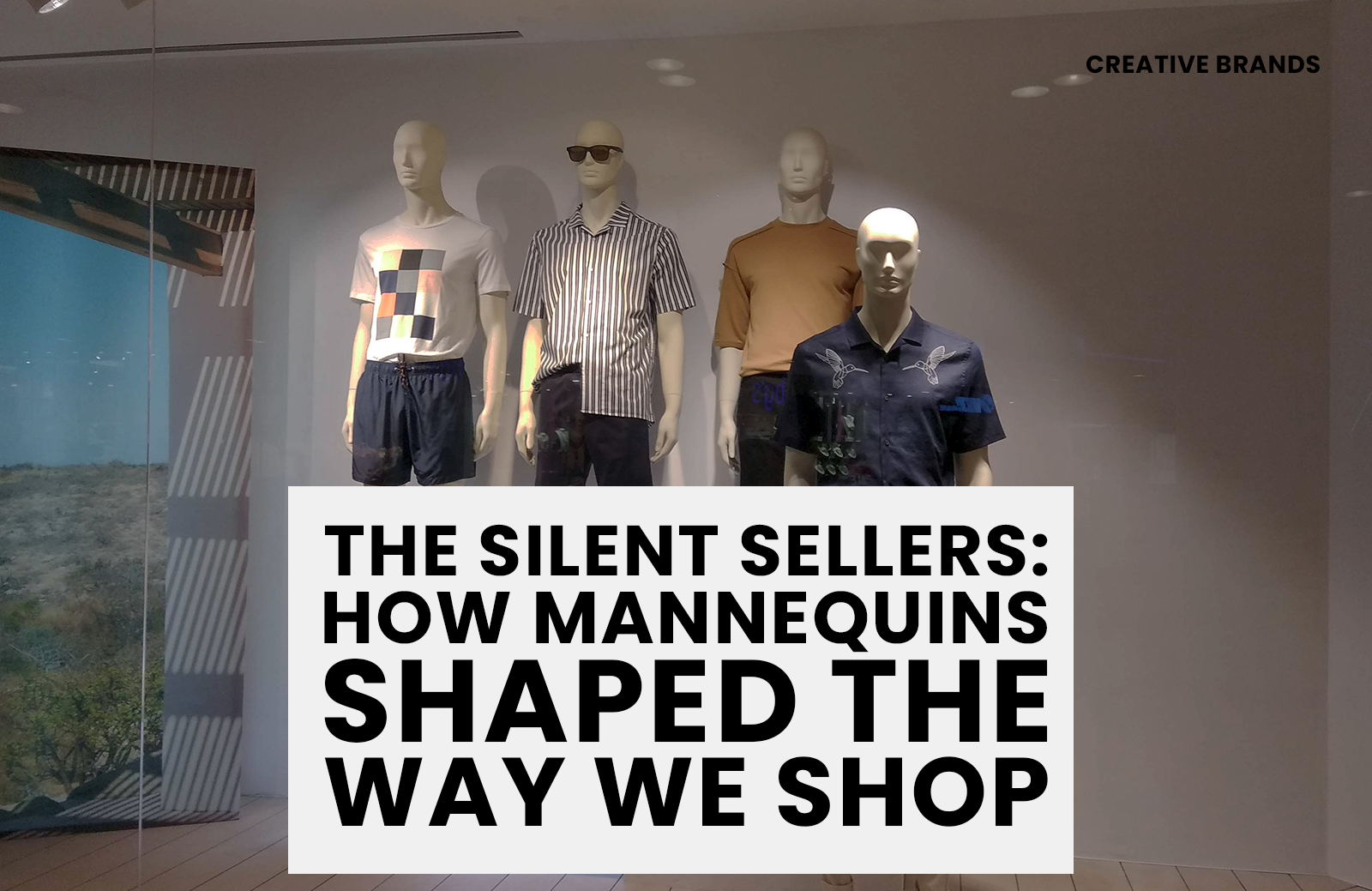
From wax figures in 19th-century Paris to AI-powered digital avatars in modern retail, mannequins have transformed window shopping into an art form. This feature explores their fascinating history, evolving materials, psychological influence, sustainability challenges, and the technological future of visual merchandising in an increasingly virtual retail world.
The first thing many shoppers notice is not the price tag, the lighting, or even the brand name. It is the figure standing silently behind the glass. Upright, poised and expressionless, mannequins have watched generations drift past department store windows, tempting them into worlds of glamour, aspiration and fantasy.
Window shopping itself is a ritual that predates modern consumer culture. Long before online baskets and targeted advertisements, people wandered through shopping streets simply to look. It remains one of the most universal urban experiences: pausing before a beautifully arranged display, imagining oneself in a particular outfit, lifestyle or moment. Retail psychologists have long argued that window displays stimulate desire before rational thought enters the picture. At the heart of this theatre stands the mannequin — retail’s most silent but persuasive salesperson.
“Mannequins are emotional triggers before they are merchandising tools,” says retail strategist Nancy Leo. “A customer may forget a price within minutes, but they remember how a display made them feel.”
Though often overlooked, mannequins tell a larger story about fashion, technology, economics and society. Their evolution mirrors humanity’s changing ideals of beauty, gender, race and even identity itself. Today, as artificial intelligence, sustainability concerns and digital retail reshape shopping habits, mannequins are once again undergoing dramatic reinvention.
The word “mannequin” originates from the Dutch word manneken, meaning “little man”. Yet the history of mannequins stretches much further back than the modern fashion industry. Ancient civilisations used figurines and carved forms to display jewellery and clothing. Historians believe that Egyptian rulers buried miniature dressed figures in tombs, while Roman traders used articulated dolls to exhibit garment styles across the empire.
The modern mannequin emerged in Europe during the 18th and 19th centuries, particularly in France, where fashion became intertwined with luxury culture. Before photography and magazines became widespread, miniature fashion dolls known as “Pandoras” travelled across European courts displaying the latest Parisian trends. These dolls acted as early fashion ambassadors.
By the mid-19th century, industrialisation transformed shopping streets. Department stores appeared in cities such as Paris, London and New York. Large glass windows became commercial stages, and retailers needed realistic figures to present clothing elegantly. Early mannequins were crafted from wax, papier-mâché and wood. Many had delicate painted faces, glass eyes and real human hair. They resembled museum sculptures rather than retail props.
“Victorian mannequins were designed to impress as much as to sell,” explains fashion historian Sheen Stella of the Fashion Institute of Technology. “Department stores understood very early that shopping could be theatrical.”
Victorian shoppers were fascinated by these lifelike figures. Some were so realistic that newspapers occasionally described passers-by mistaking mannequins for living people. Yet realism also created discomfort. Critics argued that excessively lifelike mannequins appeared eerie or morally questionable, particularly when displaying women’s undergarments in public windows.
By the early 20th century, mannequins became more stylised. Art movements such as Art Deco influenced their design. Smooth forms, elongated limbs and sculptural elegance replaced strict realism. In the glamorous decades between the First and Second World Wars, department stores transformed window displays into elaborate spectacles. Mannequins became symbols of aspiration during difficult economic times.
After the Second World War, the rise of consumer culture elevated mannequins further. Shopping became entertainment. High streets evolved into visual experiences designed to capture attention instantly. Global fashion brands realised that mannequins could communicate identity faster than words ever could.
Materials changed dramatically throughout these decades. Wax was fragile and expensive. Papier-mâché absorbed moisture and deteriorated over time. Fibreglass eventually became the industry standard during the mid-20th century because it was durable, lightweight and easy to mould into various poses.
Fibreglass revolutionised visual merchandising. Designers could now create athletic stances, dynamic walking positions and abstract artistic forms. Retailers moved away from rigid standing figures towards mannequins that conveyed movement and emotion. Some luxury brands commissioned sculptors and artists to design highly stylised mannequins that resembled gallery installations rather than store equipment.
“Modern mannequins are closer to industrial sculpture,” says Milan-based visual designer Leesa Aabir, who has worked with European luxury fashion houses. “A mannequin today must reflect brand philosophy, not merely display clothes.”
Plastic later became another popular material because it reduced production costs. Polyurethane foam, resin and acrylic were also introduced. Modern mannequins may combine several materials depending on their purpose. Luxury retailers often favour high-quality fibreglass finishes, while fast-fashion chains prefer economical plastic versions that can be replaced frequently.
Yet materials are no longer merely about cost and appearance. Sustainability has become a central issue in the global mannequin industry. Traditional fibreglass is difficult to recycle and environmentally harmful during manufacturing. As retailers face increasing pressure to reduce waste, new materials are emerging.
Some companies now produce biodegradable mannequins made from recycled paper, cardboard composites and sustainable bio-resins. Others experiment with bamboo fibres, recycled ocean plastics and plant-based materials. Eco-conscious retailers increasingly demand mannequins with lower carbon footprints.


“The retail industry can no longer separate aesthetics from environmental responsibility,” says sustainability consultant Aditi Nair. “Even store fixtures are now part of the sustainability conversation.”
The shift reflects broader anxieties surrounding fashion consumption itself. Fast fashion generates enormous textile waste, and store fixtures contribute significantly to retail pollution. Mannequins, once symbols of glamour, now sit at the centre of sustainability debates.
Beyond materials, mannequins have always reflected changing social attitudes. Their body shapes reveal evolving beauty standards across generations. In the 1950s, mannequins emphasised hourglass femininity. The 1960s introduced thinner, youth-focused forms inspired by models such as Twiggy. The supermodel era of the 1980s and 1990s produced tall, sharply defined mannequins with dramatic features.
For decades, critics have accused retailers of promoting unrealistic body standards through impossibly slim mannequins. Campaigners argued that these figures reinforced unhealthy expectations, particularly among young women.
In response, the industry slowly diversified. Plus-size mannequins appeared in mainstream retail stores. Athletic body types gained popularity as sportswear brands expanded globally. Some retailers introduced mannequins with freckles, wrinkles, natural hairstyles and varied skin tones.
Perhaps most significantly, disability representation entered visual merchandising. In recent years, major fashion brands unveiled mannequins using wheelchairs, prosthetic limbs and hearing aids. These changes reflected growing demands for inclusivity in advertising and fashion culture.
“Representation in retail spaces matters enormously,” says disability fashion advocate Shafi Ahmed. “When shoppers see themselves reflected in store environments, it signals dignity, visibility and belonging.”
Gender norms have also shifted. Traditional male and female mannequin categories are becoming less rigid. Gender-neutral fashion collections increasingly use abstract or androgynous forms. Some retailers intentionally avoid facial features altogether, allowing customers to project themselves onto the clothing more easily.
This psychological aspect of mannequins fascinates marketers and behavioural researchers alike. Humans instinctively respond to human forms. Even simplified figures trigger emotional and cognitive reactions. A well-positioned mannequin can subtly communicate confidence, elegance, rebellion or comfort without speaking a word.
Visual merchandising experts study shopper behaviour carefully. Eye-tracking research reveals that customers often look at mannequins before examining individual garments. The mannequin provides context. It tells shoppers how clothing might look when worn, how pieces can be styled together and what type of identity the brand promotes.
“People do not buy clothing alone; they buy aspiration,” explains consumer psychologist Dr Stephan Wair. “Mannequins help customers visualise a desired version of themselves.”
Luxury brands often use mannequins sparingly in minimalist displays to create exclusivity. Fast-fashion retailers prefer densely populated windows filled with energetic poses and bright colours to convey abundance and trendiness.
Lighting further shapes perception. Dramatic spotlighting can transform mannequins into theatrical characters. Window displays frequently borrow techniques from cinema, stage design and fine art. During holiday seasons especially, mannequins become part of elaborate storytelling environments filled with fantasy and nostalgia.
In some cities, window displays themselves have become tourist attractions. Department stores in London, Paris, Tokyo and New York invest enormous budgets into seasonal visual merchandising. Teams of designers, stylists, carpenters, lighting specialists and artists collaborate for months on a single campaign.
Yet physical mannequins now face their greatest challenge since their invention: digital retail.
Online shopping fundamentally altered how consumers interact with fashion. Customers increasingly browse products through smartphones rather than store windows. Social media influencers, virtual try-on tools and personalised algorithms now shape purchasing decisions once guided by mannequins.
Rather than disappearing, however, mannequins are evolving again through technology.
Artificial intelligence is rapidly transforming visual merchandising. AI-powered systems can analyse customer behaviour, track foot traffic and optimise store layouts. Smart mannequins equipped with sensors and cameras already exist in some experimental retail environments. These systems gather anonymous data about shopper demographics, attention spans and movement patterns.
Retailers use this information to refine displays in real time. If customers spend longer looking at certain outfits or colours, AI systems may recommend adjustments to inventory placement or window styling.
“AI is turning visual merchandising into a responsive science,” says retail technology analyst Rolf Stephens. “Stores are becoming intelligent environments rather than static spaces.”
Digital mannequins are also becoming increasingly sophisticated. Virtual avatars now model clothing online using body simulations that adapt to different sizes and shapes. Some brands allow customers to create personalised avatars resembling themselves. AI can then recommend outfits based on body type, preferences and purchasing history.
This technology addresses one of online retail’s greatest limitations: customers cannot physically try garments before buying them. Virtual fitting rooms powered by augmented reality attempt to recreate the mannequin experience digitally.
Meanwhile, computer-generated influencers blur the boundaries between mannequin, model and artificial personality. Virtual fashion figures with millions of followers now promote clothing entirely online. These digital creations never age, require no travel and can instantly wear endless outfits generated by software.
Luxury fashion houses are investing heavily in virtual fashion presentations. Some runway shows already feature digital models and augmented reality experiences. In the emerging metaverse economy, digital clothing for avatars may become as commercially important as physical garments.
“The future mannequin may not exist physically at all,” says futurist and fashion-tech researcher Amanda Francis. “It may live entirely in augmented reality, personalised uniquely for every consumer.”
Still, physical mannequins retain unique advantages. Shopping remains sensory and social. People continue visiting stores not merely to purchase goods but to experience atmosphere, inspiration and entertainment. A beautifully designed window display still stops pedestrians in their tracks in ways online advertisements rarely replicate.
There is also something deeply human about mannequins themselves. They exist in the strange space between object and person. Artists, filmmakers and writers have long been fascinated by them. Mannequins appear throughout popular culture as symbols of desire, identity, loneliness and artificial perfection.
Films and novels frequently use mannequins to explore psychological themes. Their stillness can feel comforting or unsettling depending on context. During quiet evenings in empty shopping centres, rows of mannequins often evoke eerie fascination precisely because they resemble us without truly being alive.
Fashion photographers have similarly embraced mannequins as artistic subjects. Some designers intentionally use faceless or fragmented forms to challenge conventional ideas of beauty and identity. Avant-garde retailers treat mannequins as sculptures rather than sales tools.
Even during the Covid-19 pandemic, mannequins acquired unexpected relevance. Empty stadiums filled seats with mannequins to simulate crowds. Restaurants used them to maintain social distancing aesthetics. Fashion stores dressed mannequins in masks and protective clothing, turning them into symbols of a changed world.
The mannequin industry itself remains surprisingly global and specialised. Major manufacturing hubs exist in China, Italy, France and the United States. Designers collaborate with fashion houses to produce custom forms tailored to brand identity. Some luxury mannequins cost thousands of pounds each, especially when hand-finished.
Technology now allows 3D printing to enter the industry as well. Retailers can produce custom mannequins faster and more sustainably than before. Body scans enable highly specific forms that better reflect diverse populations.
Some experts predict that future mannequins may become interactive. Digital screens integrated into displays could alter facial expressions, provide styling information or respond to customer movements. Holographic mannequins may eventually project changing outfits without requiring physical clothing changes at all.
Artificial intelligence may also personalise retail displays based on local demographics, weather patterns or shopping trends. A store window could theoretically change throughout the day depending on the audience walking past.
Yet amidst all this innovation, the core purpose of mannequins remains remarkably unchanged. They exist to help people imagine themselves differently.
That simple psychological function explains why window shopping still endures despite technological disruption. Humans are visual dreamers. We enjoy imagining future versions of ourselves — more elegant, confident, adventurous or successful. Mannequins facilitate that imagination silently.
They are mirrors without reflections. Blank figures onto which shoppers project aspirations and identities.
For children, mannequins often appear magical or mysterious. For adults, they evoke nostalgia for bustling department stores, festive windows and leisurely afternoons spent wandering through shopping streets. Even in an age dominated by screens, physical retail retains emotional power precisely because it creates shared public experiences.
Urban historians note that window shopping democratised luxury in many ways. People who could not afford expensive products could still admire them. Store windows became open-air galleries accessible to everyone regardless of class. Mannequins therefore played subtle roles in shaping modern public culture.
Today’s retail landscape is more fragmented than ever. Independent boutiques compete alongside global fashion giants and online marketplaces. Yet nearly all still rely on some version of the mannequin principle: presenting clothing through human form.
Whether crafted from wax in 19th-century Paris, moulded from fibreglass in a modern mall or rendered digitally through artificial intelligence, mannequins continue performing the same silent task. They stand perfectly still while the world changes around them.
And perhaps that is why they remain so captivating.
Because behind every mannequin lies an invitation — not merely to buy something, but to imagine becoming someone else.
Discover more from Creative Brands Mag
Subscribe to get the latest posts sent to your email.










Leave a comment