


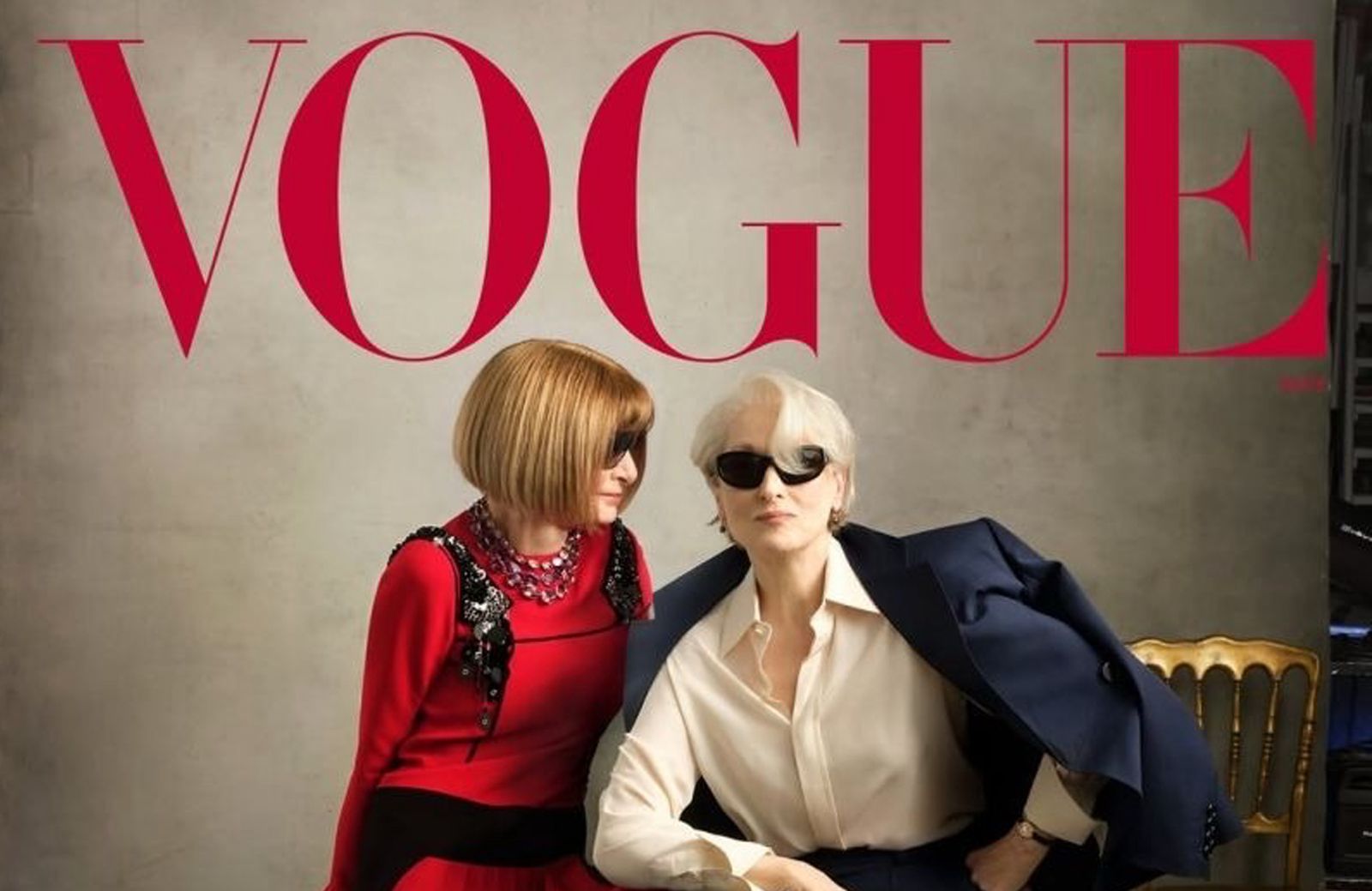
Anna Wintour and Meryl Streep, both 76, appear together on Vogue’s cover for the first time, photographed by Annie Leibovitz. Their presence challenges outdated notions of age and “prime,” celebrating decades of influence, creativity, and leadership. Vogue continues its legacy as a cultural barometer, spotlighting women shaping the world.
Two women who have defined culture in their own ways now share the spotlight on Vogue’s cover. Anna Wintour, the formidable editor-in-chief who has steered the magazine for decades, appears for the first time as a cover subject. Beside her stands Meryl Streep, the actress who immortalised Wintour’s aura through her portrayal of Miranda Priestly in The Devil Wears Prada. The image, captured by Annie Leibovitz—herself an icon at 76—marks a rare convergence of three creative forces who have shaped fashion, film, and photography.
The cover is more than a striking photograph; it is a statement. At an age when society often suggests women should retreat from the spotlight, Wintour and Streep are doing the opposite. They remain at the height of their powers, continuing to lead, create, and inspire. Their presence is a reminder that the notion of a career “prime” is outdated. For many women, the most impactful years arrive later in life, when experience and perspective sharpen their influence.
Wintour’s journey with Vogue has been inseparable from the evolution of women’s roles in culture. For 118 years, the magazine has served as America’s cultural barometer, reflecting not only how people dress but how they live, eat, listen, and lead. Its pages have consistently placed women at the centre of the narrative, investing in storytelling that celebrates individuality, grace, and earned influence.
Streep, meanwhile, has built a career that defies typecasting, embodying characters with depth and humanity. Her portrayal of Priestly remains one of cinema’s most memorable depictions of power, yet her presence on this cover alongside Wintour transforms that fictional role into a real-life dialogue about legacy and leadership.
Leibovitz’s lens adds another layer of resonance. Known for her ability to capture intimacy and grandeur in equal measure, she frames these women not as relics of past glory but as active participants in the present cultural moment. The photograph becomes a testament to endurance, artistry, and the refusal to be defined by age.
Vogue’s editorial philosophy has always rested on three pillars: visual genius, storytelling centred on women, and an optimistic eye on culture. This cover embodies all three. It is visually arresting, narratively rich, and forward-looking in its challenge to conventional ideas of ageing. For millions of readers, Vogue remains the eye of the culture, inspiring them to see themselves—and the world—differently.
In celebrating Wintour and Streep at 76, Vogue underscores a truth often overlooked: influence is not diminished by time, but deepened by it. Their careers remind us that creativity and leadership are not bound by age, but by vision. As they stand together on the cover, they invite women everywhere to embrace the power of later chapters, where decades of knowledge and experience converge into something truly formidable.
Discover more from Creative Brands Mag
Subscribe to get the latest posts sent to your email.














Leave a comment