


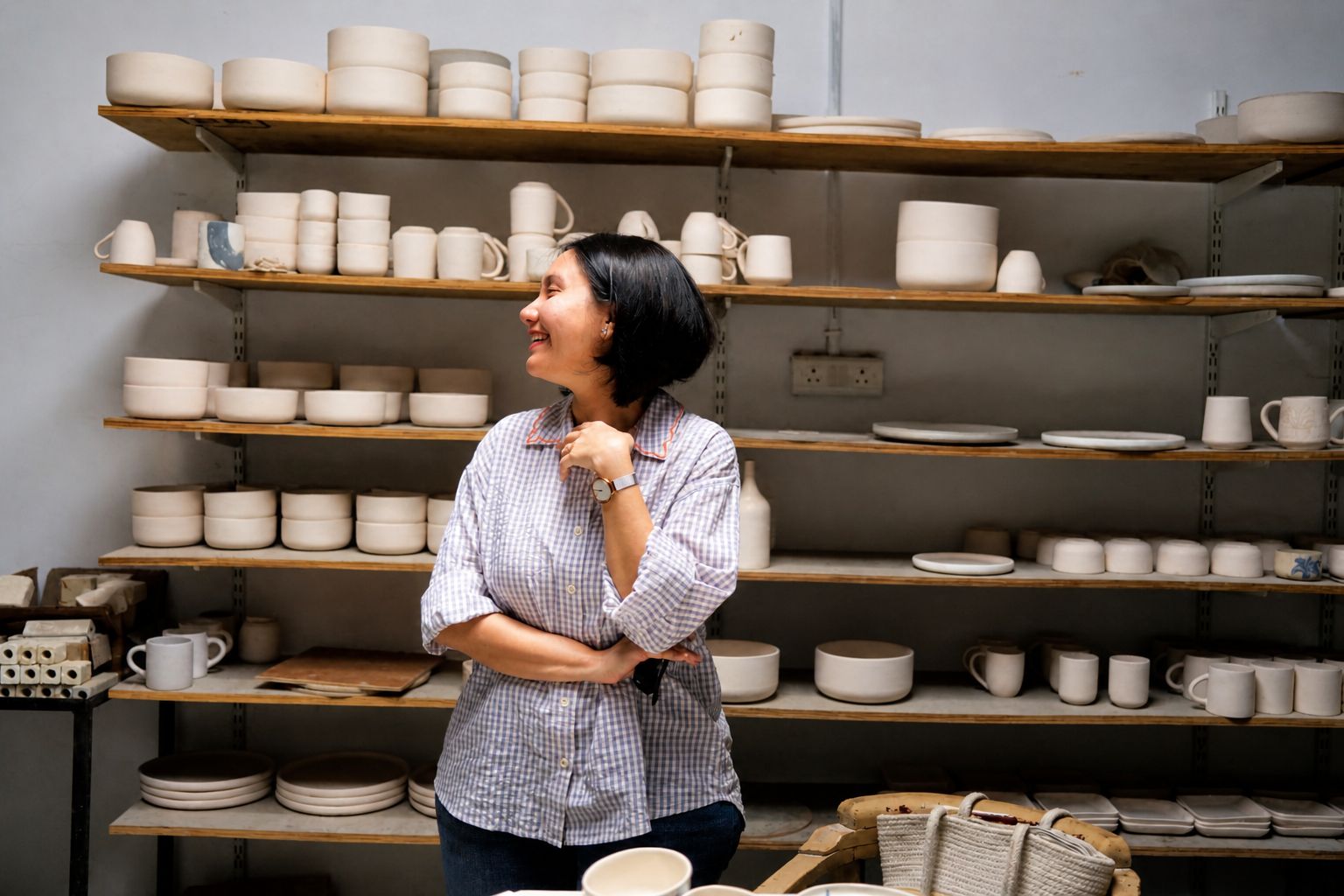
India’s ceramics industry is expanding rapidly, fuelled by rising demand for artisanal tableware and design-led décor. Yet beyond the industrial scale of ceramic manufacturing hubs, independent studios such as Ivory Keramicoz are championing a slower, handmade approach, where craftsmanship, patience and imperfection are emerging as powerful cultural and commercial values.
In an era obsessed with speed, scale and instant gratification, the quiet persistence of a ceramic studio can feel almost radical.
That contrast became strikingly apparent to brand consultant and strategist Jhanvi Thaker during a recent visit to a friend’s independently built ceramic studio. What she encountered was not simply a workspace, but what she described as “a living practice” — a place where unfinished forms rested alongside scattered tools, and where the rhythm of creation seemed deliberately detached from the urgency of modern life.


The experience reflects a wider shift unfolding across India’s growing ceramics ecosystem, where handcrafted pottery and studio ceramics are finding renewed relevance among consumers increasingly drawn to authenticity, tactility and slower forms of making.
Studios such as Ivory Keramicoz are part of this evolving movement, positioning ceramics not merely as functional objects but as decorative and artistic expressions designed to elevate living spaces. Through handcrafted pieces and design-led collections, such studios are helping transform ceramics from a traditional craft category into a contemporary lifestyle statement.
India’s ceramics market is already estimated to be worth between $400 million and $700 million, with artisanal tableware and design-driven ceramics witnessing particularly strong momentum. Handmade mugs, plates, vases and sculptural décor are increasingly appearing in boutique hospitality spaces, urban homes and independent retail stores, signalling how craft is steadily crossing into culture — and then business.
At the industrial end of the spectrum, India remains one of the world’s leading ceramic producers. The city of Morbi, often described as the centre of the country’s ceramic manufacturing industry, powers a sector valued at more than ₹60,000 crore. Its vast network of tile and sanitaryware manufacturers has helped establish India as a major global supplier.
Yet the quieter world of studio pottery operates on an entirely different philosophy.
Inside these creative spaces, ceramics remains intensely physical and deeply patient work. Clay must be kneaded, shaped, fired, glazed and often reworked repeatedly before a final piece emerges. Unlike many digitally accelerated creative industries, pottery resists shortcuts. Its imperfections remain visible; its pace cannot easily be hurried.
That, increasingly, may be precisely where its appeal lies.
As consumers become more conscious of craftsmanship and sustainability, handmade ceramics are benefiting from a broader cultural movement towards intentional living and mindful consumption. Buyers are no longer seeking flawless uniformity alone; many are gravitating towards objects that carry traces of the human hand and the unpredictability of process.
For younger ceramic artists and independent founders, the studio has evolved into more than a production site. It is also a place of discipline, repetition and experimentation — a commitment to returning daily to work that demands time and attention.
Thaker’s reflections capture a sentiment now resonating throughout India’s creative economy: that in a world driven by automation and relentless optimisation, choosing the handmade has become both an artistic preference and a philosophical decision.
The growth of ceramics, then, is not merely a story of industrial expansion or manufacturing scale. It is equally a story about renewed respect for labour that unfolds slowly, quietly and deliberately.
And perhaps that is why intimate spaces like Ivory Keramicoz continue to command attention despite existing within a vast industrial landscape. They offer something increasingly rare — proof that patience still matters, and that meaningful work often takes time.
Discover more from Creative Brands Mag
Subscribe to get the latest posts sent to your email.














Leave a comment