


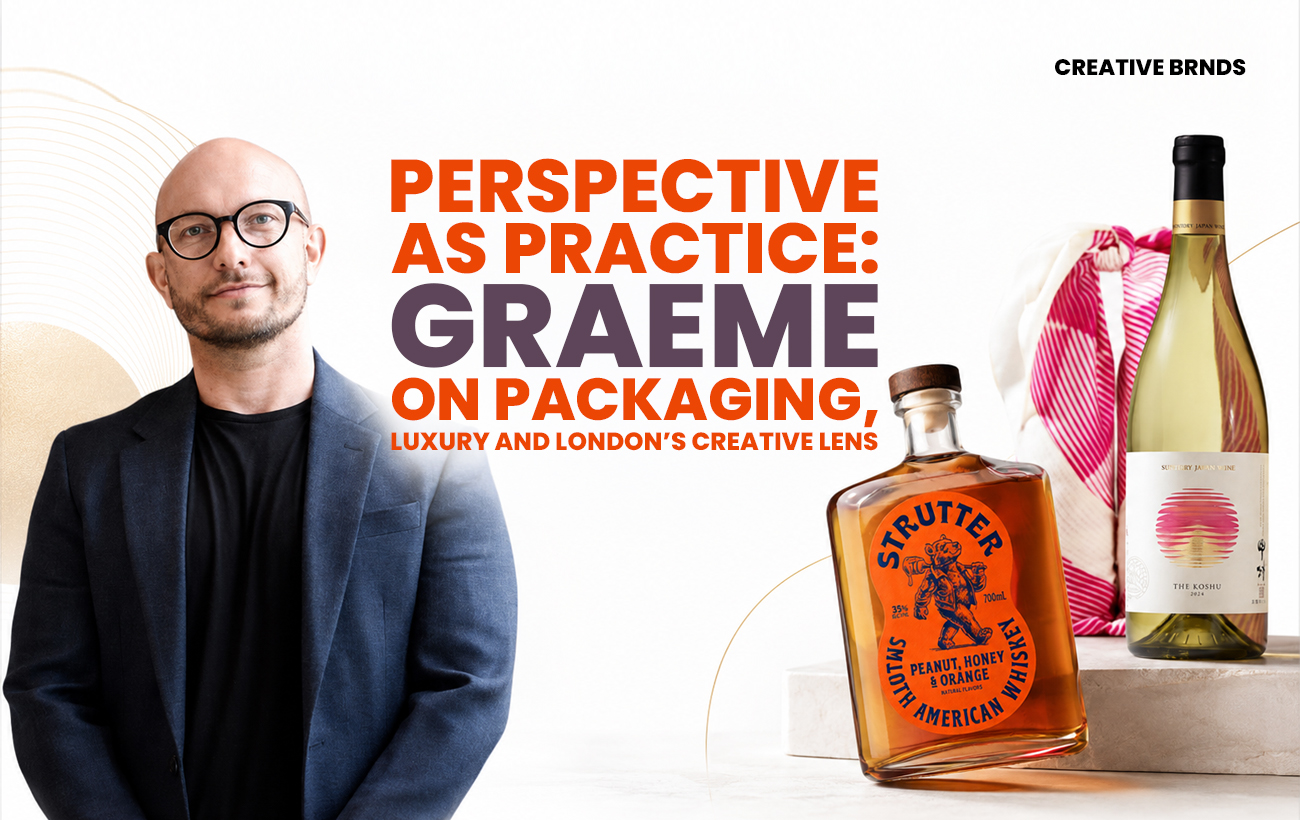
Graeme views packaging as both shared experience and commercial object, requiring strategic and aesthetic balance. London exemplifies this visibility, with own-label ranges treated as desirable. Luxury is fluid, coherence key. His outward-looking discipline, sharpened in Australia, sustains creativity—continuing at London Packaging Week 2026, where global perspectives meet.
For Graeme, design begins with context. He insists that packaging is not simply a decorative surface but a shared experience that shapes consumer perception from the outset. Yet he is pragmatic: packaging remains a commercial object, requiring strategic consideration alongside aesthetic strength. “These projects are significant investments,” he explains, highlighting the need for balance between creativity and commercial return.
London, in his view, exemplifies this balance. The city has long had a strong packaging culture, but what distinguishes it today is its visibility. Even supermarket shelves, he observes, demonstrate a level of design consideration that is not always present elsewhere. Own-label ranges, once treated as secondary, now feel desirable and integrated into a wider brand world. This shift reflects how design has become central to everyday retail experiences, not confined to luxury or niche categories.
Luxury itself, Graeme argues, is no longer fixed. It can be quiet and restrained, expressive and bold, or even casual. What matters is coherence and intent, not adherence to a single style. This fluidity reflects broader cultural changes, where consumers value authenticity and clarity of vision over rigid definitions of prestige. For designers, the challenge lies in ensuring that packaging communicates this coherence, regardless of whether the brand chooses understatement or exuberance.
Graeme often returns to the idea of perspective—not as positioning, but as practice. Based in Australia, he finds that distance sharpens the need to look outward. Travel reinforces this discipline, while observation sustains it. In a category defined by heritage, ritual and constant reinvention, such outward-looking practice becomes its own creative language. It is not a style or a signature, but a way of seeing that allows brands to remain relevant while respecting tradition.
This approach resonates strongly within drinks branding, packaging and retail experience. The sector thrives on storytelling, ritual and sensory engagement, yet it must continually adapt to shifting consumer expectations. Graeme’s insistence on perspective as practice reflects a broader truth: successful packaging design is not about imposing a singular aesthetic, but about cultivating a disciplined openness to global influences.
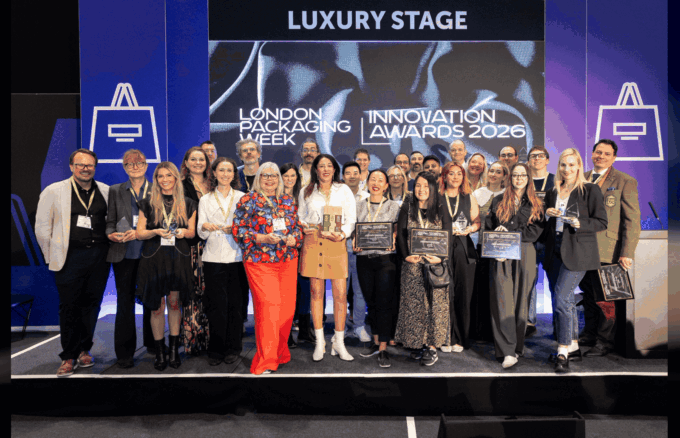
London Packaging Week, taking place on 16 & 17 September 2026 at Excel London, embodies this conversation. The event brings together international voices to explore how brands are built, expressed and experienced across categories. For those working in drinks branding and beyond, it offers a platform to examine how packaging can balance heritage with innovation, coherence with diversity, and commercial strategy with creative ambition.
Graeme’s reflections remind us that packaging is more than a surface—it is a cultural artefact, a commercial tool and a creative language. In London, where design visibility permeates even the most everyday products, this truth is especially evident. And as global perspectives converge at London Packaging Week, the dialogue between strategy and creativity, heritage and reinvention, continues to evolve.
Discover more from Creative Brands Mag
Subscribe to get the latest posts sent to your email.












Leave a comment