


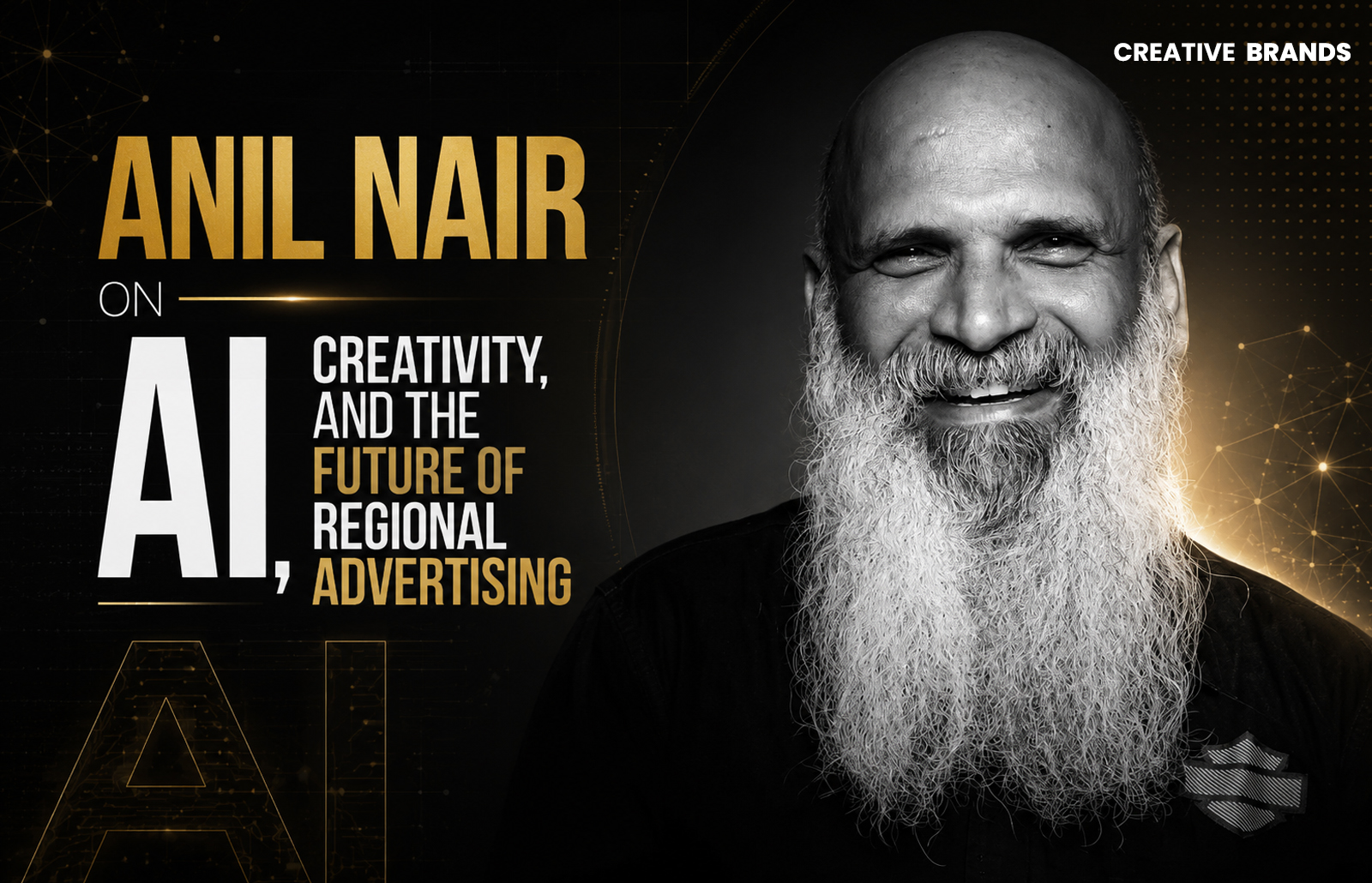
In an industry driven by constant reinvention, Anil Nair has quietly built a reputation as one of the most influential creative forces in South India’s advertising landscape. As the Founder and CEO of Turrino Advertising and T1D Communications, he stands at the intersection of traditional brand building and contemporary digital storytelling—crafting campaigns that not only capture attention but also connect deeply with audiences.
What began with the launch of Turrino Advertising in 2003 has evolved into a dynamic creative ecosystem that today services some of the region’s most prominent brands. With the introduction of T1D Communications in 2020, Anil Nair expanded his vision into the digital-first era, blending strategic communication, storytelling, and innovative content to create fully integrated campaigns across platforms.
From iconic regional brands like AVT Gold Cup, Bhima Jewellers, and Skyline Builders to large-scale television commercials fronted by stars such as Vijay Sethupathi and Rana Daggubati, his agencies have consistently delivered campaigns rooted in cultural authenticity and emotional resonance. Whether on television screens, digital platforms, or outdoor spaces, the storytelling remains unmistakably powerful — bold, relatable, and deeply regional in spirit.
In this exclusive conversation, Anil Nair opens up about his journey as an entrepreneur, the evolving language of advertising, the growing influence of regional narratives in mainstream communication, and the creative philosophy that continues to shape some of the most talked-about campaigns in the industry today.
Q. AI integration in creativity: How has AI changed the way you approach the creative process compared to traditional methods?
A. AI has primarily changed the creative process in two ways. Firstly, it opens up possibilities for creating stuff which earlier would have taken a lot more time and bigger budgets, and even attempting complex concepts. Secondly, AI allows creators to present ideas in a form closer to reality before actual execution — and that can also help clients have a better sense of the final creative.
Q. Human vs machine creativity: Where do you draw the line between human intuition and machine-generated ideas in your campaigns?
A. Referencing has always been a part of advertising — the forms may have changed. Even then, one could copy-paste something or use references to shape ideas. The same situation exists even now in a different way. Human intuition is still the key — AI can be a great enabler though.
Q. AI tools in workflow: Which AI tools or platforms have become indispensable in your day-to-day creative workflow?
A. All the usual AI tools that are commonly available, plus AI features available along with design software as well as stock sites, are used.
Q. Ethics of AI in advertising: What ethical considerations do you keep in mind when deploying AI-driven advertising strategies?
A. Whatever ethical considerations were applicable earlier are applicable even now. Finally, an ad is what it ultimately is — irrespective of the tool used. Copyrights, misrepresentation, etc., are all applicable as before.
Q. Collaboration with AI: Do you see AI as a collaborator, a tool, or a competitor in the creative space?
A. It is all of it in some measure, but mostly it is a tool with more possibilities than before, with much more expected. Of course, it might replace certain needs and affect the economics involved, and yet it is inevitable.
Q. Impact on creative teams: How has the adoption of AI reshaped the roles and dynamics within your creative team?
A. It’s a very challenging yet exciting time for them. Its impact has been so fast that it will take some amount of understanding to know how best they are using it and whether it’s having any adverse effect on the way they ideate in the long run. How and how much to use this is going to determine how it all plays out.
Q. Future of AI in advertising: What do you believe will be the next big breakthrough in AI for advertising?
A. It would be tempting to give an answer to that, but the thing with AI is that it’s evolving and gaining capabilities at a fast rate even as we speak. We might have a very different kind of conversation a few months from now — that’s the reality.
Q. Balancing speed and originality: AI accelerates execution, but how do you ensure originality and emotional resonance remain at the core of your work?
A. Any communication has to ultimately resonate with the audience — that’s the only litmus test. As long as there is that awareness, we’ll keep being on track regardless of the technology being used.
Discover more from Creative Brands Mag
Subscribe to get the latest posts sent to your email.












Leave a comment