


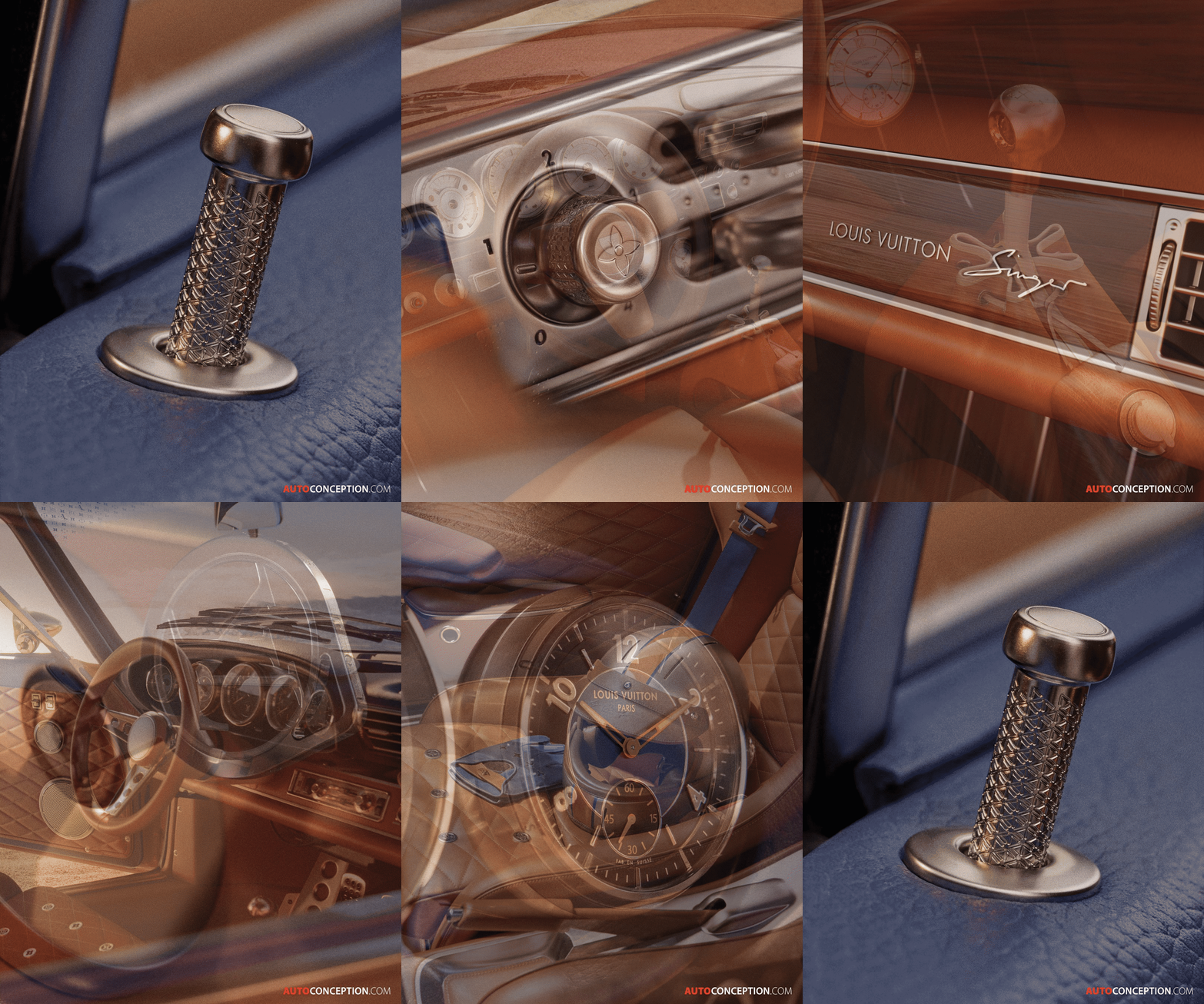
Singer has unveiled its latest Porsche restomods in collaboration with Louis Vuitton, with interiors that showcase the pinnacle of design innovation. Highlights include a detachable dashboard clock and a reimagined instrument cluster inspired by Louis Vuitton’s Tambour timepieces, reflecting nearly a year of meticulous craftsmanship and technical ingenuity.
Singer Vehicle Design has long been celebrated for its ability to reimagine the Porsche 911, blending heritage with modern artistry. Its latest collaboration with Louis Vuitton elevates this philosophy to new heights, creating restomods that are as much about haute couture as they are about automotive engineering. The interiors, designed in partnership with the French luxury fashion house, stand out as the defining feature of this project, embodying a fusion of mechanical precision and artisanal flair.
At the heart of the collaboration lies a dashboard clock that epitomises versatility and elegance. Unlike conventional automotive timepieces, this clock can be detached and repurposed as a desk accessory, seamlessly bridging the worlds of motoring and lifestyle. It is a detail that underscores the ambition of both Singer and Louis Vuitton to create objects that transcend their immediate function, becoming symbols of identity and taste.
The redesign of the instrument display proved to be one of the most challenging aspects of the project. Louis Vuitton’s designers reportedly spent nearly a year rethinking every element, from the speedometer and rev counter to the auxiliary gauges. The goal was to align the entire cluster with the graphic style of the brand’s Tambour line of timepieces, a collection renowned for its bold yet refined aesthetic. Achieving this required not only technical ingenuity but also a sensitivity to the visual language of both automotive and horological design.
The result is an instrument panel that feels less like a utilitarian interface and more like a curated piece of art. Each dial and gauge reflects the precision and elegance of Louis Vuitton’s watchmaking heritage, while remaining faithful to the demands of high-performance motoring. This duality—where engineering meets artistry—captures the essence of the collaboration.
For Singer, the partnership represents a continuation of its mission to elevate the Porsche 911 beyond its mechanical roots, transforming it into a canvas for cultural and creative expression. For Louis Vuitton, it is an opportunity to extend its design ethos into a new domain, demonstrating how fashion and automotive craftsmanship can intersect to produce something truly distinctive.
Together, the two brands have created restomods that are not merely vehicles but cultural artefacts. They embody a philosophy where luxury is defined not by excess but by meaning, detail, and narrative. The detachable clock, the Tambour-inspired instruments, and the painstaking attention to design all speak to a broader vision: that cars can be more than machines—they can be experiences, identities, and works of art.
This collaboration between Singer and Louis Vuitton is a testament to the evolving language of luxury, where boundaries between disciplines blur and innovation thrives at the intersection of tradition and modernity. It is a bold statement that redefines what automotive interiors can be, setting a new benchmark for design-led motoring.
Discover more from Creative Brands Mag
Subscribe to get the latest posts sent to your email.













Leave a comment