


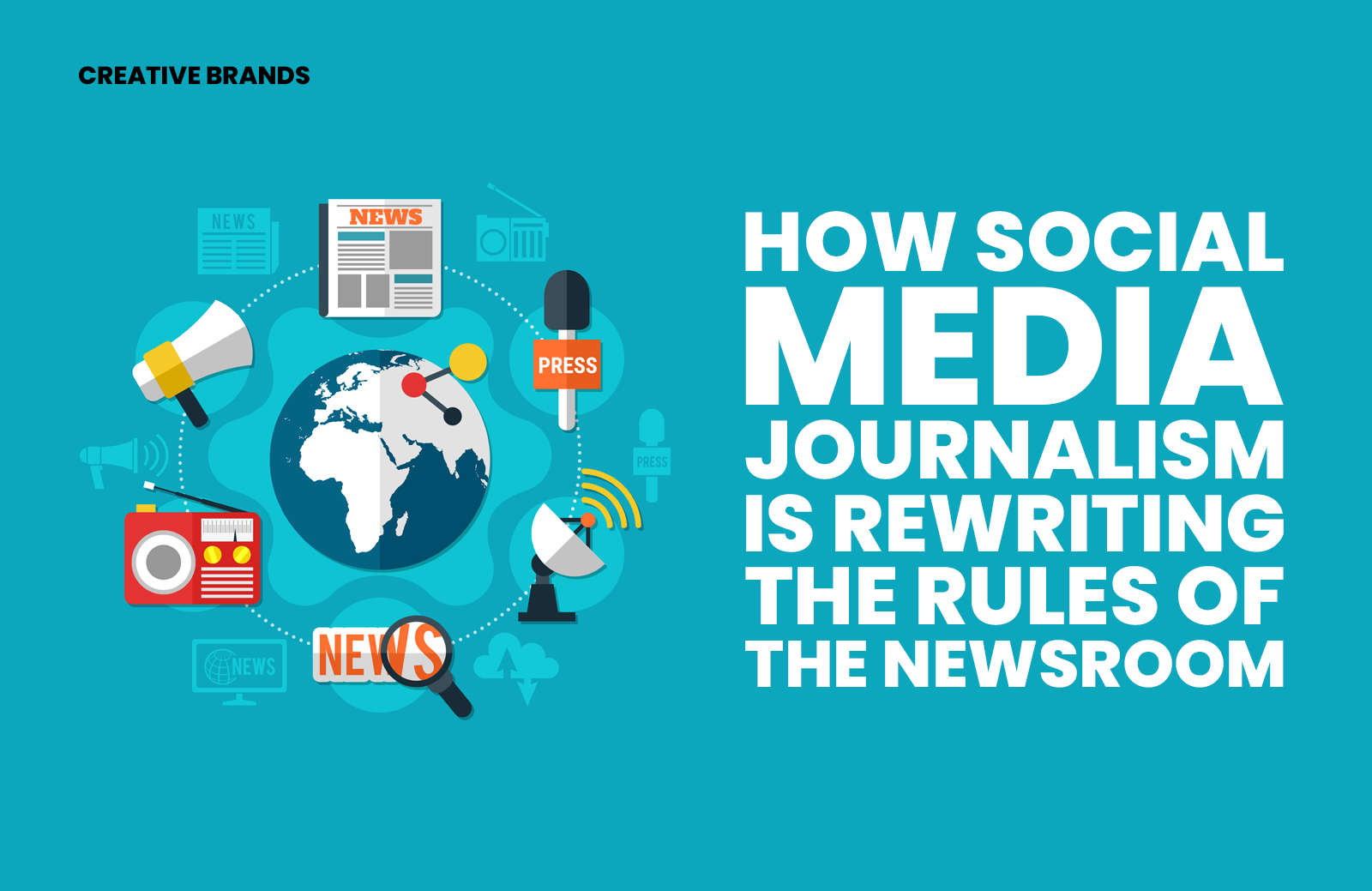
Social media journalism has become a normalised practice in contemporary newsrooms, reshaping workflows, hierarchies, and professional identities. A study of Belgian and Danish journalists reveals both opportunities and tensions, as reporters balance storytelling with platform demands. The newsroom, once stable, now exists in a constant state of flux.
Social media has long been seen as a disruptive force in journalism, but recent research underscores just how deeply it has embedded itself into the daily routines of reporters and editors. The study, conducted by Jonathan Hendrickx and Aske Kammer, draws on interviews with 23 journalists and editors from Belgium and Denmark, spanning public service broadcasters, private media houses, and digital-only outlets. What emerges is a portrait of newsrooms caught in perpetual motion, where the demands of platforms like Facebook, Instagram, TikTok, and X (formerly Twitter) are not just influencing but actively reshaping journalistic practice.
Journalists describe social media as no longer an optional add-on but a normalised part of the workflow, akin to writing a headline or filing a story. Yet this normalisation comes with profound consequences. Traditional hierarchies within newsrooms are being unsettled, as younger, digitally fluent staff often take the lead in shaping content strategies. Editors accustomed to print or broadcast rhythms find themselves negotiating with algorithms, audience metrics, and platform-specific storytelling formats. The newsroom, once defined by deadlines and editorial meetings, is now governed by the relentless tempo of the feed.
The study reveals a tension between journalistic autonomy and platform dependency. Reporters acknowledge that social media offers unparalleled reach and immediacy, allowing them to connect with audiences in real time. At the same time, they express unease at the degree to which their work is shaped by external forces—algorithmic visibility, trending hashtags, or the whims of platform design. In Belgium and Denmark, as elsewhere, journalists are acutely aware that their professional identity is being recalibrated by forces beyond their control.
One striking theme is the dual role of social media journalists. They are expected to be both storytellers and strategists, crafting narratives that resonate while also monitoring analytics, engagement rates, and audience feedback. This hybrid role blurs the line between editorial and marketing, raising questions about whether journalism risks becoming subordinate to the logic of digital promotion. For some, this represents an exciting expansion of the craft; for others, it feels like a dilution of core values.
The interviews also highlight the fragmentation of newsroom culture. In traditional settings, the newsroom was a collective space where stories were debated, refined, and published in synchrony. Social media journalism, by contrast, often unfolds in dispersed, individualised ways. Journalists may be responsible for their own accounts, cultivating personal brands alongside institutional ones. This creates new opportunities for visibility but also challenges the coherence of editorial identity. The newsroom becomes less a unified entity and more a constellation of voices competing for attention.
Yet the study does not paint social media journalism as purely corrosive. Many participants emphasise its capacity to democratise access to audiences, particularly younger demographics who rarely consume legacy media. Social platforms allow for experimentation with formats—short videos, interactive polls, live streams—that can revitalise storytelling. In Denmark, public service broadcasters see social media as a way to fulfil their mandate of reaching diverse publics. In Belgium, digital-only outlets thrive precisely because they are built around platform-native practices.
Still, the constant state of flux brings with it a sense of precarity. Journalists describe the exhausting pace of adaptation, as platforms change their algorithms or introduce new features. A strategy that works one month may be obsolete the next. This instability undermines long-term planning and contributes to professional burnout. The newsroom, once a relatively stable institution, now feels like a site of perpetual improvisation.
The study concludes that social media journalism is not simply a technical shift but a cultural transformation. It challenges the very definition of journalism, forcing practitioners to reconsider what counts as news, how authority is established, and where audiences are located. For editors and reporters in Belgium and Denmark, the task is not merely to survive this flux but to harness it in ways that preserve journalistic integrity while embracing innovation.
In many ways, the findings resonate globally. Indian newsrooms, for instance, face similar dilemmas as they balance WhatsApp-driven news distribution with traditional reporting. British media wrestles with the dominance of TikTok among younger audiences. American outlets debate whether platform-native content compromises editorial independence. The Belgian and Danish case studies thus serve as a microcosm of a broader international struggle.
Ultimately, the research suggests that the future of journalism lies not in resisting social media but in redefining the newsroom around it. This requires new skills, new ethics, and new organisational structures. It also demands a recognition that journalism, once anchored in print deadlines or broadcast schedules, now exists in a digital ecosystem where flux is the only constant. For journalists, the challenge is to navigate this turbulence without losing sight of their core mission: to inform, to scrutinise, and to tell stories that matter.
Discover more from Creative Brands Mag
Subscribe to get the latest posts sent to your email.















Leave a comment