


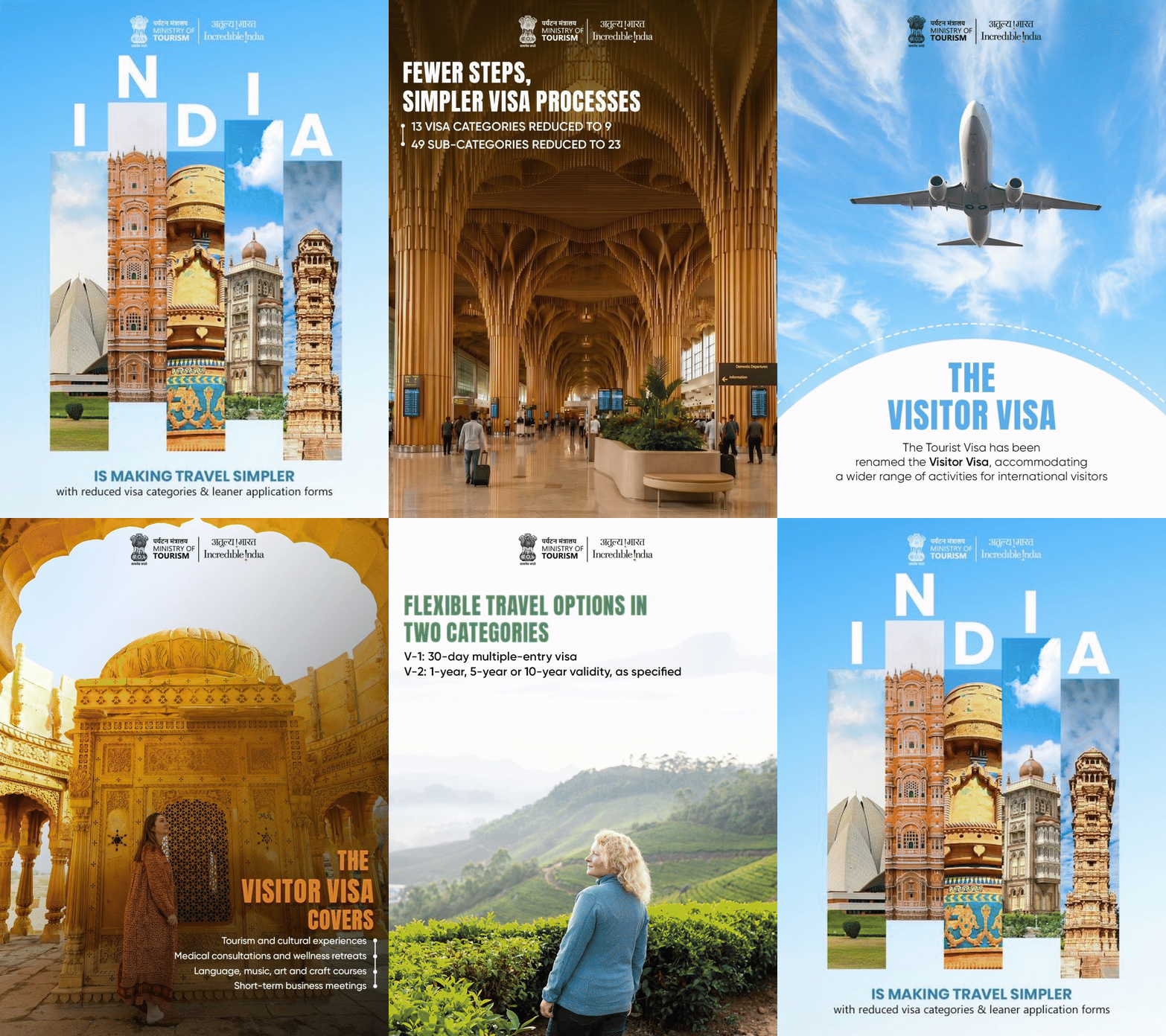
India is set to simplify international travel by overhauling its visa framework, reducing visa categories and sub-categories while introducing new visitor visas and expanding permitted activities. The reforms, expected to be implemented by the end of 2026, aim to make visiting India more straightforward and accessible for travellers worldwide.
Planning a trip to India could soon become significantly easier thanks to a major simplification of the country’s visa system designed to make international travel more accessible and visitor-friendly.
The Government of India has announced a rationalised visa regime that will reduce complexity for overseas travellers while broadening the range of activities that visitors can undertake during their stay. The reforms form part of a wider effort to enhance India’s appeal as a global destination for tourism, business, health and cultural experiences.
Under the revised framework, the number of visa categories will be reduced from 13 to nine, while visa sub-categories will be cut by more than half, from 49 to 23. Officials say the streamlined structure will make it easier for travellers to identify the most appropriate visa for their journey and navigate the application process with greater confidence.
A key feature of the reforms is the introduction of two new visitor visa categories, V-1 and V-2. These categories are intended to provide a clearer and more straightforward pathway for international visitors seeking entry to India for a variety of purposes.
The changes also recognise the evolving interests of global travellers. A wider range of activities will be permitted under the revised visa regime, reflecting the growing demand for experiential and purpose-driven travel. Visitors will be able to travel to India for wellness retreats, medical consultations and short-term educational courses, alongside more traditional tourism activities.
The expansion is expected to benefit sectors that have seen increasing international interest in recent years. India has emerged as a sought-after destination for wellness tourism, with travellers drawn to its yoga traditions, holistic therapies and wellness centres. Likewise, the country’s healthcare sector continues to attract overseas visitors seeking consultations and specialised treatments.
The inclusion of short-term courses also opens new opportunities for educational and cultural exchange. International visitors interested in learning about India’s languages, arts, history or professional disciplines may find the updated system more accommodating and transparent.
Tourism stakeholders are likely to welcome the move, viewing it as a practical step towards improving visitor experiences before travellers even arrive in the country. Visa requirements are often among the first considerations for those planning international journeys, and a simpler structure can play an important role in shaping destination choices.
The revised visa framework is expected to be implemented by the end of 2026. Once in place, travellers will encounter a system designed to reduce confusion, provide greater flexibility and better align with contemporary travel needs.
For millions of potential visitors around the world, the message is clear: discovering India may soon involve fewer administrative hurdles and more opportunities to experience the country’s rich culture, diverse landscapes, world-renowned wellness offerings and educational opportunities.
As global travel continues to evolve, India’s visa reforms signal a commitment to making the journey as welcoming as the destination itself.
Discover more from Creative Brands Mag
Subscribe to get the latest posts sent to your email.












Leave a comment