


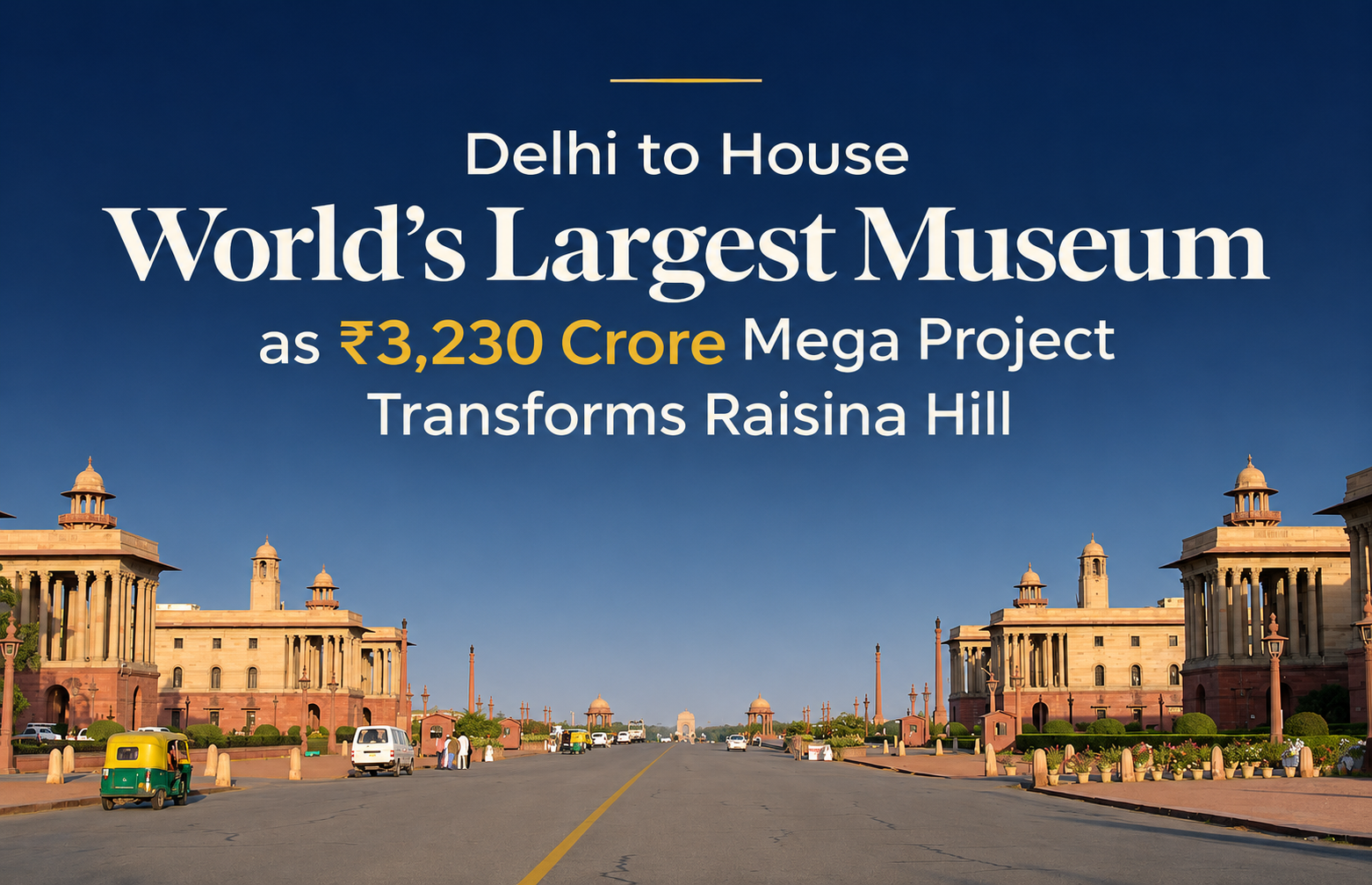
The Indian government has approved the ₹3,230 crore Yuge Yugeen Bharat Museum in New Delhi, set to become the world’s largest museum. Housed in the historic North and South Blocks on Raisina Hill, it will showcase 1.8 million artefacts across 178,509 square metres, exceeding the Louvre and British Museum.
New Delhi is poised to become home to the world’s largest museum following approval of the ambitious ₹3,230 crore Yuge Yugeen Bharat Museum project, a landmark cultural initiative that will transform the iconic North and South Blocks on Raisina Hill into a vast repository of India’s civilisational heritage.
The museum, named Yuge Yugeen Bharat, will span an impressive 178,509 square metres and house approximately 1.8 million artefacts, making it larger than both Paris’s Louvre Museum and London’s British Museum. The project represents one of the most significant cultural infrastructure investments undertaken in India and is expected to redefine the way the nation presents its history, traditions and artistic achievements to the world.
Located in the heart of the national capital, the North and South Blocks have long served as symbols of India’s administrative and political power. Designed by British architect Sir Edwin Lutyens as part of the capital’s imperial-era layout, the two monumental sandstone buildings overlook Rajpath and Rashtrapati Bhavan, forming an integral part of Delhi’s historic Raisina Hill precinct.
Their conversion into a museum marks a dramatic shift in purpose, turning spaces once dedicated to governance into galleries dedicated to preserving and sharing India’s rich cultural legacy. The move also aligns with broader efforts to reimagine historic government buildings for public engagement and cultural enrichment.
The scale of the proposed museum is unprecedented. Housing 1.8 million artefacts, the institution will bring together objects and collections spanning thousands of years of Indian history. From ancient civilisations and archaeological treasures to artistic masterpieces, manuscripts, textiles and cultural artefacts, the museum aims to offer an expansive narrative of India’s journey through the ages.
Officials envision the Yuge Yugeen Bharat Museum as a world-class destination capable of attracting scholars, historians, tourists and cultural enthusiasts from across the globe. The museum is expected to employ advanced exhibition technologies, immersive displays and interactive storytelling methods to present artefacts in engaging and contemporary ways.
Beyond its cultural significance, the project is also expected to deliver economic and tourism benefits for the capital. Museums of global stature often serve as major visitor attractions, generating employment opportunities and strengthening a city’s international profile. By creating a museum that surpasses some of the world’s most renowned institutions in size, India is positioning itself as a leading destination for heritage tourism and cultural scholarship.
The transformation of the North and South Blocks is particularly symbolic. Buildings that once reflected the machinery of government will now serve as gateways to the nation’s collective memory, enabling visitors to explore centuries of history under one roof.
As plans move forward, the Yuge Yugeen Bharat Museum is set to become not only a showcase of India’s past but also a statement of its cultural confidence and global ambitions. When completed, it will stand as a monumental tribute to the diversity, depth and continuity of Indian civilisation, while securing New Delhi a place at the forefront of the world’s museum landscape.
Discover more from Creative Brands Mag
Subscribe to get the latest posts sent to your email.














Leave a comment