


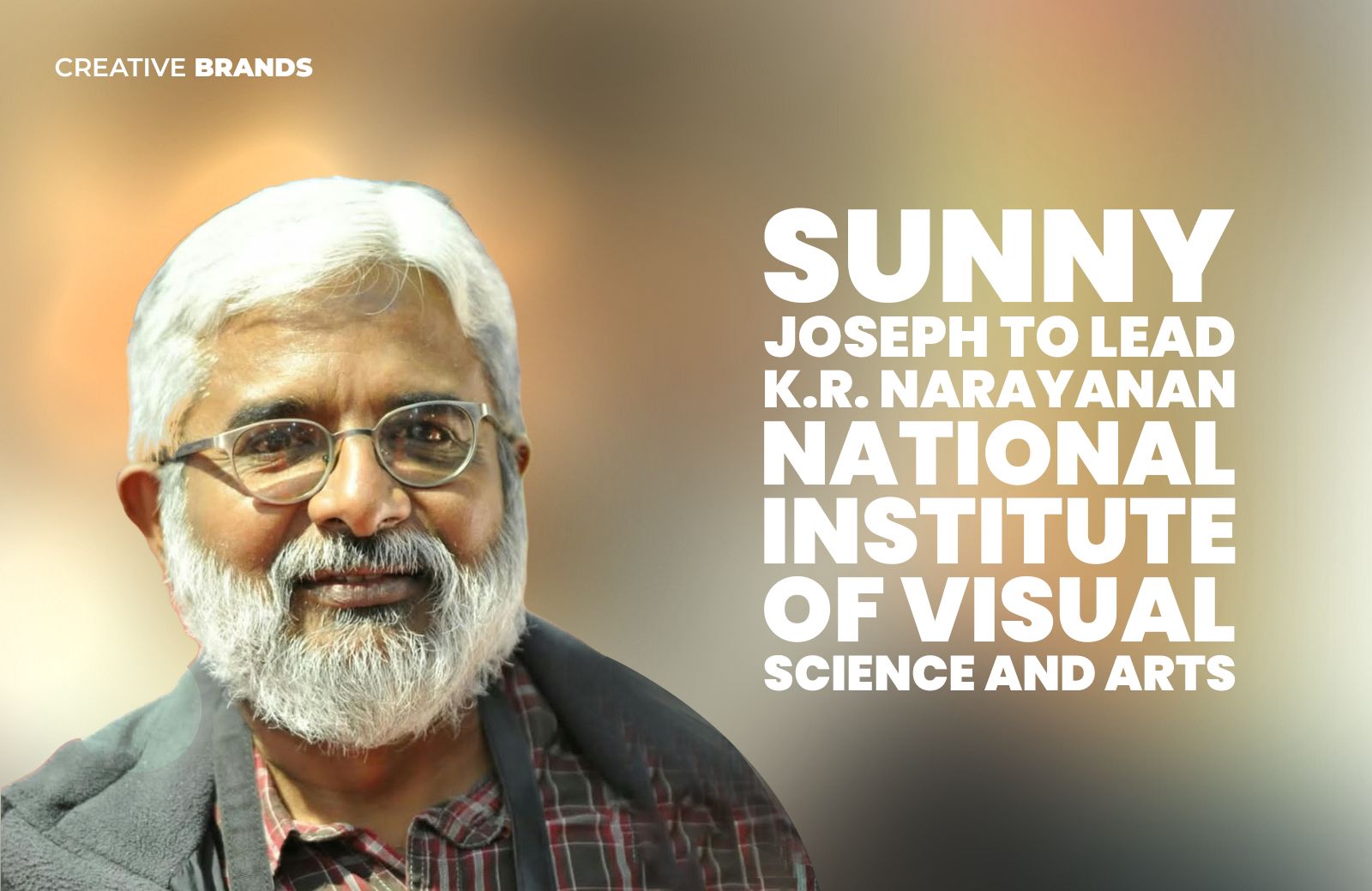
Acclaimed cinematographer Sunny Joseph, a veteran of over four decades in Indian cinema and recipient of multiple State and national awards, has been appointed director of the K.R. Narayanan National Institute of Visual Science and Arts, Kottayam. His leadership is expected to elevate the institute to international prominence.
Sunny Joseph, one of India’s most distinguished cinematographers, has been appointed as the new director of the K.R. Narayanan National Institute of Visual Science and Arts. The announcement marks a significant moment for the institution, which has been steadily building its reputation as a centre for film education and cultural discourse. With Joseph’s appointment, the institute is poised to strengthen its standing as a hub for cinematic excellence and international collaboration.
A graduate of the Film and Television Institute of India (FTII), Joseph’s career spans more than four decades, during which he has worked on 65 feature films across 12 Indian languages, in addition to numerous short films and documentaries. His versatility and mastery of the craft have earned him widespread recognition, including multiple State and national awards for both cinematography and direction. His debut feature film as a director, Salt of the Earth, showcased his ability to move seamlessly between the roles of cinematographer and storyteller, cementing his reputation as a creative force in Indian cinema.
Joseph’s body of work reflects both artistic depth and technical brilliance. He has been the cinematographer for landmark films such as Piravi, Nizhalkuthu, Train to Pakistan, Oru Cheru Punchiri, Bimba Prathibimba, Janala, Woh, Goddess, and Mango Souffle. Each of these projects demonstrates his ability to capture the essence of human experience through visual storytelling, whether in the intimate portrayal of grief in Piravi or the sweeping historical canvas of Train to Pakistan. His cinematography is often noted for its sensitivity to light, texture, and atmosphere, qualities that have made his work resonate across diverse audiences and cultures.
Beyond his contributions to cinema, Joseph has played a pivotal role in nurturing the next generation of filmmakers. He has conducted workshops in film schools across the country, sharing his expertise and encouraging students to explore the possibilities of visual language. His commitment to education and mentorship reflects a broader vision of cinema as a collaborative and evolving art form. As a founder member of the Indian Society of Cinematographers and the current president of the Cinematographers Union of Malayalam Cinema, Joseph has also been instrumental in shaping professional standards and advocating for the creative rights of practitioners in the industry.
The appointment has been welcomed by the academic and creative community. Minister for Higher Education R. Bindu remarked that Joseph’s leadership would pave the way for raising the institute to the status of an international centre for film studies. This endorsement underscores the expectation that Joseph’s global outlook and professional experience will help the institute expand its reach, attract international collaborations, and provide students with exposure to diverse cinematic traditions.
Joseph’s career trajectory illustrates the evolution of Indian cinema itself. Beginning at a time when regional films were gaining recognition for their artistic merit, he has witnessed and contributed to the transformation of the industry into a dynamic and globally connected space. His work across multiple languages and genres reflects the pluralistic nature of Indian cinema, while his engagement with international projects highlights the growing dialogue between Indian filmmakers and global audiences. In this sense, his appointment is not only a recognition of his personal achievements but also a symbolic affirmation of the institute’s role in bridging local traditions with global perspectives.
The K.R. Narayanan National Institute of Visual Science and Arts, named after India’s former President, has been envisioned as a centre that combines academic rigour with creative exploration. Under Joseph’s stewardship, the institute is expected to deepen its engagement with both the technical and philosophical dimensions of cinema. His emphasis on visual storytelling as a means of exploring human experience aligns with the institute’s mission to foster critical thinking and artistic innovation. Students can anticipate a curriculum enriched by his practical insights and his belief in cinema as a medium of cultural dialogue.
Joseph’s appointment also comes at a time when the Indian film industry is undergoing significant shifts, driven by digital technologies, streaming platforms, and changing audience preferences. His experience in both traditional filmmaking and contemporary practices positions him to guide students through this evolving landscape. By integrating classical techniques with modern innovations, he is likely to encourage a holistic approach to filmmaking that honours legacy while embracing change.
For many in the industry, Joseph represents a rare blend of artistry and leadership. His ability to balance creative vision with institutional responsibility will be crucial in shaping the future of the institute. As director, he will not only oversee academic programmes but also play a role in positioning the institute within the broader ecosystem of film education and cultural exchange. His international collaborations and reputation as a mentor suggest that he will prioritise building networks that connect students with opportunities beyond national boundaries.
The announcement has generated optimism among students, faculty, and industry professionals alike. For aspiring filmmakers, the chance to learn under Joseph’s guidance is an invaluable opportunity to engage with one of the most respected voices in Indian cinema. For the institute, his appointment signals a new chapter in its journey towards becoming a globally recognised centre for visual science and arts. And for the wider film community, it reaffirms the importance of nurturing institutions that combine education, creativity, and cultural legacy.
Sunny Joseph’s journey from FTII to the helm of the K.R. Narayanan National Institute of Visual Science and Arts is a testament to the enduring power of cinema as both an art and a profession. His appointment reflects not only his personal achievements but also the collective aspirations of an industry that continues to evolve and inspire. As he takes on this new role, the institute stands on the threshold of a future where Indian cinema can engage with the world on equal terms, guided by a leader whose vision is rooted in both tradition and innovation
Discover more from Creative Brands Mag
Subscribe to get the latest posts sent to your email.
















Leave a comment