


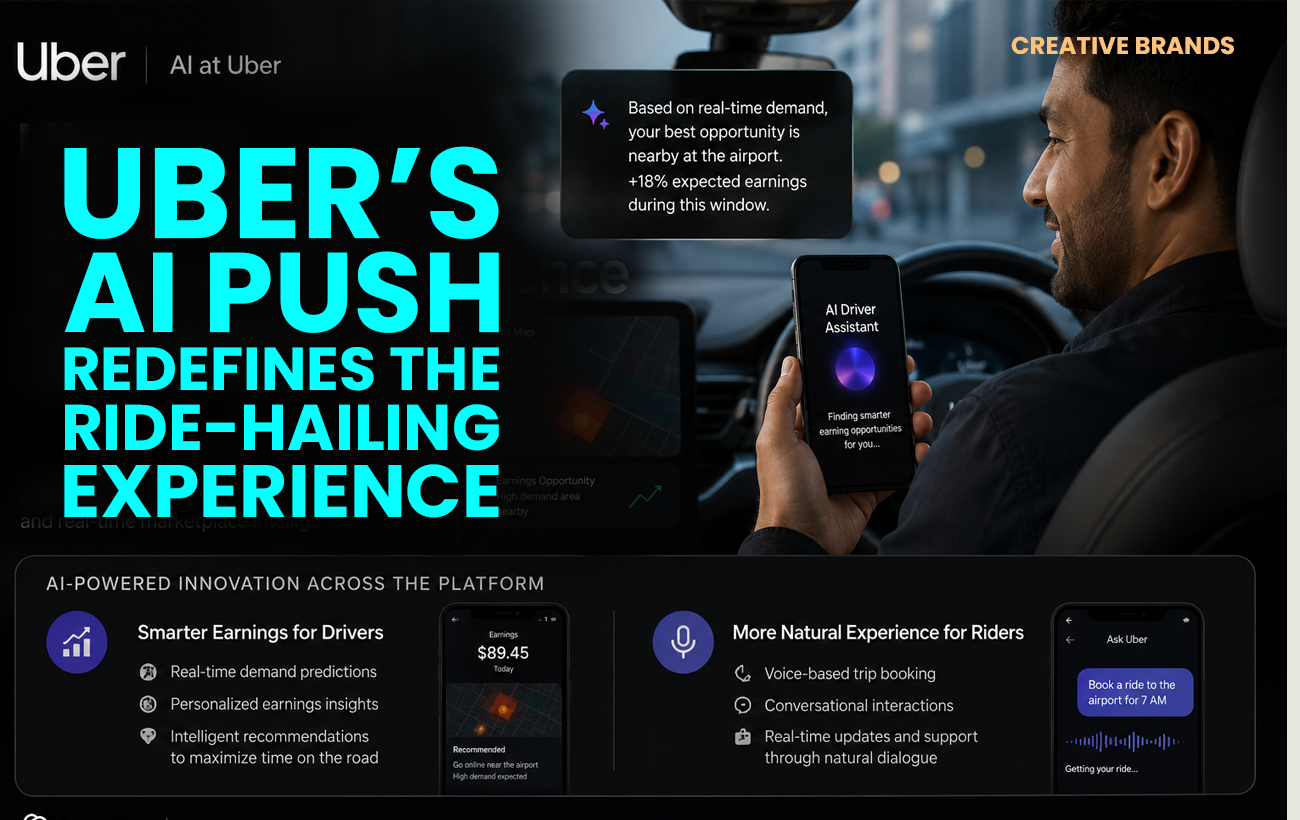
Uber is deepening its investment in artificial intelligence by integrating OpenAI models and Realtime APIs into its platform. The company says its new AI-powered tools are helping drivers make smarter earning decisions and enabling riders to book journeys more naturally through voice-based interactions and real-time marketplace intelligence.
In the fiercely competitive world of ride-hailing, speed, timing and decision-making can determine whether drivers maximise their earnings and whether riders secure a quicker journey. Now, Uber is turning to artificial intelligence to sharpen both sides of that equation.
The global mobility company has revealed that it is using OpenAI models and Realtime APIs to power a new generation of AI-driven experiences across its vast transport marketplace. Every day, Uber operates one of the world’s largest real-time marketplaces, coordinating millions of rides, deliveries and transport decisions across cities worldwide. The sheer complexity of balancing supply and demand has increasingly made artificial intelligence central to its operations.
At the heart of the latest move is Uber Assistant, an AI-powered feature designed to help drivers make better earning decisions while on the platform. The assistant interprets live marketplace signals — including demand trends, pricing patterns and heatmaps — and converts them into simple, actionable guidance that drivers can quickly understand while working.
Rather than forcing drivers to manually study surge maps or changing demand zones, the AI assistant aims to simplify the process by highlighting where opportunities may emerge and how drivers can position themselves more effectively. Uber says the beta version of Uber Assistant has already been expanded to hundreds of thousands of drivers across the United States, reflecting growing confidence in the technology’s ability to support workers on the platform.
The initiative signals a broader transformation in how gig economy companies are using AI not merely for automation, but as a decision-support tool. For drivers, particularly those working long hours in dense urban environments, instant access to clearer marketplace intelligence could translate into more efficient working patterns and potentially improved earnings.
At the same time, Uber is introducing new voice experiences aimed at riders. These features allow customers to request trips using natural speech rather than typing commands into the app. By integrating conversational AI capabilities, the company hopes to make bookings faster and more intuitive, particularly in situations where users may be multitasking or unable to interact with their phones easily.
The move reflects the wider technology industry’s race to embed generative AI and conversational interfaces into everyday digital experiences. As voice assistants become more sophisticated, companies are increasingly seeking to reduce friction between customer intent and action. In Uber’s case, the ambition is to make requesting a car feel closer to speaking naturally with a human assistant.
The partnership with OpenAI also illustrates how AI providers are becoming deeply integrated into mainstream consumer platforms. OpenAI’s Realtime APIs are designed to support low-latency conversational interactions, enabling applications such as live voice assistance and instant contextual responses — capabilities that are particularly valuable in fast-moving transport environments.
Industry analysts say the development could have wider implications for urban mobility. Real-time AI guidance may improve marketplace efficiency by helping distribute drivers more evenly across cities, reducing idle time and potentially shortening waiting periods for riders. It could also reshape how gig workers interact with digital platforms, with AI increasingly acting as a personalised operational guide.
Yet the growing use of AI in the gig economy also raises questions about transparency and worker dependence on algorithmic systems. Driver groups in several countries have previously expressed concerns about opaque pricing systems and automated decision-making. As AI tools become more influential in determining where drivers go and how they work, scrutiny over fairness and accountability is likely to intensify.
Uber, however, is positioning the technology as a support mechanism rather than a replacement for human judgement. By simplifying complex marketplace data into accessible recommendations, the company argues that drivers retain control while benefiting from stronger informational support.
The latest rollout comes at a time when technology firms across sectors are racing to convert AI breakthroughs into commercially viable consumer products. From banking to healthcare and retail, businesses are experimenting with conversational assistants, predictive analytics and personalised recommendations. For Uber, whose business depends on managing real-time movement across cities, AI offers an especially powerful tool for optimisation.
As the boundaries between mobility services and intelligent digital assistants continue to blur, Uber’s experiment may provide a glimpse into the future of transport platforms — one in which algorithms not only match riders and drivers, but actively guide both sides of the journey in real time.
Discover more from Creative Brands Mag
Subscribe to get the latest posts sent to your email.
















Leave a comment