


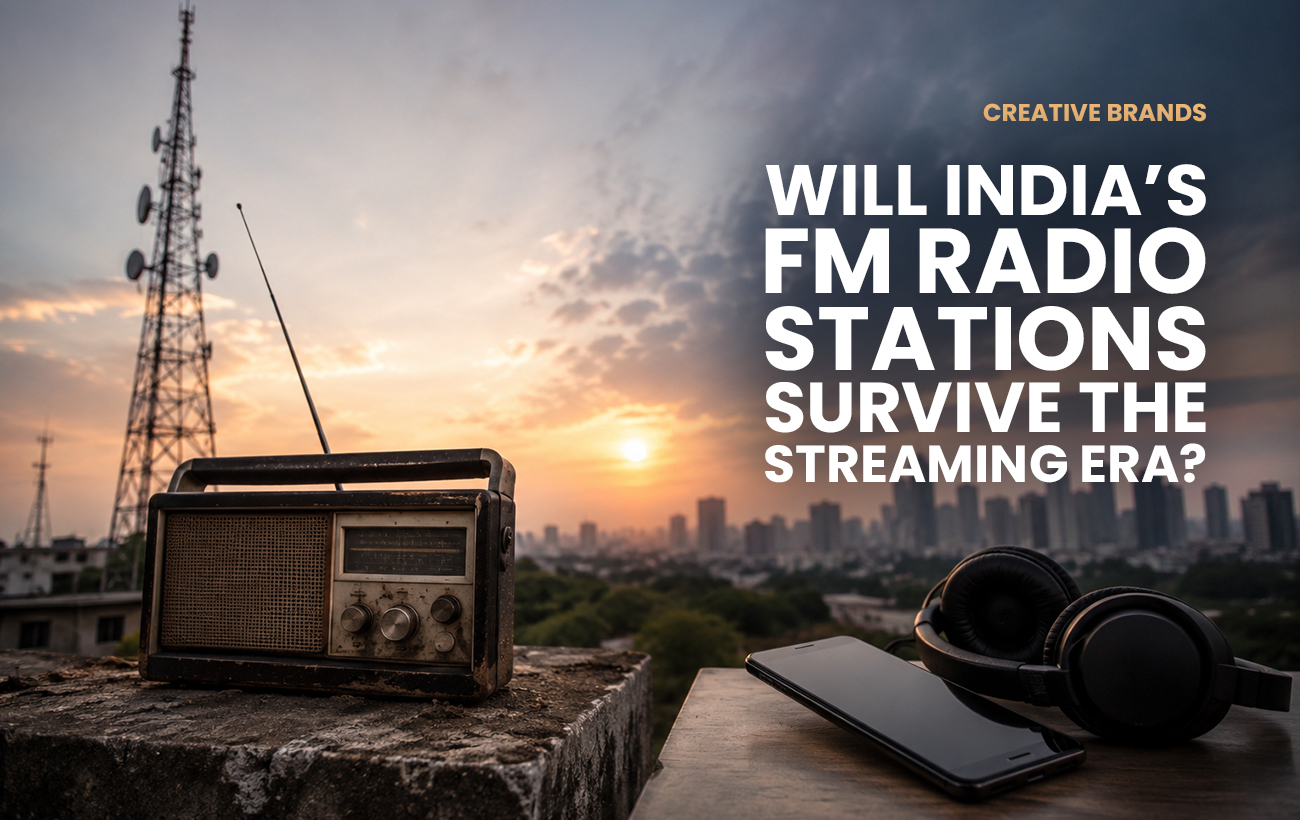
India’s private FM radio industry is facing one of its deepest crises, with major broadcasters surrendering licences, shutting stations and struggling against digital disruption. As streaming platforms dominate audio consumption, industry leaders are demanding urgent policy reforms, warning that without government action, one of India’s most accessible and localised media platforms could slowly fade into silence.
The silence creeping across India’s FM radio landscape is becoming impossible to ignore.
For decades, private FM stations were the soundtrack of urban India — playing in tea shops, buses, taxis, offices and homes, connecting listeners through music, humour, local language programming and city-centric culture. But today, one station after another is shutting down, surrendering licences or slipping into financial distress, raising a troubling question: is Indian FM radio slowly dying?
The latest sign of distress has come from the HT Media Group, which has reportedly decided to surrender multiple FM radio licences across important markets. The move has reignited fears within the broadcasting industry that the crisis facing private radio is no longer temporary but structural.
The closure trend has been building steadily over the past few years. Earlier, TV Today Network exited the radio business altogether. BIG FM entered insolvency proceedings. Red FM too surrendered Magic FM in Mumbai earlier this year. What was once considered a rapidly expanding media sector is now shrinking frequency by frequency.
Industry insiders say the warning signs have existed for years, but policy paralysis and changing listener habits have pushed the sector into a dangerous corner.
At the centre of the debate lies the explosive rise of digital streaming platforms such as Spotify, which transformed how Indians consume audio entertainment. Young listeners increasingly prefer personalised playlists, podcasts and on-demand music rather than scheduled radio programming. Cheap mobile internet and affordable smartphones accelerated that transition dramatically after the telecom data revolution of the late 2010s.
Yet many within the radio industry argue that blaming streaming services alone oversimplifies the crisis.
According to broadcasters, the deeper problem is that Indian FM radio has been operating under outdated regulations while competing against global technology platforms with far fewer restrictions. Industry representatives have repeatedly sought reforms from the government and the Telecom Regulatory Authority of India (TRAI), but many proposals have remained stuck in discussions rather than implementation.
One of the biggest demands has been the continuation of the 4 per cent Adjusted Gross Revenue model for Phase III licence extensions after 2030, without forcing stations into expensive fresh auctions. Broadcasters argue that another round of aggressive bidding could financially cripple already struggling operators.
Another long-standing demand is the reduction of GST on radio advertising from 18 per cent to 5 per cent, bringing it closer to the rates enjoyed by some other media sectors. Radio companies say the current taxation structure hurts small and medium advertisers who traditionally formed the backbone of local FM revenues.
But perhaps the most ironic issue concerns smartphones themselves.
Industry estimates suggest that nearly 90 per cent of FM listening in India now happens through mobile phones. However, many smartphone manufacturers quietly disabled FM receiver chips in devices sold in India, pushing consumers towards internet-based streaming instead. Broadcasters argue that millions of users are now forced to consume paid mobile data for audio content that could otherwise be accessed free through FM signals.
The industry has long demanded mandatory activation of FM receivers on smartphones sold in India. Yet despite repeated appeals and policy discussions, enforcement never truly materialised.
For radio executives, this represents more than a technological issue. It symbolises how a low-cost, widely accessible public medium gradually lost ground to global digital platforms driven by subscription and advertising models.
There is also another unresolved issue that broadcasters believe limits the growth potential of FM radio: the inability of private stations to air independent news and current affairs programming. Unlike many global radio markets, Indian private FM channels face severe restrictions on news broadcasting. Industry leaders say allowing regulated news content could significantly improve listener engagement and make radio more relevant in the digital era.
The irony, broadcasters note, is that radio still remains one of India’s most democratic media platforms. In smaller towns and semi-urban regions, FM continues to reach audiences in local languages where digital penetration remains uneven. Radio also plays a crucial role during emergencies, natural disasters and public announcements.
The symbolic importance of the medium remains visible in Narendra Modi’s monthly programme Mann Ki Baat, which uses radio’s vast reach to connect with citizens across the country. Even in the streaming age, radio still carries emotional familiarity and trust that newer platforms often struggle to replicate.
Media analysts say the crisis facing Indian FM radio reflects a broader transformation in the global audio industry. Around the world, traditional radio broadcasters are trying to reinvent themselves through podcasts, digital apps and hybrid content strategies. However, India’s private radio industry faces an added burden of heavy regulation, licensing costs and policy uncertainty.
Some experts believe radio still has a future if it adapts quickly. Hyperlocal programming, regional language content, community engagement and live city-based experiences remain strengths that algorithm-driven streaming services cannot fully replicate. Radio’s real-time companionship — especially during commutes, festivals, elections and crises — continues to hold cultural value.
Yet adaptation requires investment, and investment requires confidence.
That confidence is fading as stations close and revenues shrink.
For many veterans of the industry, the frustration is not rooted in nostalgia but in the belief that radio never received a level playing field. Broadcasters insist they are not seeking subsidies or protectionism. What they seek, they say, is policy support that recognises radio as a public communication medium rather than merely a commercial entertainment business.
The urgency has now become difficult to dismiss. Every surrendered licence weakens the industry further, reduces local employment and narrows the diversity of India’s media ecosystem.
The larger question haunting the industry is no longer whether streaming changed listener behaviour. It clearly did. The more important question is whether Indian FM radio was given the opportunity to evolve alongside that change.
As smartphones continue to dominate audio consumption and global platforms tighten their grip on attention spans, India’s radio broadcasters are waiting for reforms that have been discussed for years but rarely delivered.
Until then, the fear inside the industry is growing louder: if policy action continues to lag behind technological change, the country may soon discover that some frequencies, once lost, do not easily return.
Discover more from Creative Brands Mag
Subscribe to get the latest posts sent to your email.
















Leave a comment