


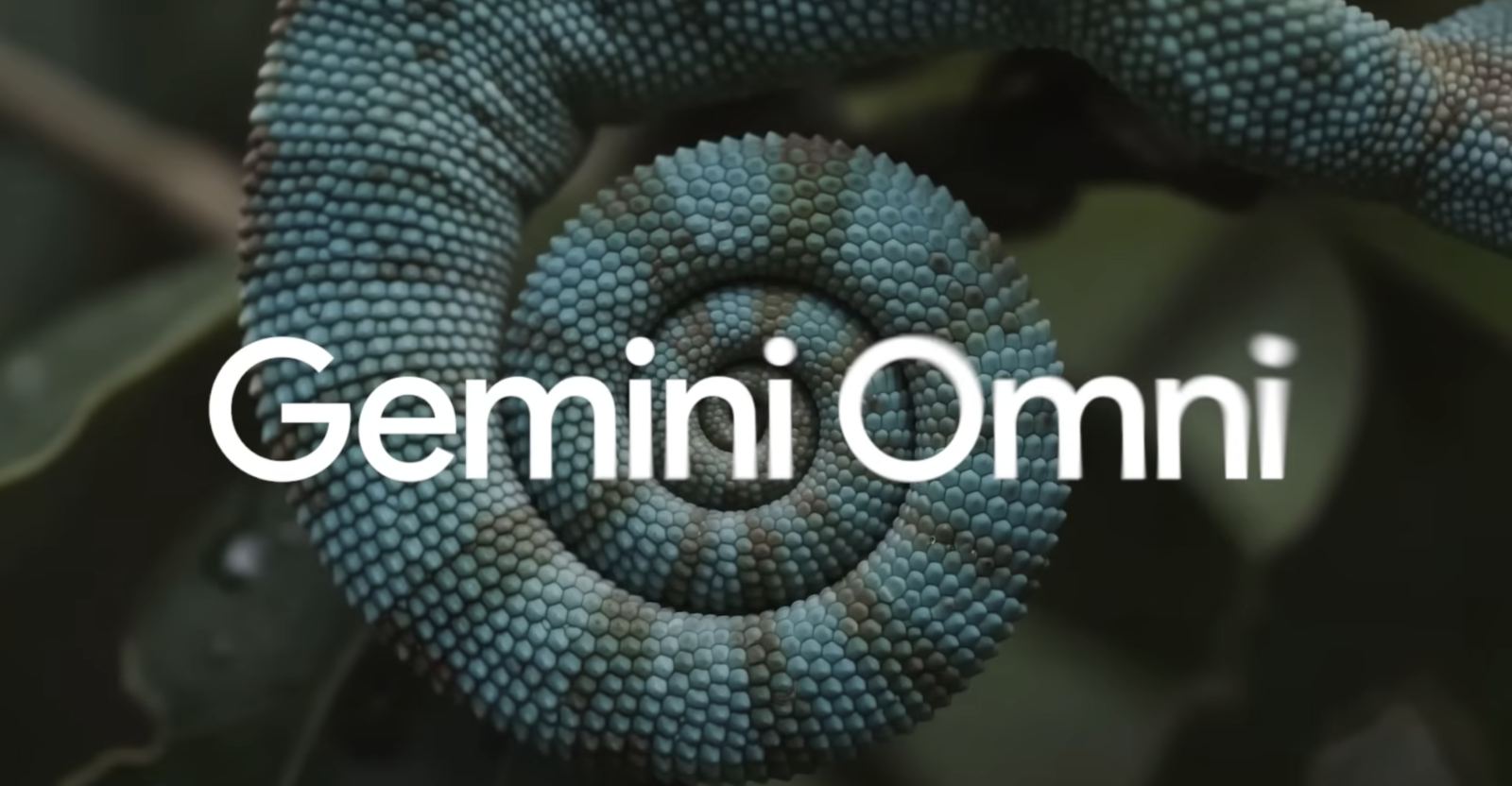
Google has unveiled Gemini Omni, a new family of artificial intelligence models capable of generating and editing videos using text, images, audio and existing video clips. Announced during Google I/O 2026, the technology reflects the company’s growing ambition to make AI more creative, conversational and deeply integrated across digital life.
Google has taken another dramatic step in the global artificial intelligence race with the launch of Gemini Omni, a new family of AI models designed to create videos from almost any form of input. The announcement, made during the company’s annual Google I/O 2026 developer conference, positions the tech giant at the centre of the rapidly evolving world of multimodal AI, where machines can understand and generate text, images, sound and video simultaneously.
The first model in the new family, Gemini Omni Flash, has been introduced as a system capable of turning combinations of photographs, audio clips, text prompts and video footage into polished video outputs. Google says the tool can also edit videos conversationally, allowing users to refine scenes, alter styles and adjust content through natural language instructions rather than complex editing software.
The company describes Omni as a fusion of Gemini’s reasoning abilities with advanced generative media technology. In practical terms, that means the model does not simply stitch together visuals. Instead, it attempts to understand the context, relationships and logic within a scene before generating content. Google executives argue that this “world understanding” could make AI-generated videos more coherent and realistic than earlier systems.
The announcement comes at a time when competition among AI companies has intensified sharply. OpenAI, Anthropic, Meta and several Chinese technology firms have all been racing to develop increasingly capable multimodal systems. Video generation, in particular, has become one of the most fiercely contested frontiers in AI because of its potential impact on filmmaking, advertising, entertainment, education and social media content creation.
Google’s move is especially significant because the company already controls many of the platforms where such AI-generated media could be distributed. Gemini Omni is expected to be integrated into the Gemini app, Google Flow, YouTube Shorts and YouTube Create, creating a seamless pipeline from generation to publication.
The launch also reflects Google’s broader shift into what Chief Executive Officer Sundar Pichai has called the “agentic Gemini era”. At I/O 2026, the company repeatedly emphasised that AI would no longer function merely as a passive assistant but as an active collaborator capable of completing tasks, generating creative outputs and making decisions on behalf of users.
During demonstrations, Google showcased how users could provide a mixture of materials — such as a photograph, a short audio recording and a written description — and ask Omni Flash to create a short cinematic video. The system reportedly maintains character consistency, scene continuity and object behaviour more effectively than earlier AI video generators.
Industry analysts believe the model could significantly lower the barriers to video production. Tasks that once required cameras, editing suites, lighting equipment and trained crews may increasingly be performed through conversational AI tools. Independent creators, marketers and small businesses could gain access to production capabilities that were previously expensive or technically demanding.
Yet the technology also raises fresh concerns about misinformation and authenticity. AI-generated videos have already sparked debate globally because of the rise of deepfakes and manipulated visual content. Google says it plans to use SynthID watermarking and verification systems to identify AI-generated material and improve transparency across platforms.
The company appears aware of the ethical sensitivities surrounding synthetic media. Reports suggest some features, particularly those involving realistic voice modification or advanced avatar generation, remain under review because of potential misuse risks.
The unveiling of Gemini Omni was one among a flood of AI-related announcements at Google I/O 2026. The company also introduced Gemini 3.5 Flash, a faster and more efficient AI model focused on coding and automation, alongside Gemini Spark, a proactive AI agent designed to assist users continuously throughout the day.
Google additionally revealed sweeping changes to Search, describing the overhaul as the platform’s biggest transformation in 25 years. AI-powered search experiences, conversational interfaces and intelligent shopping systems are now being deeply integrated into the company’s ecosystem.
For Google, Gemini Omni represents more than a creative tool. It is also a strategic attempt to define the next phase of human-computer interaction. Rather than treating text, audio, image and video generation as separate tasks, the company is moving towards unified systems capable of understanding and producing all forms of media together.
Experts say this direction mirrors a larger shift across the AI industry towards “omni-modal” models. Academic research published in recent months has highlighted growing interest in systems that can reason across multiple sensory and informational formats at once.
For users, the implications could be transformative. A student might one day create an educational film from lecture notes and photographs. A journalist could generate visual explainers from raw reporting material. A musician might produce a complete music video from a simple audio track and a few descriptive prompts.
At the same time, the rise of increasingly realistic AI-generated media may intensify questions about copyright, creative ownership and employment disruption in film, design and advertising industries. Many creative professionals are already debating whether AI tools should be viewed as collaborators, competitors or entirely new categories of media production technology.
Google’s latest announcement suggests that the company sees AI creativity not as a side experiment but as a central pillar of its future. By combining conversational intelligence with sophisticated media generation, Gemini Omni may become one of the clearest examples yet of how artificial intelligence is moving beyond chatbots and into the realm of full-scale digital creation.
Discover more from Creative Brands Mag
Subscribe to get the latest posts sent to your email.















Leave a comment