


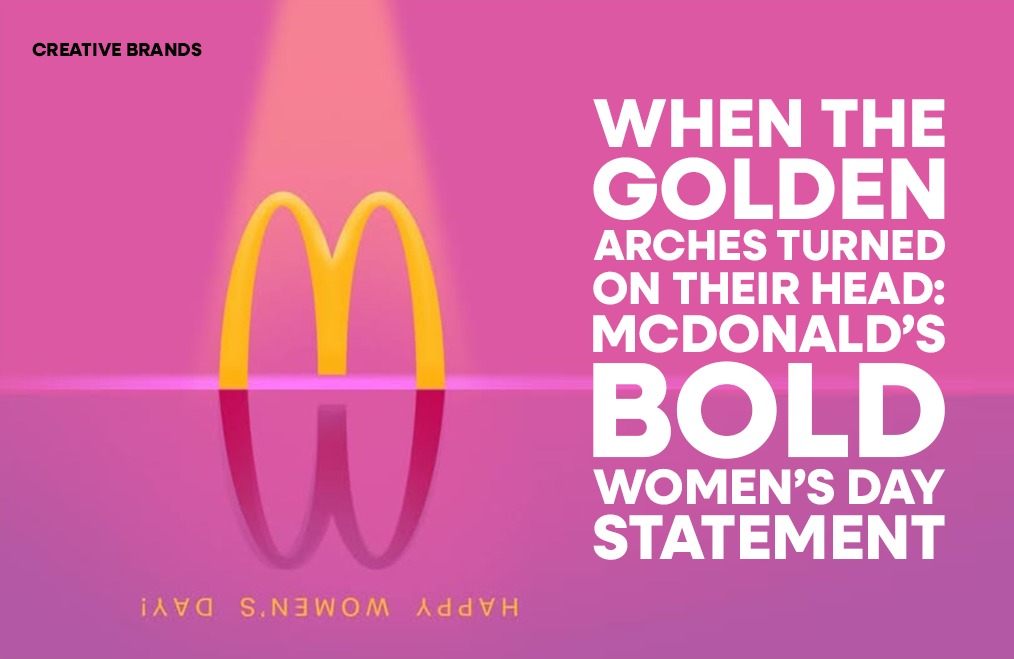
McDonald’s made headlines by flipping its iconic Golden Arches into a “W” to honour women on International Women’s Day in 2018. Inspired by a female franchise owner in California, the symbolic change highlighted the role of women across the company—from restaurant crews to executives—and sparked global conversation.
As the world marked International Women’s Day, one of the most recognisable logos on the planet briefly turned upside down. The golden arches of McDonald’s—a symbol familiar across continents—were flipped into a “W,” transforming a global brand icon into a tribute to women.
The bold move began with a simple but powerful idea from a franchise owner in Lynwood, California. Patricia Williams, who owned and operated a local McDonald’s restaurant, decided to literally turn the brand on its head. By inverting the restaurant’s famous “M,” she created a striking “W” that stood for women—an unmistakable visual message celebrating their impact within the company and beyond.
For a brand whose golden arches have remained largely unchanged for decades, the decision was unusually daring. Corporate logos are among the most carefully guarded assets in the business world, often protected from even the slightest alteration. Yet for International Women’s Day, McDonald’s embraced the symbolic transformation.
The inverted arches appeared not only on Williams’ restaurant sign but also across McDonald’s digital platforms and select marketing materials. Social media profiles adopted the flipped logo, while branded packaging, crew shirts, and signage in some locations carried the “W.” The gesture was designed to spotlight the contributions of women working throughout the company—from restaurant teams to corporate leadership.
At the time, McDonald’s said women represented a substantial portion of its global workforce and leadership pipeline. The campaign aimed to acknowledge that influence while aligning with broader conversations about gender equality in the workplace.
For Williams, the idea was deeply personal. As a longtime franchisee and one of the few Black women operating McDonald’s restaurants, she understood both the opportunities and challenges women face in the fast-food industry. Flipping the arches was her way of celebrating those who had paved the way and those continuing to break barriers.
The visual impact of the reversed logo was immediate. Photos of the Lynwood sign spread rapidly online, prompting curiosity and discussion. Some observers praised the creativity and symbolism, calling it a clever way for a global brand to recognise women’s achievements. Others debated whether such symbolic gestures should be accompanied by deeper structural commitments to equality.
Regardless of perspective, the campaign achieved what many marketing efforts strive for: attention. The simple act of turning a familiar logo upside down sparked a global conversation about women’s representation in business and leadership.
Brand experts noted that the move worked precisely because it altered something so familiar. The golden arches are among the most recognisable corporate symbols in the world, representing thousands of restaurants in more than 100 countries. Changing that icon—even temporarily—was bound to capture public imagination.
International Women’s Day has increasingly become a stage for companies to express support for gender equality. But McDonald’s approach stood out for its visual simplicity. Instead of introducing an entirely new design, the brand transformed its existing identity with a single, symbolic twist.
Years later, the inverted arches remain one of the most memorable corporate gestures associated with the 2018 celebration. What began as a franchisee’s idea in a California restaurant became a global talking point—demonstrating the power of symbolism when paired with a message that resonates widely.
For one day, the arches that billions recognise as “M” told a different story. Turned upside down, they became a “W,” reminding the world that behind one of the largest restaurant chains on earth are countless women shaping its past, present, and future.
Discover more from Creative Brands Mag
Subscribe to get the latest posts sent to your email.








Leave a comment