


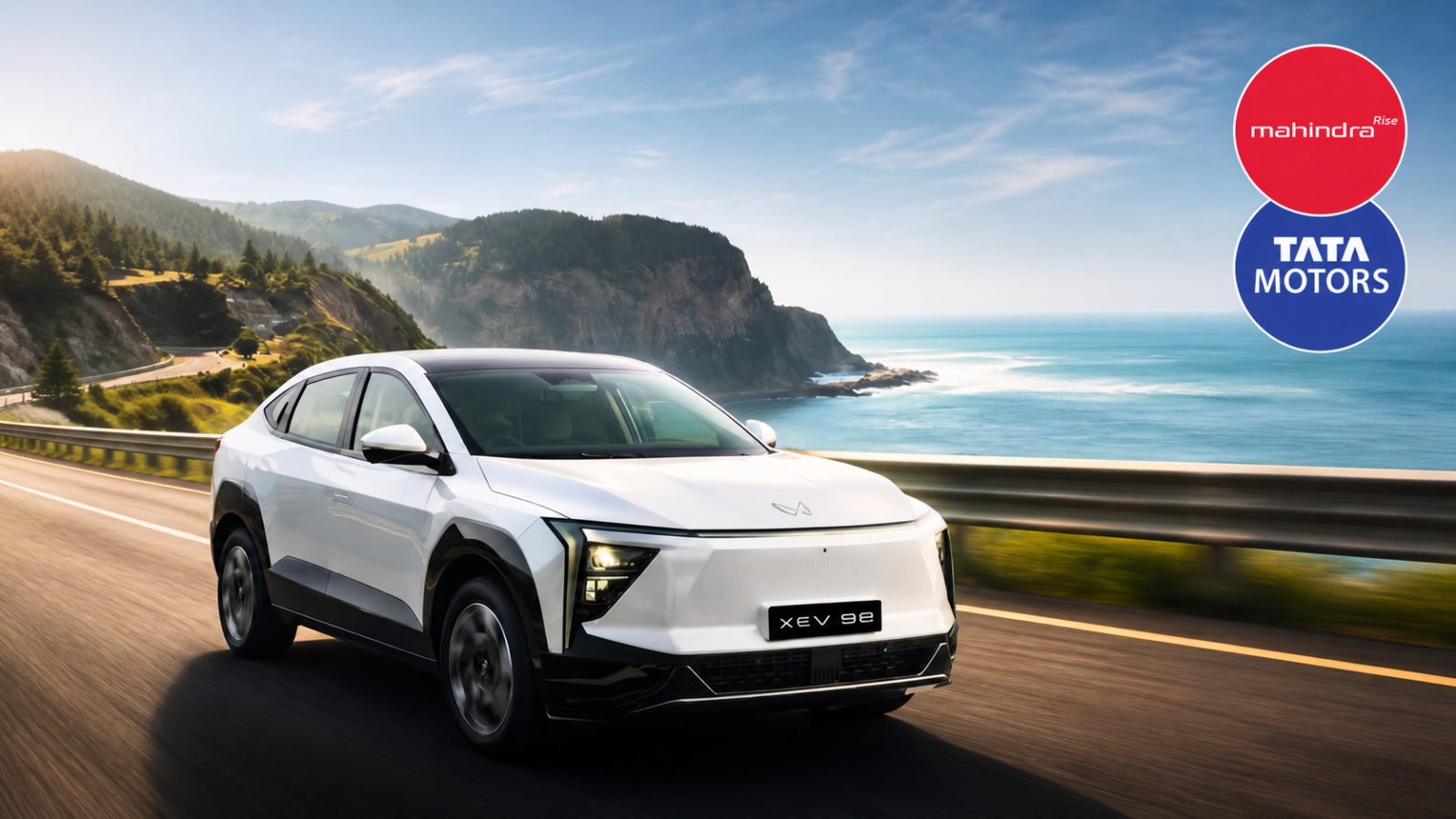
Mahindra & Mahindra has edged past Tata Motors to become India’s top electric car seller by revenue in FY26, reporting ₹15,089 crore against Tata’s ₹14,995 crore. Despite Tata’s dominance in unit sales, the milestone underscores a market shift towards premium EVs and value leadership.
Mahindra & Mahindra has marked a historic milestone in India’s fast‑evolving electric vehicle sector, overtaking Tata Motors in revenue for the first time. In FY26, Mahindra reported EV revenue of approximately ₹15,089 crore, narrowly surpassing Tata Motors’ ₹14,995 crore—a razor‑thin gap of just ₹94 crore. The achievement signals a new phase in the competition between India’s two leading automotive giants, where value rather than sheer volume is beginning to define leadership.
Tata Motors continues to dominate in terms of units sold, with nearly 78,800 EVs delivered during the year compared to Mahindra’s 42,700 units. This clear divide between volume leadership and value leadership reflects the contrasting strategies of the two companies. Tata has built its strength on accessible, mass‑market EVs, while Mahindra has leaned into higher‑value models that appeal to consumers seeking premium features, advanced technology, and greater driving comfort.
The numbers reveal more than just a financial contest. They highlight a shift in consumer behaviour in India’s EV market, where rising disposable incomes and growing aspirations are fuelling demand for premium electric vehicles. Mahindra’s ability to generate higher revenue from fewer units suggests that buyers are increasingly willing to pay more for advanced design, performance, and brand positioning. This trend mirrors global patterns, where EV adoption is being driven not only by affordability but also by the appeal of innovation and status.
For Tata Motors, the challenge lies in balancing its volume leadership with the need to capture greater value from its portfolio. While its dominance in unit sales underscores its reach and accessibility, the revenue gap—even if marginal—illustrates how premium positioning can tilt the scales in terms of financial performance. Tata’s next steps may involve strengthening its premium offerings to ensure it remains competitive across both dimensions of the market.
Mahindra’s breakthrough also carries wider implications for India’s automotive industry. As the government continues to push for electrification through incentives and infrastructure development, the competition between Tata and Mahindra is likely to shape the pace and direction of EV adoption. The emergence of value leadership as a decisive factor could encourage other automakers to recalibrate their strategies, focusing not only on affordability but also on aspirational design and advanced technology.
This milestone is more than a corporate victory; it is a reflection of India’s changing mobility landscape. The razor‑thin margin between Mahindra and Tata underscores the intensity of the rivalry, while the broader narrative points to a market in transition—one where the definition of success is expanding beyond units sold to encompass value creation, brand differentiation, and consumer aspiration.
As FY26 closes, Mahindra’s triumph in revenue marks a turning point in India’s EV story. The competition between Tata and Mahindra is set to intensify, but the real winner may be the Indian consumer, who now has access to a wider spectrum of electric vehicles that cater to both affordability and premium demand.
Discover more from Creative Brands Mag
Subscribe to get the latest posts sent to your email.
















Leave a comment