


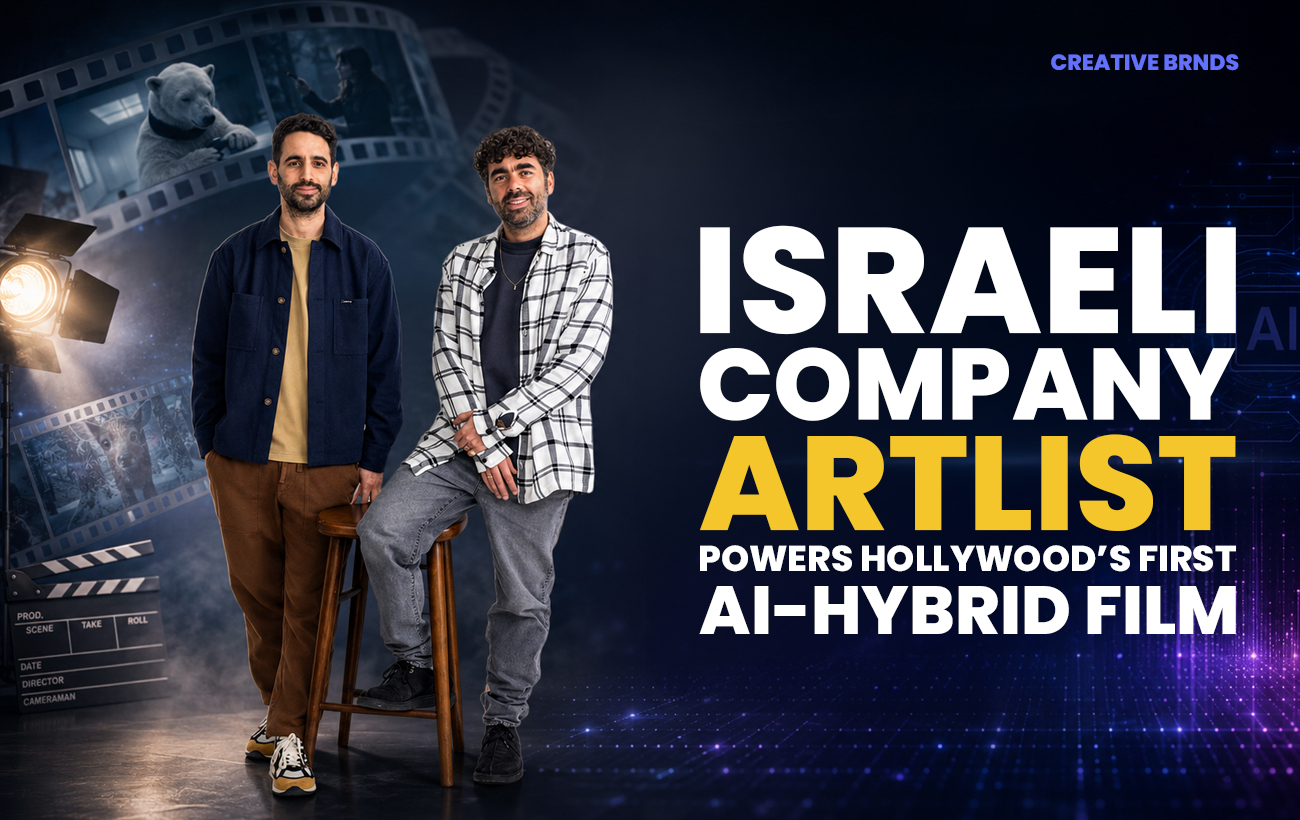
Israeli company Artlist has announced its role as financier and technology partner in Hollywood’s first AI-hybrid feature film, Terrarium. Produced by horror veteran Steven Schneider, the project blends traditional filmmaking with AI-generated scenes, promising unprecedented visuals and reduced costs, while marking Artlist’s breakthrough into Hollywood’s creative spotlight.
Hollywood is preparing to take a cautious but significant leap into the future of filmmaking with Terrarium, the first feature film to combine traditional production with artificial intelligence. At the centre of this experiment is Israeli company Artlist, which revealed on Wednesday that it will serve as both financier and technology partner for the project.
The film, produced by horror specialist Steven Schneider, is not backed by Steven Spielberg but nonetheless represents a full-scale Hollywood production. What sets Terrarium apart is its hybrid approach: some sequences will be shot conventionally, while others will be generated using AI. This dual method is expected to deliver visuals never before seen on cinema screens, while also cutting production costs considerably—a factor that could prove decisive as studios weigh AI’s creative potential against industry disruption fears.


The announcement was made at a high-profile Artlist event in Los Angeles, where CEO Ira Belsky, once a resident of Israel’s Golan Heights, walked the red carpet alongside Hollywood executives. For Artlist, the evening was more than a launch; it was a chance to position itself as a rising star in the global entertainment industry. If the reception is positive, the company could find itself at the forefront of Hollywood’s evolving relationship with AI.
Artlist’s involvement signals a major step for the company, which has built its reputation as a creative technology platform but now seeks to expand into film production. For Hollywood, however, the move is more tentative. Studios remain wary of AI’s impact on jobs, creative control, and artistic authenticity. Yet the promise of reduced costs and enhanced visual possibilities makes Terrarium a test case that could shape future industry decisions.
The project also reflects a broader trend: as AI tools become more sophisticated, filmmakers are exploring ways to integrate them without abandoning traditional craft. Schneider’s horror pedigree ensures that Terrarium will have genre credibility, while Artlist’s technological expertise provides the infrastructure to experiment safely.
For Belsky and his team, the film represents an extraordinary opportunity to showcase Israeli innovation on a global stage. By aligning with Hollywood at a moment of technological transition, Artlist is betting that AI will not replace human creativity but amplify it. Whether Terrarium succeeds commercially or critically, its production marks a turning point in cinema’s ongoing dialogue with technology.
As the industry watches closely, Artlist’s gamble could redefine not only its own trajectory but also Hollywood’s willingness to embrace AI as a creative partner rather than a disruptive threat.
Discover more from Creative Brands Mag
Subscribe to get the latest posts sent to your email.












Leave a comment