


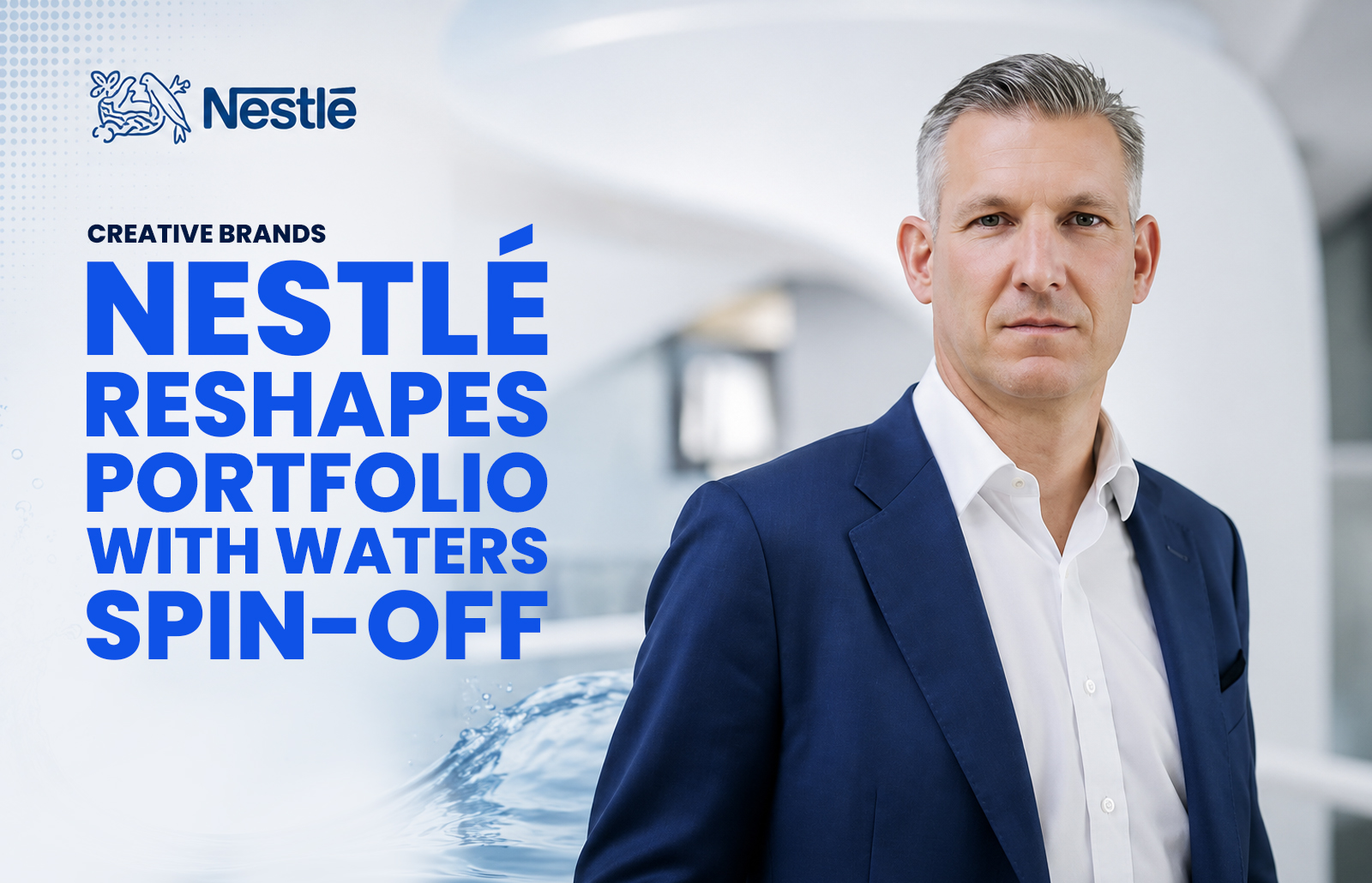
Nestlé is spinning off its waters and premium beverages into Peranel, a joint venture with Platinum Equity, as net profit fell 31.4 per cent. The group is reshaping its portfolio with disposals and acquisitions, while its Asia, Oceania and Africa zone delivered the strongest growth, led by KitKat, Maggi and Milo.
Nestlé is embarking on one of its most significant portfolio reshuffles in recent years, announcing a 50:50 joint venture with Platinum Equity to house its waters and premium beverages business. The new entity, Peranel, will include celebrated names such as S.Pellegrino, Sanpellegrino and Maison Perrier, with the deal valued at EUR 4.9 billion (AU$8 billion). Nestlé expects cash proceeds of CHF 2.8 billion (AU$5 billion) by mid-2027, underscoring its strategy of sharpening focus while reinvesting in growth.
The move comes as the Swiss group reported a 31.4 per cent drop in first-half net profit to CHF 3.5 billion (AU$6.1 billion), driven by a CHF 1.3 billion (AU$2.3 billion) write-down on its vitamins, minerals and supplements brands, which have been classified as held for sale. Restructuring costs also surged to CHF 469 million (AU$820 million), linked to the Fuel for Growth programme targeting CHF 3 billion (AU$5.25 billion) in savings by 2027. So far, CHF 1.7 billion (AU$3 billion) has been delivered.
Nestlé’s portfolio reshaping has been swift. Alongside the waters spin-off, it sold Blue Bottle Coffee to Centurium Capital, acquired the remaining 51 per cent of German meal replacement firm yfood Labs, and is transferring its remaining ice cream assets to the Froneri joint venture. These moves reflect a deliberate pivot towards higher-margin categories and operational efficiency.
Group sales for the half reached CHF 43.1 billion (AU$75 billion), with organic growth of 3.6 per cent. Reported sales fell 2.5 per cent, hit by a 6.2 per cent currency headwind. Underlying trading operating profit was CHF 7.1 billion (AU$12 billion) at a margin of 16.4 per cent, flat in constant currency but pressured by rising coffee and cocoa costs and the infant formula recall.
The standout performance came from the Asia, Oceania and Africa zone, which includes Australia and New Zealand. Organic growth reached 4.3 per cent in the half, accelerating to 6.5 per cent in the second quarter, with real internal growth of 4.8 per cent. Zone margin held at 21.4 per cent, the highest across Nestlé’s regions, as cost savings offset increased brand investment and recall impacts. Food and snacks grew at double-digit rates in Q2, led by KitKat, Maggi and Milo, while infant formula brands showed a strong recovery.
Chair Pablo Isla and chief executive Philipp Navratil told shareholders the company is “sharpening our portfolio focus and driving further efficiencies to reinvest”. For the full year, Nestlé expects organic growth of 3–4 per cent, an improved operating margin versus 2025, and free cash flow above CHF 9 billion (AU$12 billion). Yet it warned of higher transport and energy costs in the second half due to the Middle East conflict, signalling a challenging backdrop for its transformation.
Discover more from Creative Brands Mag
Subscribe to get the latest posts sent to your email.









Leave a comment