


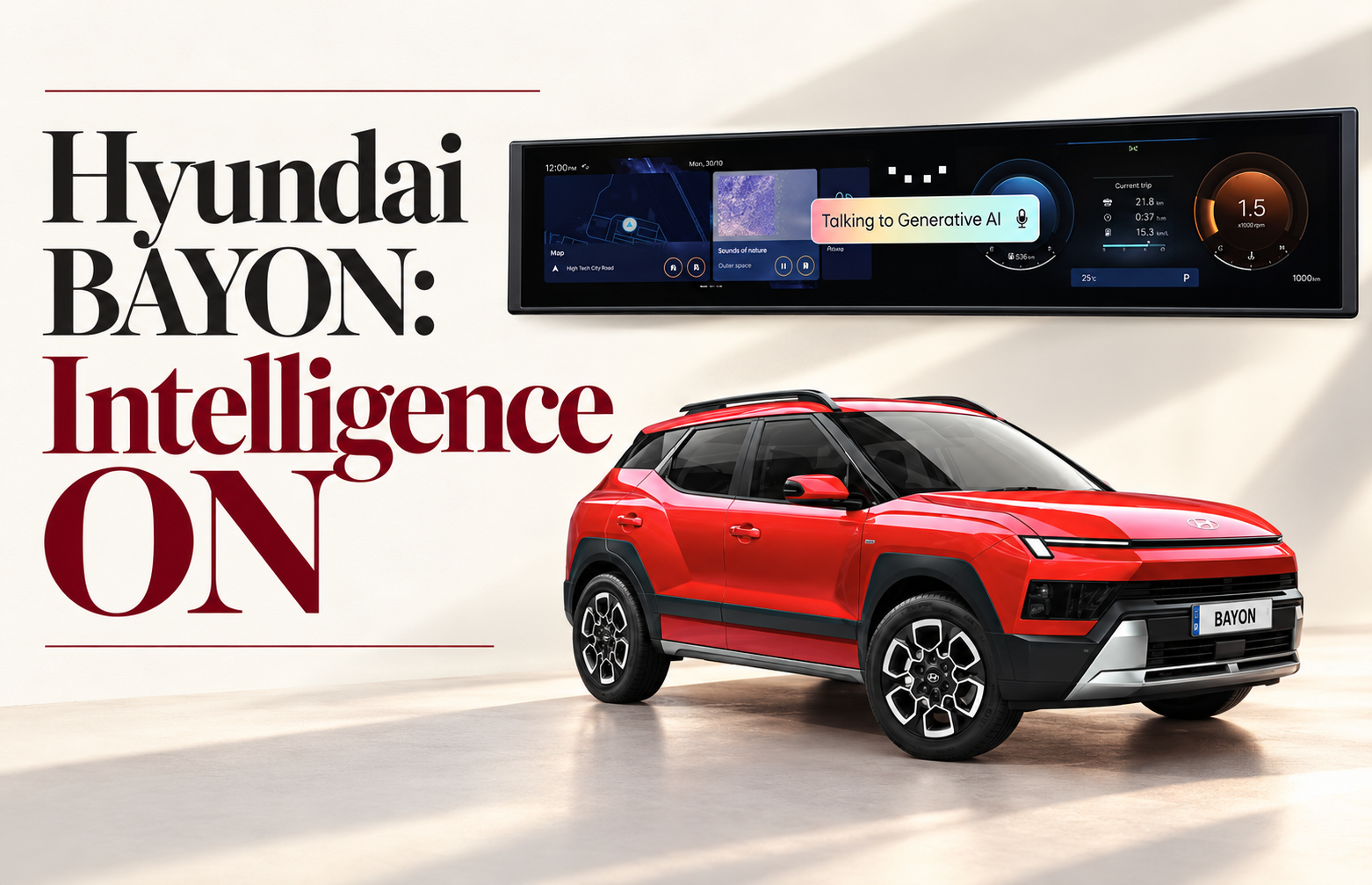
Hyundai has unveiled an innovative print advertising concept for the BAYON, transforming a conventional four-page newspaper jacket into an interactive audio experience. With a simple press of a button, readers can hear the advertisement speak, blending traditional print media with modern technology and offering a striking new way to engage audiences.
For decades, newspapers have relied solely on words and images to tell stories, sell products and capture readers’ attention. Now, Hyundai is challenging that convention with an advertising innovation that asks a simple yet intriguing question: what if your newspaper could talk?
The automotive manufacturer has introduced an interactive print advertisement for its BAYON model that brings sound to one of the oldest forms of media. At a time when brands are increasingly searching for fresh ways to connect with consumers, Hyundai’s latest campaign demonstrates how traditional print can still surprise and engage audiences in the digital age.
The centrepiece of the campaign is a specially designed four-page newspaper jacket that contains built-in audio technology. Rather than simply reading about the BAYON, newspaper readers can interact directly with the advertisement by pressing a button embedded within the printed wrap. Instantly, the page comes to life with a spoken message, creating a sensory experience that combines the familiarity of print with the immediacy of sound.
The concept transforms what is normally a passive medium into an active one. Readers no longer need to rely solely on headlines, photographs or promotional copy to understand the vehicle’s message. Instead, they can hear the campaign unfold, creating a more memorable and immersive encounter with the brand.
The BAYON, Hyundai’s compact crossover, serves as the ideal platform for such an innovation. Positioned as a modern and technology-driven vehicle, the model is associated with smart features and contemporary urban lifestyles. By embedding audio into a newspaper advertisement, Hyundai reinforces those attributes in a way that reflects the vehicle’s forward-thinking character.
The campaign also highlights the continuing relevance of print media at a time when much advertising investment is directed towards digital channels. Newspapers are often viewed as a traditional format, yet Hyundai’s initiative illustrates how creativity and technology can redefine expectations. By integrating an audio component into the physical newspaper jacket, the company has effectively blurred the boundaries between print and digital engagement.
Marketing specialists have long argued that creating memorable brand experiences is crucial in an increasingly crowded media landscape. Interactive advertising, whether online or offline, tends to attract greater attention because it encourages participation rather than passive consumption. Hyundai’s talking newspaper taps into this principle, inviting readers to become part of the experience with a simple touch.
Beyond its novelty value, the campaign showcases how emerging technologies can breathe new life into established media formats. The result is an advertisement that stands out not only because of what it says, but because of how it says it.
As readers press the button and hear the BAYON speak, they encounter something rarely associated with newspapers: a voice. In doing so, Hyundai has transformed a familiar printed page into an unexpected conversation, proving that even in an age dominated by screens, innovation can still be found in the rustle of newsprint.
Discover more from Creative Brands Mag
Subscribe to get the latest posts sent to your email.
















Leave a comment