


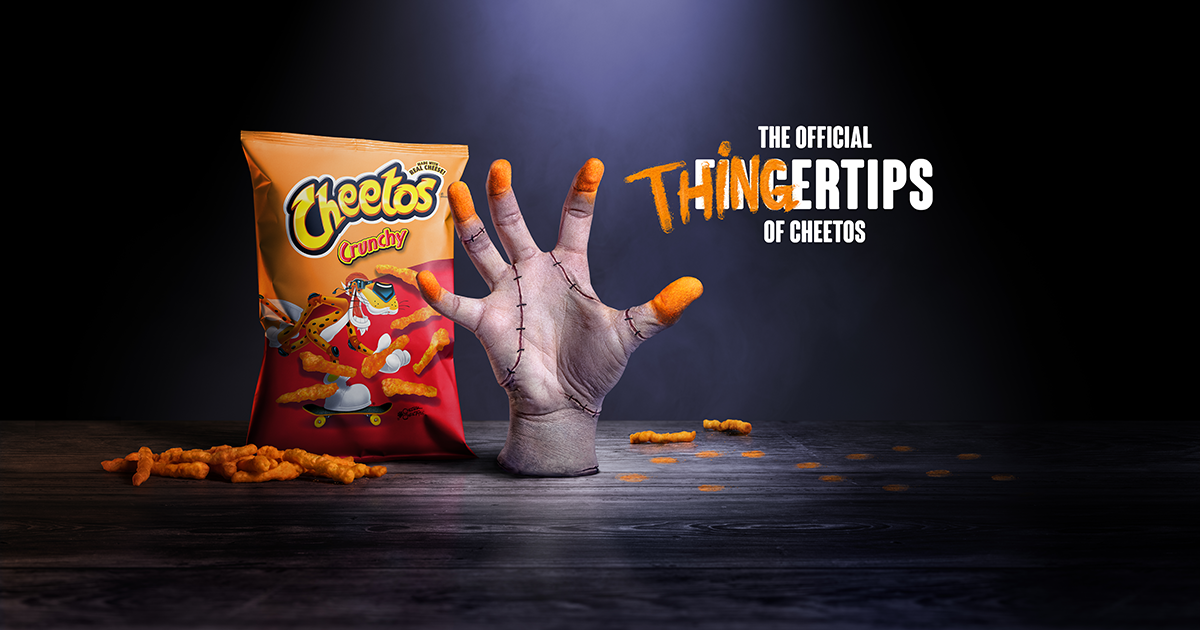
Cheetos and creative agency Goodby Silverstein & Partners have transformed the messy aftermath of snacking into a celebrated marketing idea with “The Official Thingertips of Cheetos”. The campaign, recognised at The One Show, highlights how brands are increasingly turning ordinary consumer habits into cultural storytelling.
The bright orange dust left behind after eating Cheetos has long been part of the snack’s identity, but in the hands of marketers and creatives it has now become something far larger — a cultural symbol, a fan badge and an award-winning advertising device. “The Official Thingertips of Cheetos”, created by Goodby Silverstein & Partners for Cheetos, has emerged as one of the most talked-about campaigns in the global advertising industry after gaining recognition at The One Show and the Clio Awards.
The campaign builds on a deceptively simple insight: nearly everyone eats Cheetos with their dominant hand, willingly sacrificing clean fingers for the experience of the snack. Rather than treating the orange residue as an inconvenience, the campaign reframed it as a mark of commitment and fandom. The term “Thingertips” cleverly merged “things” and “fingertips”, turning stained hands into a playful badge of honour.
The work forms part of Cheetos’ wider “Other Hand” platform, a campaign direction that has consistently explored the humorous consequences of dedicating one’s dominant hand entirely to eating Cheetos. Advertisements, digital stunts and live activations imagined people attempting ordinary tasks — parking cars, designing fonts or performing professional duties — using only their non-dominant hand while their preferred hand remained occupied with the snack.
What makes “The Official Thingertips of Cheetos” particularly significant is how it reflects a broader shift in global advertising. Brands are no longer simply selling products; they are turning consumer behaviours into participatory culture. Instead of polished perfection, marketers increasingly celebrate quirks, messiness and rituals that audiences already recognise from everyday life. In Cheetos’ case, the infamous “Cheetle” dust — the orange powder coating fingers after eating the snack — became central to storytelling. Earlier campaigns had already explored the phenomenon, including “Cheetle in Cheadle”, which highlighted public fascination with the orange residue.
The campaign’s success also lies in its understanding of internet humour. Social media audiences often embrace absurdity, self-awareness and relatable inconvenience, all of which were embedded into the execution. From meme-friendly outdoor advertisements to digital interactions, the campaign was designed not merely to be viewed but shared and remixed. One billboard stunt showing the chaos of parking a car with the “other hand” reportedly gained viral traction online and spread through meme accounts and social feeds.
Industry recognition soon followed. At the 2025 edition of The One Show 2025, the broader “Other Hand” campaign won top honours in Integrated and Omnichannel categories, including the prestigious Best of Discipline Pencil. “The Official Thingertips of Cheetos” additionally picked up recognition at the Clio Awards in the fan engagement category, highlighting its crossover appeal between entertainment, advertising and internet culture.
Behind the humour sits a highly strategic brand exercise. The global snack market has become increasingly crowded, especially among younger consumers drawn towards novelty flavours, health-conscious alternatives and rapidly changing food trends. In such an environment, iconic brands must continually rediscover their cultural relevance. Cheetos chose not to compete solely on flavour innovation or nutritional positioning, but on emotional familiarity and ritualistic behaviour.
The numbers suggest the strategy worked. According to campaign information released through award submissions, the “Other Hand” platform generated billions of impressions and helped Cheetos grow sales despite a slight decline in the wider savoury-snack category. The campaign reportedly achieved overwhelmingly positive audience sentiment while expanding the brand’s social visibility.
The campaign also reveals how modern advertising increasingly depends on participation rather than passive viewing. Consumers today are not merely spectators; they become contributors, meme creators and cultural amplifiers. Orange-stained fingertips are especially effective in this regard because they already exist as a recognisable shared experience. The campaign did not invent a behaviour; it elevated one that millions already understood.
There is also a subtle nostalgia attached to the campaign’s success. Online communities continue to discuss old Cheetos flavours, childhood promotions and the brand’s unusual collectable culture with remarkable affection. Reddit threads filled with memories of discontinued flavours, promotional contests and rare snack variants demonstrate the deep emotional attachment audiences have formed with the brand over decades.
For advertising observers, “The Official Thingertips of Cheetos” stands as another example of how the industry increasingly rewards ideas rooted in authentic consumer behaviour. Rather than manufacturing artificial narratives, successful campaigns now often emerge from amplifying small truths that audiences instantly recognise. In this case, something as trivial as messy fingers became the centrepiece of a global creative success story.
The campaign’s rise also underlines the continued importance of humour in advertising. At a time when many brands chase social purpose messaging or cinematic emotional storytelling, Cheetos leaned unapologetically into silliness. Yet the humour never overshadowed the product itself. The orange residue, the awkward hand-switching and the exaggerated mishaps all reinforced the same idea: people love Cheetos enough to inconvenience themselves for it.
That combination of self-aware comedy, behavioural insight and cultural participation has turned a snack-food quirk into one of the year’s most celebrated creative campaigns — proving that sometimes the strongest brand ideas are already sitting on consumers’ fingertips.
Discover more from Creative Brands Mag
Subscribe to get the latest posts sent to your email.









Leave a comment