


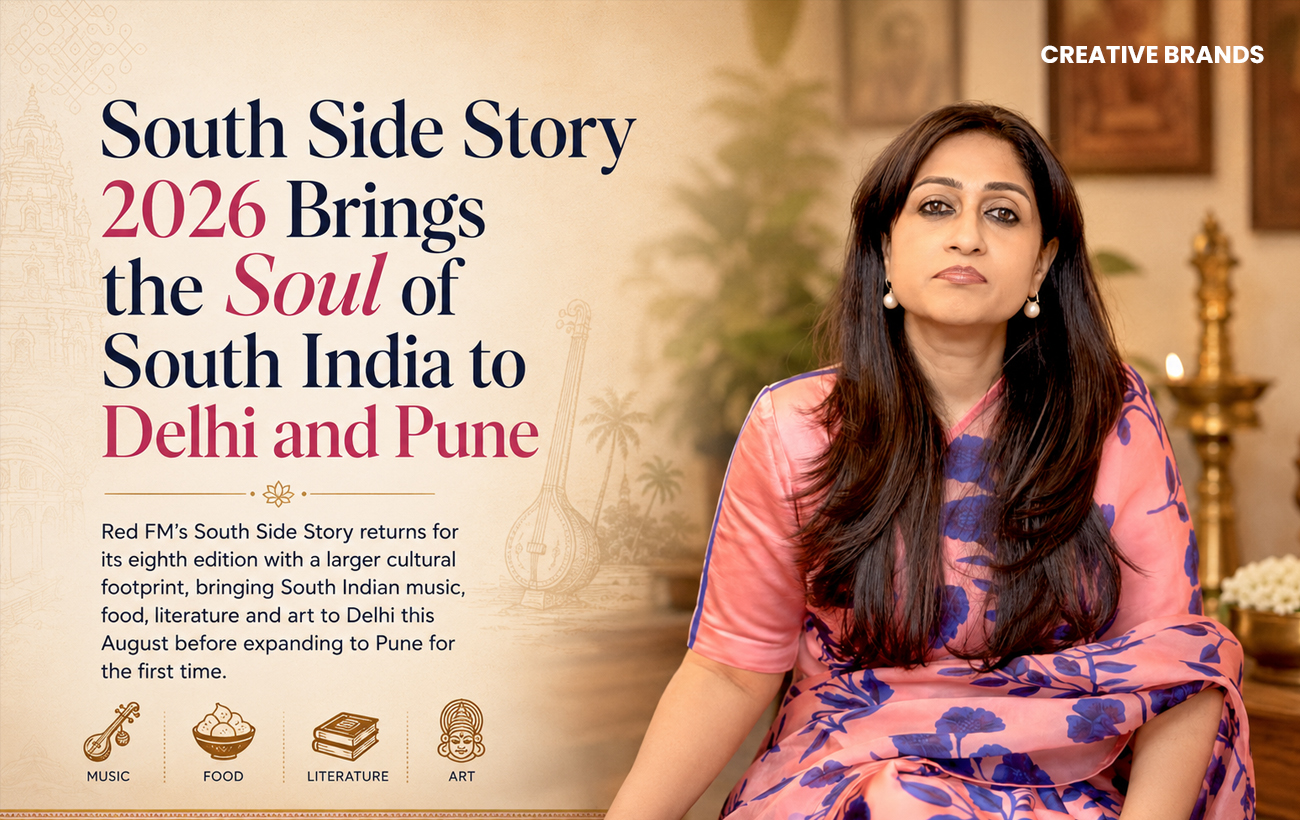
Red FM’s South Side Story returns for its eighth edition with a larger cultural footprint, bringing South Indian music, food, literature and art to Delhi this August before expanding to Pune for the first time. The festival reflects Red FM’s growing focus on culture-led experiences rooted in India’s regional identities and traditions.
The sounds of rap, folk rhythms, rock anthems and cinematic melodies are set to echo through Delhi once again as Red FM prepares to bring back its flagship cultural festival, South Side Story, for an eighth edition that promises to be larger, louder and more immersive than ever before.
Scheduled for August 22 and 23, 2026, the Onam-special celebration will once again transform the national capital into a vibrant showcase of South Indian culture, drawing together music lovers, food enthusiasts, artists and communities eager to reconnect with the traditions and contemporary creativity of the southern states. This year’s edition also marks a significant expansion for the property, with Red FM announcing that the festival will debut in Pune for the first time, extending its cultural footprint beyond Delhi.
Positioned as a celebration of “stories of India, from India and by Indians”, South Side Story has steadily evolved into one of the capital’s most recognisable regional cultural festivals. Over the years, the event has created a unique space where the flavours, languages, sounds and aesthetics of South India meet audiences from across the country, many of whom live far away from their cultural roots but seek familiar experiences through festivals such as these.
The 2026 edition aims to deepen that connection. Organisers have promised a two-day experience filled with live performances, immersive installations, literary conversations and culinary experiences inspired by the many traditions of South India. Visitors can expect everything from the aroma of freshly brewed Karnataka coffee and elaborate Onam sadya spreads to visual art inspired by temple architecture, cinema culture and folk storytelling traditions.
The festival’s appeal lies in the way it blends nostalgia with modernity. Alongside traditional elements, South Side Story has increasingly embraced contemporary South Indian youth culture, including independent music, rap, experimental fusion acts and pop performances. This year’s line-up, though not fully revealed yet, is expected to feature some of the region’s biggest performers across genres, reflecting the changing soundscape of South Indian entertainment.
Red FM has positioned the event not merely as a music festival, but as an immersive cultural platform that allows audiences to engage with the South beyond stereotypes. The organisers describe it as an “all-access pass” to the South Side’s finest stories, sounds and soul, designed to create moments that feel both intimate and celebratory.
The announcement comes at a time when regional identity and language-driven cultural experiences are increasingly shaping India’s entertainment landscape. From the rise of South Indian cinema on national streaming platforms to the growing popularity of regional food festivals and independent music circuits, audiences across urban India are showing renewed interest in local cultures and linguistic diversity.
For broadcasters and entertainment brands, such festivals are becoming powerful tools for community building. Unlike traditional concerts focused solely on performances, experiential properties like South Side Story encourage participation and emotional engagement. Visitors are invited not just to watch but to taste, explore, listen and interact, creating a sense of belonging that extends beyond entertainment.
Nisha Narayanan, Director and COO of Red FM, described the festival as an expression of the network’s commitment to culture-first storytelling. Reflecting on the event’s growth, she said the initiative was rooted in a belief that the most powerful stories emerge from local cultures and lived experiences.
“At Red FM, we have always believed the most powerful stories are the ones rooted in our own soil,” Narayanan said while announcing the return of the festival. She noted that at a time when global live entertainment experiences continue to face uncertainty, the network chose to place its confidence in the strength and resilience of Indian cultural narratives.
Her comments also highlighted the strategic importance of regional storytelling within India’s media landscape. In recent years, radio broadcasters have increasingly expanded beyond conventional programming into experiential events, branded intellectual properties and community-led festivals. For Red FM, South Side Story has emerged as one of its defining cultural properties, helping the network strengthen its identity as a curator of local experiences rather than merely a broadcaster.
Narayanan emphasised that while Delhi remains central to the festival’s identity, the expansion to Pune signals a broader ambition. “We are not just returning, we are expanding,” she said, describing Pune as an “exciting new chapter” for the property.
The choice of Pune is significant. The city has become an increasingly important hub for students, creative professionals and migrant communities from across South India, particularly from Kerala, Tamil Nadu, Karnataka and Andhra Pradesh. By bringing South Side Story there, Red FM appears to be tapping into a growing appetite for regional cultural experiences among younger urban audiences.
The festival’s timing around Onam also gives it a distinct emotional resonance, particularly for Malayali communities living outside Kerala. For many migrants, Onam celebrations organised in cities such as Delhi, Bengaluru, Mumbai and Pune have become important social gatherings that recreate a sense of home through food, music and shared traditions. South Side Story expands that sentiment into a broader celebration of southern cultural identity.
Organisers say attendees can expect immersive art installations and interactive experiences designed to celebrate the region’s diversity. While South India is often grouped together culturally, the festival attempts to showcase the distinctive traditions, artistic forms and tastes that define each state. From Tamil literary heritage and Telugu popular music to Malayalam cinema culture and Karnataka’s coffee traditions, the event embraces plurality rather than a singular regional identity.
That layered approach mirrors a wider shift within India’s cultural economy, where audiences increasingly seek authenticity and regional nuance. Festivals built around local stories are finding strong resonance in metropolitan centres, especially among younger audiences interested in rediscovering heritage in modern formats.
As the countdown to August begins, South Side Story 2026 is shaping up to be more than a festival. It is becoming a statement about the growing influence of regional cultures in shaping India’s creative future. For two days in Delhi — and now in Pune as well — the many voices of the South will come together in celebration, reminding audiences that culture remains one of the country’s most powerful shared experiences.
Discover more from Creative Brands Mag
Subscribe to get the latest posts sent to your email.














Leave a comment