


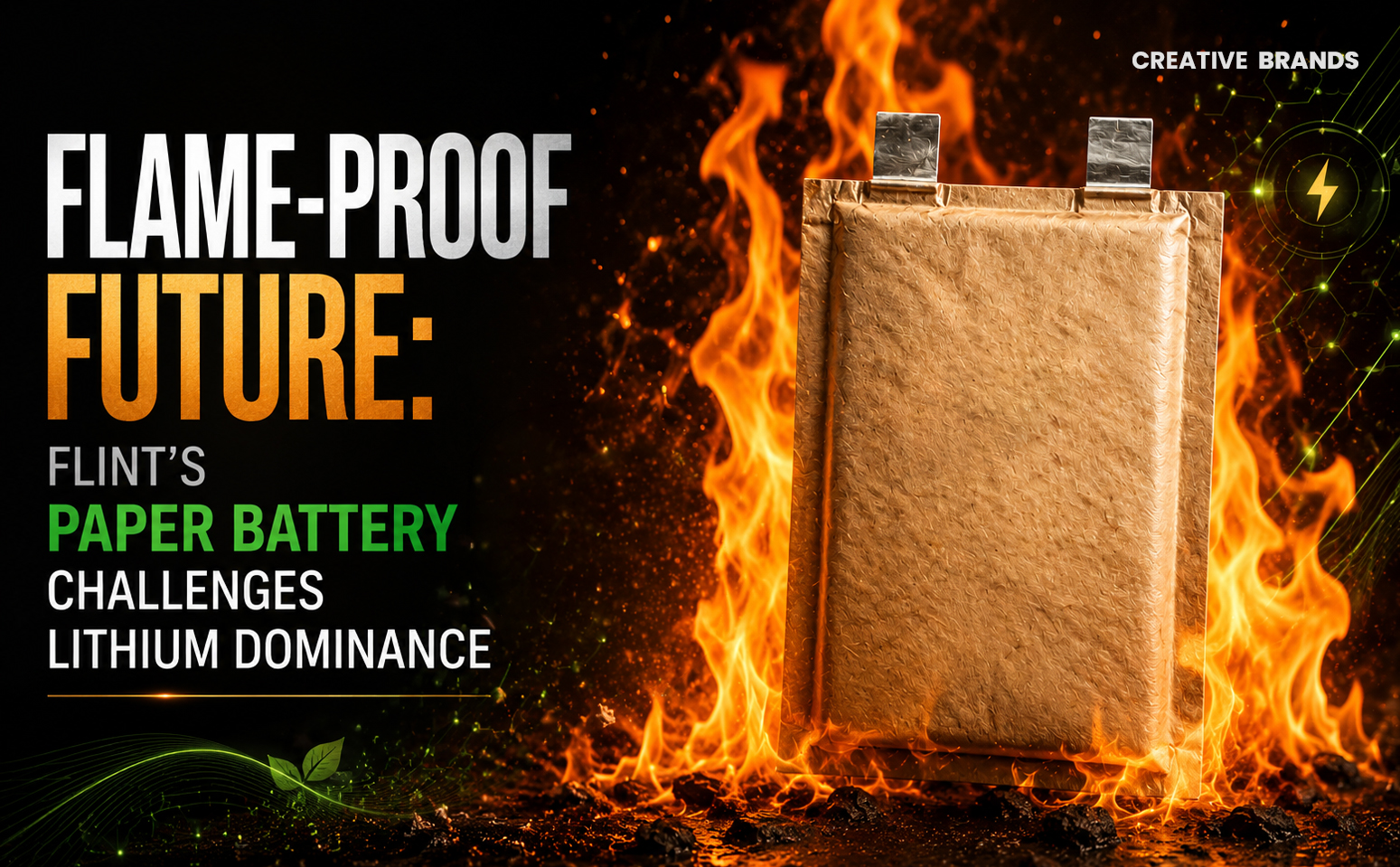
Singapore startup Flint has unveiled a paper-based battery made from zinc, manganese dioxide and cellulose that can withstand direct flame without exploding. By avoiding lithium, cobalt, nickel and PFAS chemicals, the innovation promises safer, more sustainable energy storage. If scalable, it could replace lithium batteries in everyday gadgets.
A battery that can sit inside a flame and still not explode sounds like science fiction. Yet that is precisely why Flint, a Singapore-based startup, is drawing attention with its new paper battery. Built from zinc, manganese dioxide and cellulose — the same natural material found in paper — the innovation is being hailed as a safer, more sustainable alternative to conventional lithium-ion technology.
The breakthrough lies not only in its resilience but also in what it avoids. Flint’s battery contains no lithium, cobalt, nickel or PFAS “forever chemicals.” This matters because lithium-ion batteries, while powering the modern world, have long been associated with mining pressures, supply chain dependencies, recycling challenges and the risk of thermal runaway. By sidestepping these problematic materials, Flint positions its product as a cleaner, more responsible solution.
The design is equally compelling. The battery can be manufactured as a thin, flexible sheet, shaped into standard formats, and — according to Flint — can withstand direct flame without catching fire. Such durability could transform safety standards in consumer electronics, where overheating and fire risks remain a concern.
Of course, the critical question is scalability. At present, Flint’s paper battery is being tested in pilot projects and small devices. But if production can be scaled, the implications are significant. Everyday gadgets such as keyboards, remotes and mice may no longer need lithium batteries, opening the door to a new era of accessible, eco-friendly energy storage.
The symbolism is striking: the next big leap in battery technology may not come from rare metals but from paper. Flint’s innovation suggests that the future of energy could be shaped by natural materials, challenging assumptions about what powers our devices.
For those tracking the evolution of clean energy and sustainable innovation, Flint’s paper battery is a reminder that disruptive ideas often emerge from unexpected places — and sometimes, from something as simple as paper.
Follow RiseX Ventures for more stories on future tech, clean energy, AI and innovation.
Discover more from Creative Brands Mag
Subscribe to get the latest posts sent to your email.
















Leave a comment