


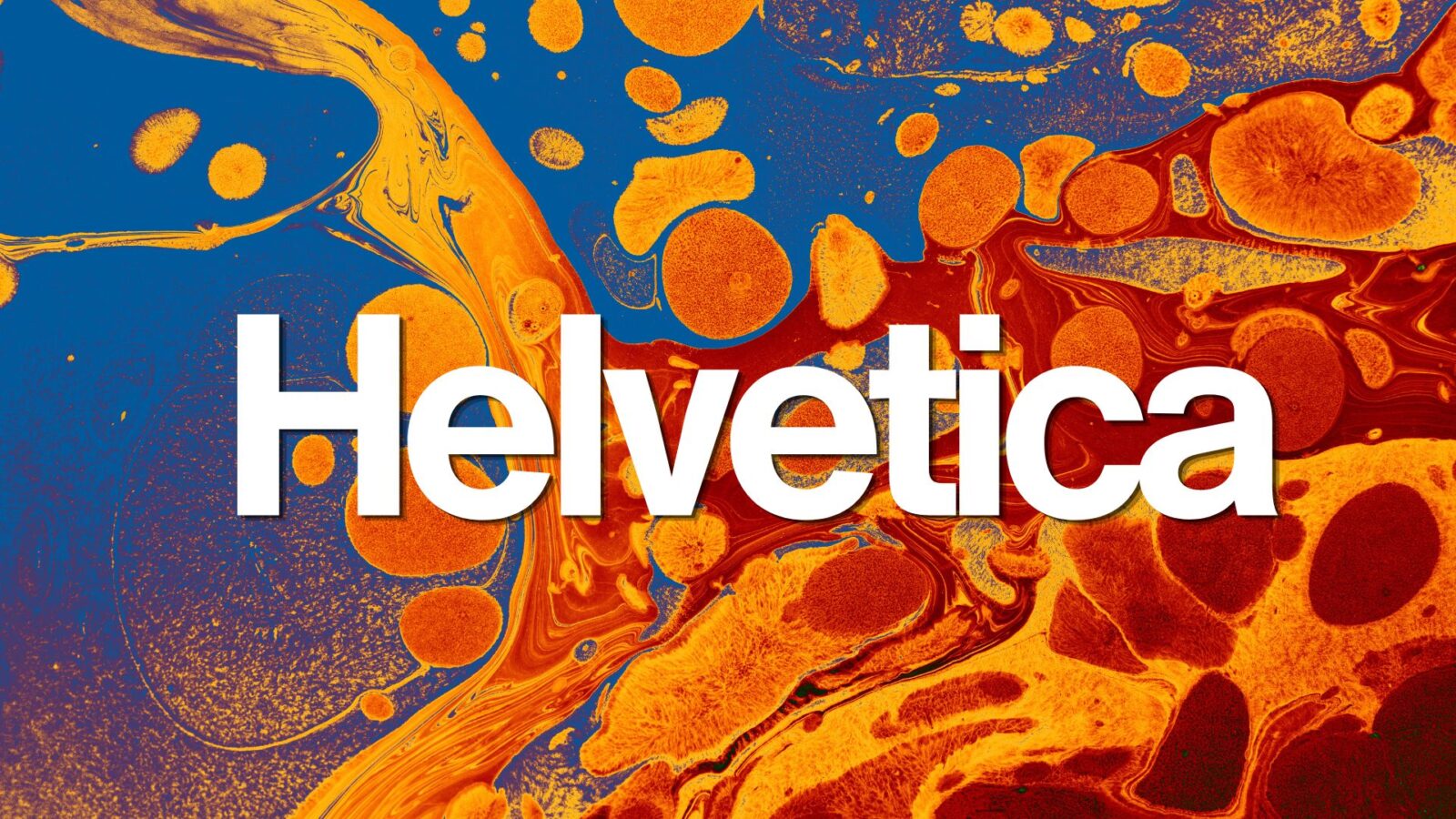
From Swiss precision to global ubiquity, Helvetica remains one of the most influential typefaces ever created. This feature explores its origins, cultural dominance, contemporary reinvention, and evolving role in a digital-first world, where clarity, neutrality, and adaptability continue to define how we communicate visually across generations and platforms.
Few design elements have achieved the quiet authority and enduring relevance of Helvetica. Clean, neutral, and almost invisible in its ubiquity, the typeface has shaped the visual language of the modern world for over six decades, becoming synonymous with clarity, order, and functional beauty.
Helvetica was born in 1957 in Switzerland, a country then emerging as a global epicentre of modernist design. It was developed by Max Miedinger under the direction of Eduard Hoffmann at the Haas Type Foundry. Originally named Neue Haas Grotesk, the typeface was later rebranded as Helvetica—derived from “Helvetia,” the Latin name for Switzerland—to enhance its international appeal. Distributed widely by Linotype, Helvetica quickly transcended its origins to become a global design standard.
Its appeal lay in its neutrality. Unlike more expressive typefaces, Helvetica carried no overt personality, allowing it to adapt seamlessly across contexts—from corporate branding and public signage to advertising and editorial design. It became the visual voice of modern corporations, embraced by companies such as American Airlines, BMW, and Panasonic, as well as public systems like the New York City subway. In many ways, Helvetica came to embody the ideals of mid-20th-century modernism: efficiency, universality, and rationality.
However, its dominance has not gone unchallenged. By the late 20th century, critics argued that Helvetica’s neutrality masked a certain uniformity, even monotony. Designers seeking more expressive or distinctive visual identities began to move away from it, embracing alternative typefaces that offered greater personality or warmth. Yet even in critique, Helvetica remained central—a benchmark against which other designs were measured.
In the digital age, Helvetica has undergone both technical and conceptual reinvention. The transition from print to screen posed challenges, as the typeface was not originally designed for pixel-based environments. This led to the development of updated versions optimised for digital use, most notably Helvetica Now by Monotype. Released in 2019, it introduced refined spacing, improved legibility, and a broader range of weights and styles, ensuring its relevance across devices and platforms.
Today, Helvetica occupies a complex position. It is both timeless and contested, revered and questioned. For some, it represents the pinnacle of typographic clarity; for others, it symbolises an era of corporate sameness. Yet its adaptability continues to secure its place in contemporary design. In a world increasingly saturated with visual noise, Helvetica’s restraint can feel almost radical—a return to simplicity and purpose.
Looking ahead, the future of Helvetica will likely mirror the broader evolution of design itself. As variable fonts, responsive design, and artificial intelligence reshape how typography is created and consumed, Helvetica will continue to evolve, not by abandoning its core principles, but by refining them. Its legacy is not merely historical; it is ongoing.
In the end, Helvetica’s greatest achievement may be its invisibility. It does not demand attention, yet it shapes perception. It does not impose meaning, yet it enables communication. And in doing so, it remains one of the most powerful tools in the designer’s arsenal—quietly defining how the world reads, sees, and understands.
Discover more from Creative Brands Mag
Subscribe to get the latest posts sent to your email.













Leave a comment