


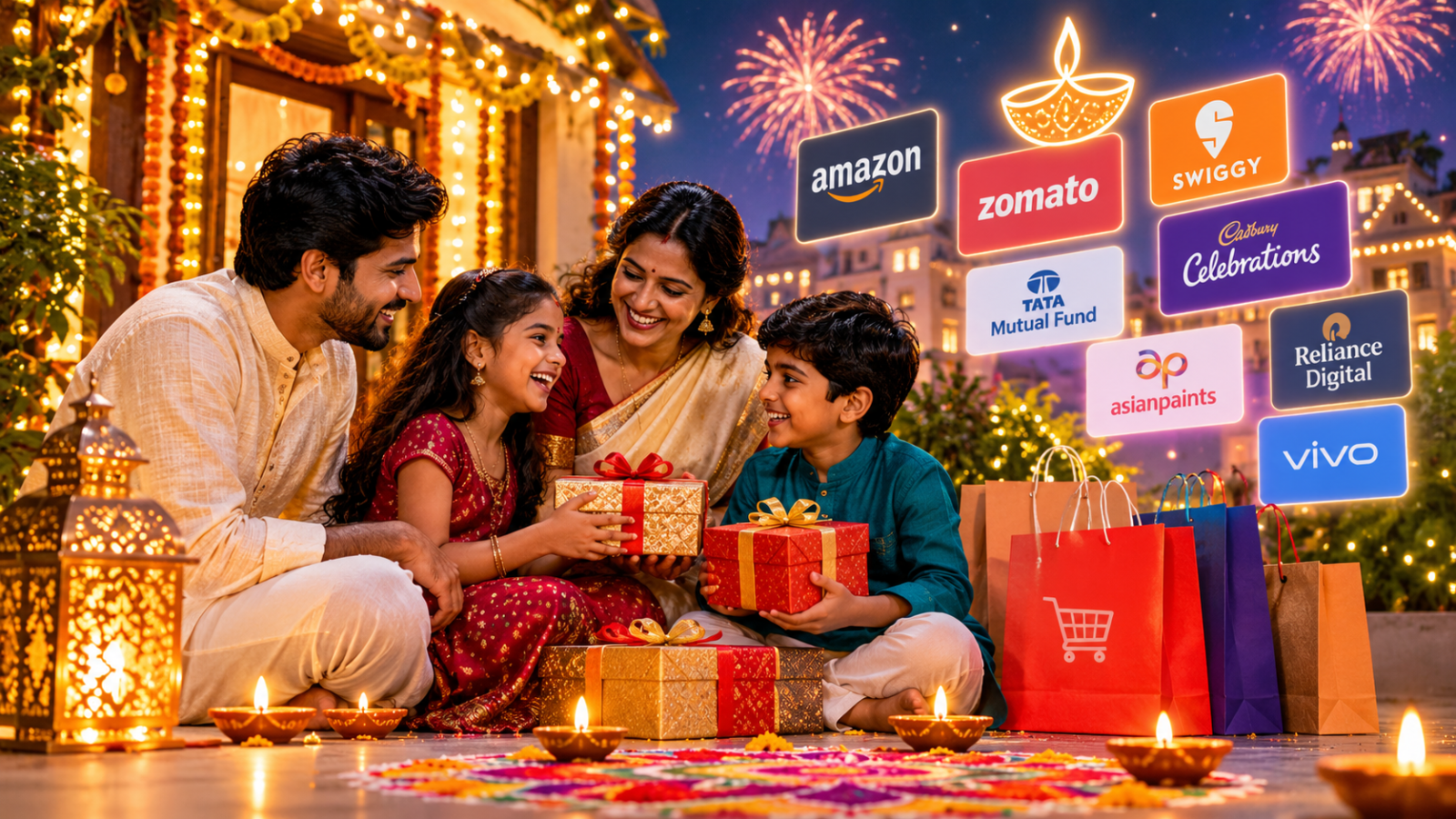
Indian brands are celebrating Diwali 2026 with campaigns that go beyond conventional festive advertising. From family reunions and nostalgic memories to thoughtful gifting, technology, sustainability and instant shopping, companies are finding fresh ways to connect with consumers. Emotional storytelling, digital innovation and cultural relevance are shaping this year’s festive marketing landscape.
Diwali has always been one of India’s biggest opportunities for brands to connect with consumers, but the festival’s commercial and cultural significance is evolving. In 2026, Indian brands are moving beyond the familiar combination of decorative advertisements, celebrity endorsements and discount-led promotions. Their campaigns are increasingly centred on relationships, shared experiences, childhood memories, thoughtful gifting and the changing lifestyles of Indian families.
With Diwali falling on 8 November this year, brands across food, confectionery, technology, fashion, jewellery, e-commerce, financial services and home improvement have developed campaigns that attempt to make their products part of the festival’s emotional experience. The common thread is a shift from simply selling products to creating stories that audiences can recognise, remember and share.
Amazon India’s ‘#DeliverTheLove’ campaign revisits childhood memories and sibling relationships. Its story follows Bittu, who remembers the playful moments of celebrating Diwali with his elder brother and sister. A familiar childhood experience becomes an emotional reason to reconnect with family members. The campaign demonstrates how e-commerce brands can use nostalgia to give a human dimension to online shopping and festive gifting.
For Zomato, the celebration revolves around food and the growing popularity of curated festive hampers. Its ‘Have a WOW Diwali’ campaign, featuring Saif Ali Khan, presents restaurant-sourced hampers as an alternative to conventional gifts. Swiggy, meanwhile, takes a more unconventional approach. It temporarily changes its social media identity to ‘Sweety’, creating curiosity before revealing its festive sweets offering through the message ‘Oh Sweety, ghar aana’. The campaign combines social media engagement with traditional print advertising.
The quick-commerce sector is also finding new ways to participate in Diwali preparations. Instamart uses humour and fashion-inspired visuals to promote festive decorations, while Flipkart Minutes highlights the convenience of last-minute purchases. These campaigns reflect a consumer environment in which forgotten essentials, decorations, sweets and gifts are increasingly expected to arrive quickly, sometimes within minutes.
Food and confectionery brands are particularly active in adapting traditional festive preferences to changing consumer tastes. Cadbury Celebrations has introduced its ‘#ThisNokJhokIsSweet’ campaign, using the familiar disagreements and playful arguments between neighbours as an opportunity to promote reconciliation through gifting. Its Milky Mithai range combines chocolate with traditional Indian flavours such as kesar pista, crispy rabdi, badam barfi and kesar badam. The strategy is significant because it attempts to bring chocolate closer to India’s established mithai culture rather than treating it as a completely different gifting category.
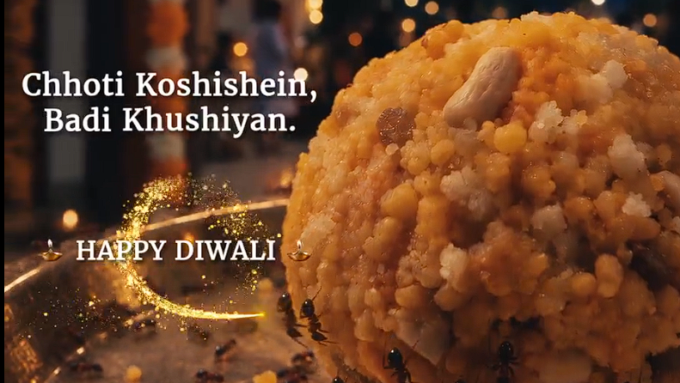
Kinder has taken the idea further by introducing festive packs shaped like rockets, anars and lanterns. Its Kinder Festive Home activation at Mumbai’s Phoenix Marketcity invited families to make rangolis, create torans, decorate diyas and paint lanterns. The experience turns product promotion into a family activity. Nutella, featuring brand ambassador Ranveer Singh, uses the warmth of childhood memories, familiar food and family traditions to make its products part of the festive dining experience. Haldiram’s, meanwhile, builds its communication around the belief that happiness multiplies when shared, while its partnership with Zepto brings traditional festive snacks and gifting into the quick-commerce space.
Other food brands are exploring health, authenticity and responsible consumption. Organic Tattva’s ‘Pure Festivals’ campaign connects the purity of ingredients with the significance of religious traditions and festive food. Farmley is promoting dry fruits, roasted makhana and date-based alternatives to conventional sweets, including products without refined sugar. KisaanSay is placing emphasis on the geographical origins of its dry fruits, highlighting produce sourced from Indian farming regions. These approaches suggest that festive gifting is increasingly accommodating consumers who want a combination of tradition, quality, health and transparency.
Technology brands are also attempting to establish stronger emotional connections. Reliance Digital’s ‘Apno Se Roshni’ is among the more touching campaigns this season. It tells the story of a grandfather whose memories are gradually fading and how his grandchildren use technology to bring cherished photographs and family experiences back to life. The message is that technology can do more than improve convenience; it can also help people reconnect with their past.
Vivo’s ‘#JoyOfHomecoming’ campaign celebrates the happiness of returning home and participating in family traditions. Nikon India has brought content creators into its Diwali storytelling through ‘The Creator’s Cut’, featuring a family whose members document the celebrations from their individual creative perspectives. Zebronics presents technology as part of contemporary family entertainment, showing televisions, speakers, karaoke, gaming and music becoming integral to festive gatherings.
Spotify has chosen a lighter approach, connecting music with everyday Diwali preparations. Its communication encourages people to make activities such as preparing laddoos, creating rangolis and decorating homes more enjoyable through music. HP’s ‘The Lights of Change’ and Samsung’s festive communication also demonstrate how technology companies are using the festival to associate innovation with positive experiences and aspirations.
Financial services companies are discovering that Diwali offers an opportunity to discuss something more meaningful than loans, credit cards and investment products. Tata Mutual Fund’s ‘Mehfil-e-Fund: Diwali Special’ uses poetry, humour and the familiar format of a Kavi Sammelan to explain systematic investment plans, diversification, index funds and long-term financial planning. By bringing financial education into a cultural setting, the brand makes relatively complicated investment concepts more accessible.
Invesco Mutual Fund’s ‘Ek Lifafa. Ek SIP’ campaign connects the traditional practice of giving money in an envelope with the idea of investing for the future. ICICI Prudential Mutual Fund has used familiar life events, including weddings and promotions, to introduce investment conversations. BHIM Payments App has partnered with Goonj for its ‘Meethi Diwali’ initiative, while airpay money’s ‘Safalta ka Sukoon’ campaign explores the emotional satisfaction associated with achievement and financial well-being. Such initiatives indicate that financial brands increasingly want to position themselves as partners in consumers’ long-term lives rather than merely service providers.
Fashion, apparel and jewellery brands continue to rely on the emotional value of gifting, but their communication is also reflecting changing ideas about identity and personal expression. Titan’s Utsav campaigns celebrate relationships that become family and the importance of welcoming people into one’s life. GIVA and its sub-brand Heer have developed festive communication around jewellery and the idea of celebrating oneself alongside others. Reliance Jewels encourages consumers to create their own traditions, while Palmonas combines contemporary jewellery with promotional offers.
Pothys, Sabhyata, Paragon Footwear and Turtle are among the apparel and lifestyle brands using Diwali to promote festive collections. Kushals Fashion Jewellery presents different jewellery styles for occasions ranging from family pujas to office celebrations and evening gatherings. Titan Eye+’s ‘Ankhon Wali Diwali’ takes a more emotional approach, suggesting that eyes communicate feelings that words cannot express. Collectively, these campaigns recognise that consumers are not necessarily looking for one traditional festive appearance; they want products that fit different occasions and individual preferences.
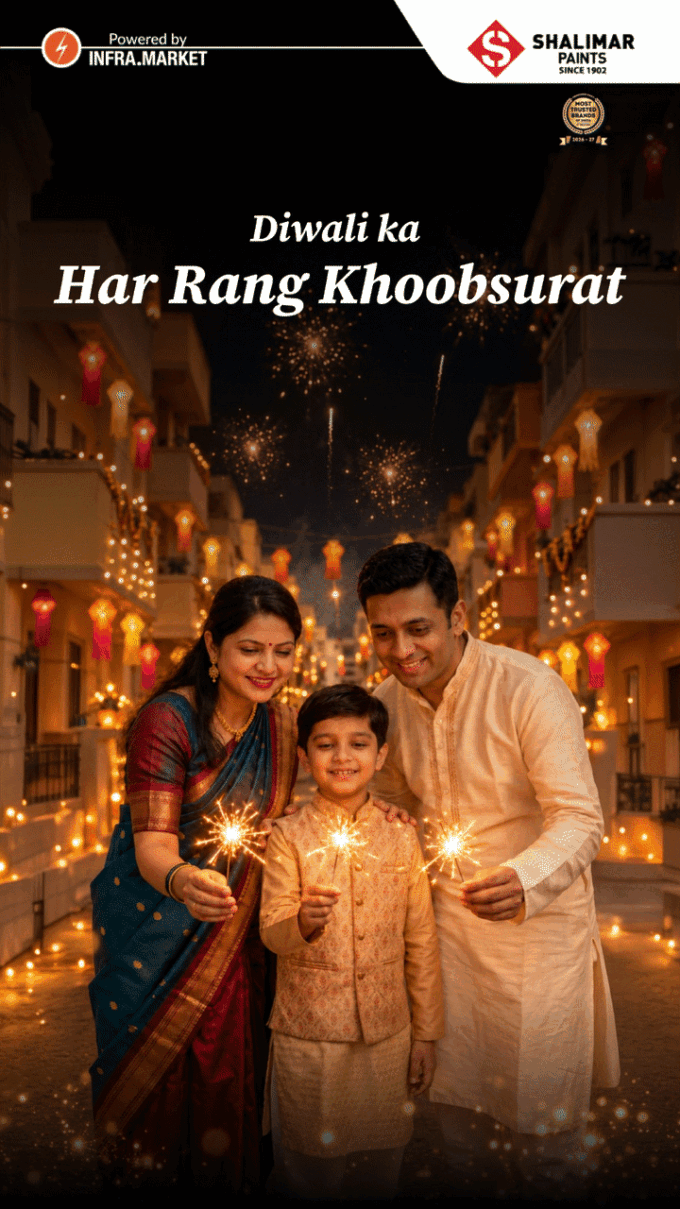
The home improvement and infrastructure sectors have also found their place in the celebrations. Asian Paints’ ‘Tayyari Shuru, Tyohaar Shuru’ connects the preparations for Diwali with the transformation of homes. UltraTech Cement’s ‘#GharKaTyohaar’ positions the home as the centre of festive life. Luminous Power Technologies, through its solar-focused ‘#SochKaDiya’ campaign, connects the symbolism of lighting a diya with the possibilities of clean energy. Skipper Pipes uses humour to draw attention to household maintenance and seepage problems, while Home Centre focuses on festive interiors and home decoration.
There is also a growing attempt to connect celebrations with social responsibility. Supertails’ ‘No Bang Diwali’ campaign promotes a celebration without firecrackers, particularly relevant to households with pets. SUROJ Buildcon’s ‘Tohfa’ campaign takes a different but equally meaningful approach. It tells the story of a father who risks overlooking workplace safety while trying to fulfil his family’s festive wishes. Its central message is that returning home safely is the greatest gift a person can give their family. These campaigns expand the meaning of celebration beyond consumption and entertainment.
What makes Diwali 2026 particularly interesting is the changing relationship between advertising, digital discovery and purchasing behaviour. Brands are no longer depending exclusively on television commercials, newspaper advertisements or outdoor displays. Their campaigns move across YouTube, Instagram, short-form video, influencers, e-commerce platforms, physical stores and quick-commerce applications. A single campaign may begin with a social media teaser, develop into a short film, generate conversations among creators and eventually lead consumers to a shopping platform.
Google’s September 2026 festive consumer research offers some interesting insights into this transformation. It reports that eight in ten Diwali and Navratri shopping journeys involve consumers finding ideas through image searches or images on social media. Among shoppers using Google and YouTube, 81 per cent used at least one of the platforms for discovery and inspiration. Nine in ten consumers who made festive purchases researched beforehand, while 70 per cent made at least one spontaneous purchase during the festive period. Nearly 30 per cent used quick-commerce platforms for their festive requirements. These findings underline the importance of combining emotional storytelling with convenience, discoverability and immediate availability.
There is, however, a larger challenge for marketers. Diwali advertising has traditionally been built around powerful emotional narratives of family reunions, generosity, relationships and togetherness. Repeating these themes every year does not automatically make a campaign memorable. The challenge is to find an original human insight and translate it into a story that consumers genuinely connect with. The long-standing recall of iconic festive advertisements, including Moti Soap’s Diwali communication, demonstrates how successfully created campaigns can become part of popular culture and even influence annual buying habits.
For Indian brands, Diwali 2026 is therefore more than a seasonal sales opportunity. It is a test of their ability to understand changing consumers while remaining connected to cultural traditions. Some are selling sweets, jewellery, clothes and electronics; others are promoting investments, sustainability, safety and social responsibility. Yet the strongest campaigns share an important characteristic: they attempt to make the brand relevant to a moment in people’s lives.
Consumers may remember the advertisement, the celebrity or the attractive offer. But what makes a brand endure is the emotional association it creates. In a marketplace crowded with festive messages, the brands that succeed will not necessarily be those that shout the loudest or offer the biggest discounts. They will be those that understand what Diwali means to people and find an authentic way to become part of that celebration.
Discover more from Creative Brands Mag
Subscribe to get the latest posts sent to your email.












Leave a comment