


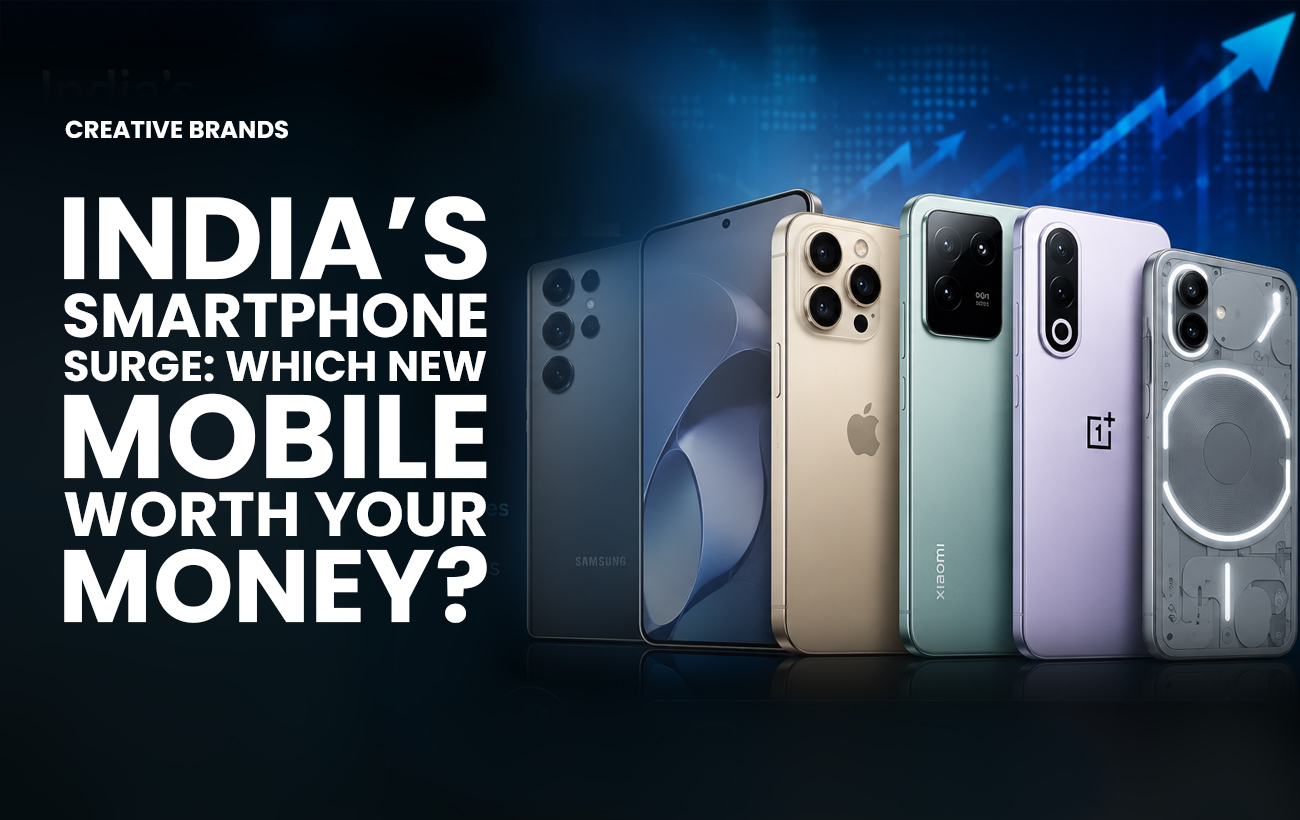
India’s smartphone market is witnessing a flood of premium and mid-range launches in 2026, from Samsung and Apple to OnePlus, Xiaomi and Nothing. While flashy AI tools and camera upgrades dominate advertisements, buyers are increasingly asking whether these devices truly justify their price tags in an economically cautious market.
India’s smartphone market has entered another aggressive upgrade cycle, with global and Chinese brands racing to launch devices packed with artificial intelligence features, advanced cameras, gaming processors and larger batteries. From ultra-premium flagships costing over ₹1.5 lakh to mid-range models promising flagship-like performance, 2026 is shaping up to be one of the busiest years for mobile launches in the country.
For Indian consumers, however, the central question is no longer simply about specifications. It is about value. At a time when inflation, rising living costs and longer replacement cycles are changing purchasing habits, buyers are becoming more selective. The average Indian user now expects a phone to last at least four to five years, making software support, battery health and repairability just as important as cameras or gaming speed.
Among the most discussed launches is the Samsung Galaxy S26 5G, Samsung’s latest flagship designed for users who want a compact premium device without sacrificing performance. Reports suggest it features AI-assisted productivity tools, an upgraded OLED display and improved battery efficiency.
The phone succeeds in offering a polished experience with strong software optimisation and one of the best Android ecosystems available. Samsung’s promise of extended software updates also makes it attractive for long-term users. Yet, at around ₹80,000, the device may feel expensive for buyers who primarily use social media, streaming and casual photography. For professionals and heavy multitaskers, though, it remains a dependable investment.
The bigger and more ambitious Samsung Galaxy S26 Ultra 5G pushes further into ultra-premium territory. Equipped with advanced AI tools, S Pen integration and a high-end camera system, the device targets creators, business executives and photography enthusiasts.
Its strengths are undeniable. The display quality is exceptional, low-light photography is among the best in Android phones, and productivity tools rival some tablets. However, the price crosses the comfort zone for most Indian consumers. While it is technologically impressive, many users may struggle to fully utilise features that justify the cost. It is a luxury flagship rather than a mass-market necessity.
Apple, meanwhile, continues to dominate aspirational buying with the Apple iPhone 17 and the Apple iPhone 17 Pro Max. Apple’s greatest advantage remains ecosystem stability, long-term software support and consistent performance. Even older iPhones continue receiving updates years after launch, which improves resale value significantly.
The standard iPhone 17 appears to be the more sensible choice for most buyers. It delivers reliable performance, premium build quality and a refined camera system without entering the extreme pricing zone of the Pro Max version. The Pro Max model, although technologically superior, caters mainly to users interested in advanced videography, professional content creation and luxury ownership.
The challenge for Apple in India is affordability. Even with financing schemes and exchange offers, premium iPhones remain inaccessible for a large section of the population. Buyers seeking practical value may find Android alternatives offering faster charging, bigger batteries and similar performance at substantially lower prices.
That value-driven competition is where OnePlus 15 5G has generated considerable attention. OnePlus has steadily rebuilt its reputation after criticism over software inconsistencies in previous years. The new model focuses heavily on gaming performance, thermal efficiency and battery life.
For many Indian users, the OnePlus 15 arguably represents one of the best balances between flagship power and realistic pricing. The device performs exceptionally well in gaming and multitasking, while maintaining a cleaner software experience than many rivals. Fast charging remains one of its biggest strengths. However, camera performance, while improved, still trails Samsung and Apple in consistency.
The slightly cheaper OnePlus 15R Snapdragon 8 Gen 5 Battery may actually become the smarter buy for younger consumers and gamers. It sacrifices some premium features but retains strong performance credentials. In India’s increasingly price-sensitive market, such “flagship killer” devices are likely to outperform ultra-premium launches in actual sales.
Another brand attracting curiosity is Nothing. The Nothing Phone 4a 5G and Nothing Phone 4a Pro 5G continue the company’s transparent design philosophy and minimalist software approach. These phones appeal particularly to younger urban consumers seeking something visually distinctive.
Nothing’s greatest strength is branding. Its interface feels fresh, uncluttered and modern. The devices also provide respectable battery life and balanced performance. Yet, buyers must recognise that much of the appeal comes from aesthetics and user experience rather than raw technological superiority. Competing Chinese brands often provide more aggressive specifications for the same price.
Photography-focused buyers are increasingly paying attention to Xiaomi’s flagship ambitions. The Xiaomi 17 Ultra 5G and Xiaomi 15 Ultra 25010PN30G highlight the company’s collaboration with Leica for advanced mobile photography. Xiaomi’s renewed push into premium devices marks an important strategic shift after years of dominating the budget segment.
The camera hardware is genuinely impressive, especially for portrait and zoom photography. Battery performance and charging speeds are also highly competitive. However, Xiaomi still faces perception challenges in India’s premium market, where buyers often prioritise brand prestige alongside specifications. Software advertisements and occasional interface clutter may also frustrate users accustomed to cleaner Android experiences.
The mid-range market remains the true battlefield. Devices such as the Realme 16T, Vivo X300 series and upcoming iQOO launches are aggressively targeting consumers under ₹40,000.
Realme’s latest launches focus heavily on battery life, AI photography tools and durability. Vivo continues strengthening its reputation in mobile imaging, especially among social media creators. iQOO, meanwhile, remains performance-oriented, targeting gamers with large batteries and powerful chipsets.
These mid-range launches are arguably more cost effective than ultra-premium phones because they now offer features once reserved for expensive flagships. High-refresh-rate displays, fast charging, capable cameras and AI-powered editing tools are no longer exclusive to ₹1 lakh devices. For most users, spending between ₹25,000 and ₹45,000 now delivers the best balance of performance and affordability.
The smartphone industry’s new obsession with artificial intelligence also deserves scrutiny. Brands increasingly market AI-assisted editing, voice tools and productivity features as revolutionary innovations. In reality, many features remain experimental or underutilised by average users. While AI can improve photography and translation, it is unlikely to fundamentally change how most Indians use smartphones in the near future.
Battery life, software reliability and network stability continue to matter far more in day-to-day experience than headline-grabbing AI demonstrations. Consumers should therefore avoid being influenced solely by marketing language around “AI phones”.
For buyers considering an upgrade in 2026, the smartest approach is not chasing the most expensive device but identifying practical needs. Users focused on photography may prefer Samsung or Xiaomi. Gamers may find OnePlus or iQOO more rewarding. Buyers wanting longevity and resale value may still gravitate towards Apple. Budget-conscious consumers can now access remarkably capable mid-range devices without entering premium pricing territory.
The Indian smartphone market has matured significantly. Consumers are better informed, more cautious and less willing to upgrade purely for brand prestige. In that sense, 2026’s mobile launches reveal an industry attempting to convince users to spend more, while users increasingly demand proof that every extra rupee genuinely improves daily life.
Discover more from Creative Brands Mag
Subscribe to get the latest posts sent to your email.
















Leave a comment